US Utilities Hold 74 GW of Renewables and Batteries Amid AI
US utility plans cover 70% of the 104 GW they need by 2035 with solar, storage and wind, while data centers lean toward gas.
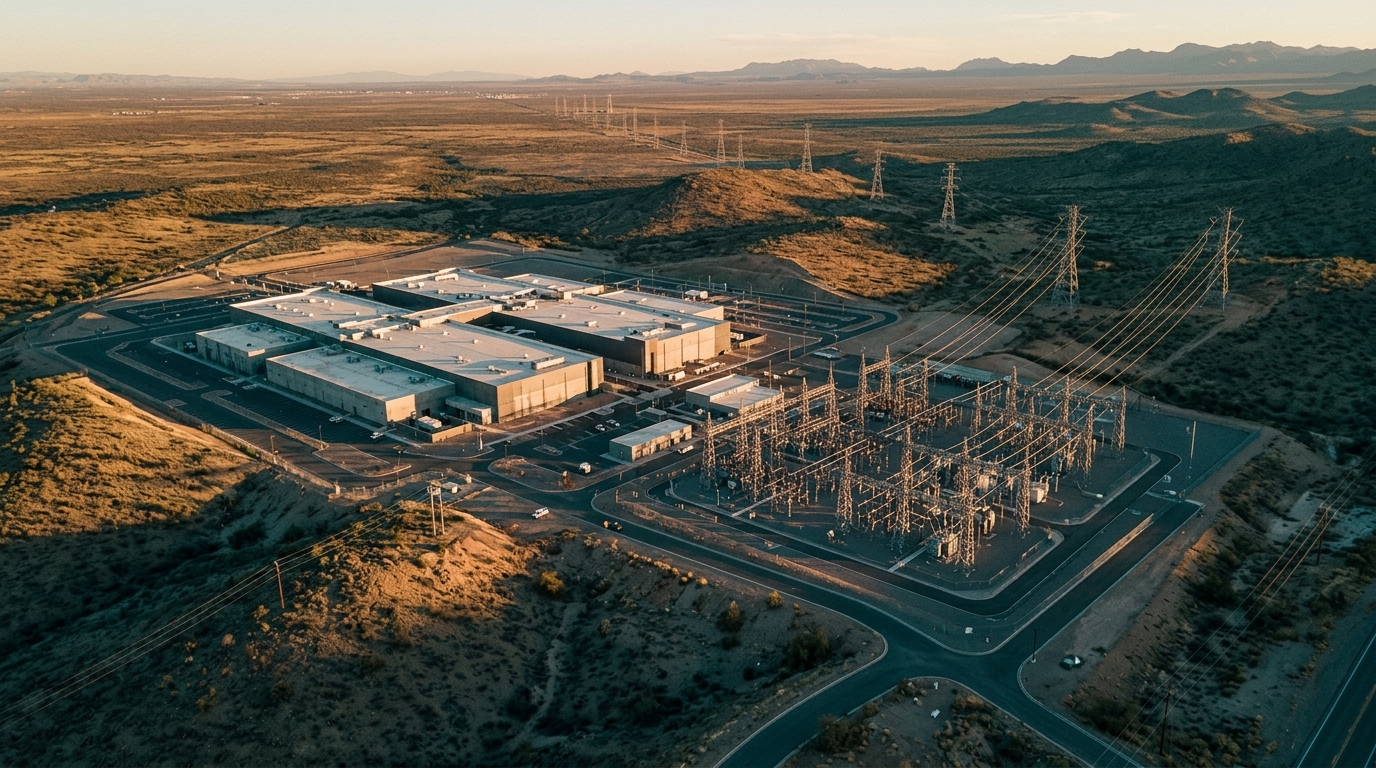
US utility resource plans keep adding solar, batteries and wind at the pace they set before the data center boom: 74 of the 104 GW of new supply the sector projects it will need by 2035 are already covered by those three technologies, according to Latitude Intelligence's analysis of October 7, 2026.
The official record backs that reading. In its October 6, 2026 report, the Energy Information Administration (EIA) projects that US solar capacity will rise from 152 GW in 2025 to 182 GW this year and 223 GW in 2027, and that wind will move from 159 to 170 and 179 GW, with total generation at 4,545 billion kWh this year. Demand presses in parallel: building and powering a gigawatt-scale data center requires firm supply, and the shortage of electrical equipment has fueled a gray market in turbine spares and power plant parts. For Mexico, which is looking to attract data centers and the generation that feeds them, competition for that equipment defines which projects connect first in the region.
The sector's own figures supply the nuance. Within ERCOT, Texas's power market, there are 27 GW of contracted load with on-site generation plans, and only about 2.8 GW will be powered by solar or wind, according to Latitude Intelligence. Outside ERCOT, developers foresee 72 GW of on-site generation across 33 projects, and gas is named in at least 39 GW of them. Land constraints reinforce that tilt: a solar farm requires roughly 20 times the surface area of an equivalent gas plant, and wind up to 100 times. In addition, 62% of signed load operates under approved data center tariffs, and 19 of the 24 tariff classes in force require paying at least 80% of contracted demand, whether it is used or not.
What comes next: federal permit approvals that are holding up more than a hundred projects developers describe as ready to build, with longer delays for wind, and a permit reform moving through Washington whose benefits also reach gas pipelines. The EIA publishes its next update on November 10.
This article was drafted with the assistance of artificial intelligence from verified sources and reviewed by a human editor before publication.
Sources
Related stories
This article was drafted with AI assistance from verified sources and reviewed by a human editor before publication.
← All news