EU must cut gas demand 7% as reserves hit 2011 low
EU gas storage is at its lowest since 2011 and the bloc needs to cut winter demand by 7%. Mexico imports 70% of the gas it consumes.
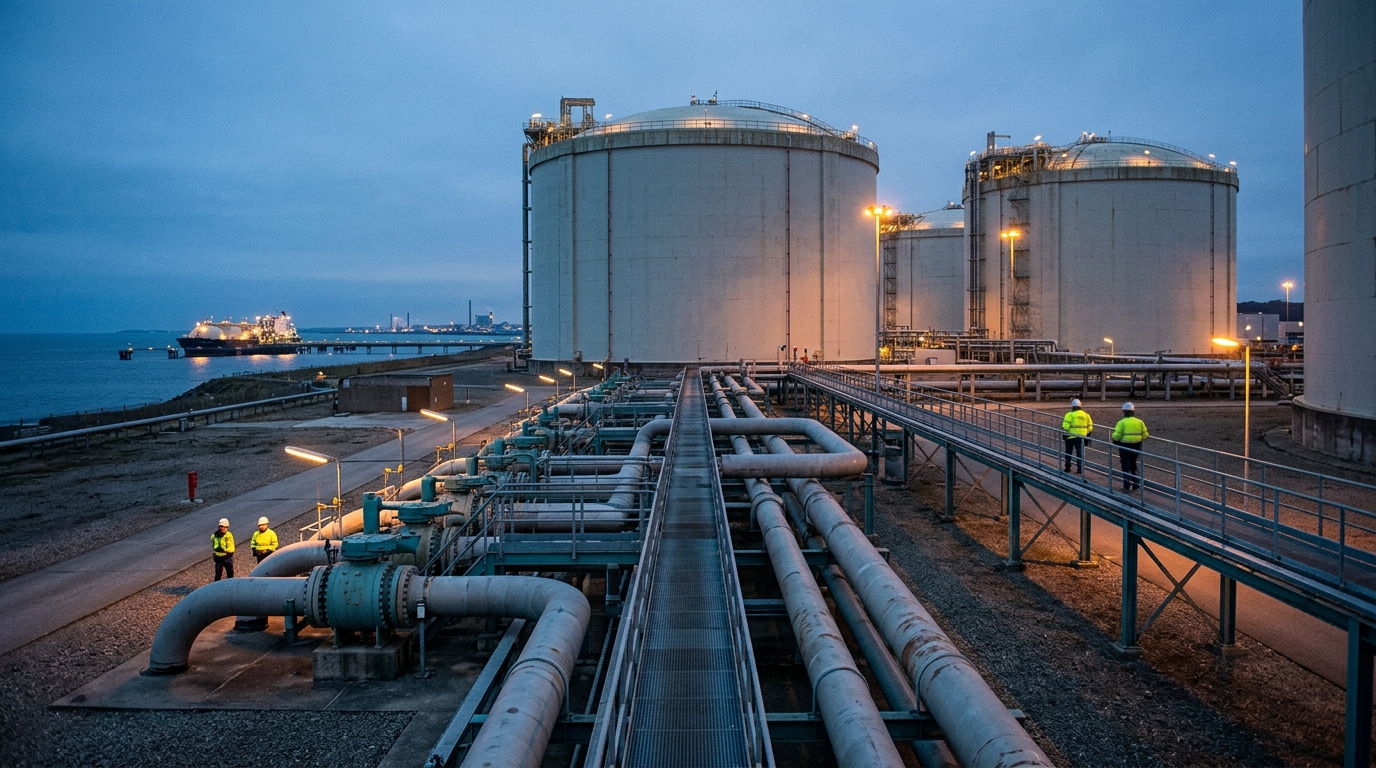
European Union gas storage was 72.4% full on 3 October 2026, the lowest level for that time of year since records began in 2011, according to an analysis by the Institute for Energy Economics and Financial Analysis (IEEFA) released on 9 October.
The institute documents two trends behind the gap. European winter demand again hovered around 200,000 million cubic meters (bcm) in each of the past two winters, after falling to about 185 bcm in 2022-23, while imports remained almost flat. With less slack, storage went from covering 25% of winter consumption in 2021-22 to 30% in 2025-26, according to Eurostat data cited in the analysis. The comparison applies on the other side of the Atlantic: around 70% of the natural gas Mexico consumes comes from the United States, according to Expansión, which documented a temporary reduction of between 950 and 1,350 million cubic feet per day in shipments from Texas between 24 September and 4 October.
IEEFA projects that storage will supply 7.3 bcm less gas this winter, from November to March, than in the previous one. Added to the total ban on imports of Russian liquefied natural gas (LNG) planned for January 2027, the calculation points to a 7% cut in winter demand, equivalent to 14 bcm. The European Network of Transmission System Operators (ENTSOG) agrees in its 2026-27 supply outlook, cited by OilPrice: even with a colder-than-normal winter and optimal LNG supply, the required cut remains at 7%, and in a scenario of severe cold with limited LNG, ENTSOG puts storage at 11%. Covering the shortfall with additional imports would cost around 3,000 million euros, 12% more than the same volume in 2025.
The next data point to watch is the level of European storage at the end of winter, in March, which will define the cost of the summer refill. In Mexico, consumption is around 11,000 million cubic feet per day and dependence on US gas is moving from 70% in 2025 toward nearly 80% in 2030, according to a BloombergNEF projection cited by Expansión. The country does not have strategic gas reserves today.
This article was written with artificial intelligence assistance based on verified sources and reviewed by a human editor before publication.
Sources
Related stories
This article was drafted with AI assistance from verified sources and reviewed by a human editor before publication.
← All news