Wood Mackenzie: Federal Permitting Review Stalls 92 GW of U.S. Clean Energy
32% of early-stage wind, solar, and battery projects face additional federal scrutiny, with $121 billion in investment exposed.
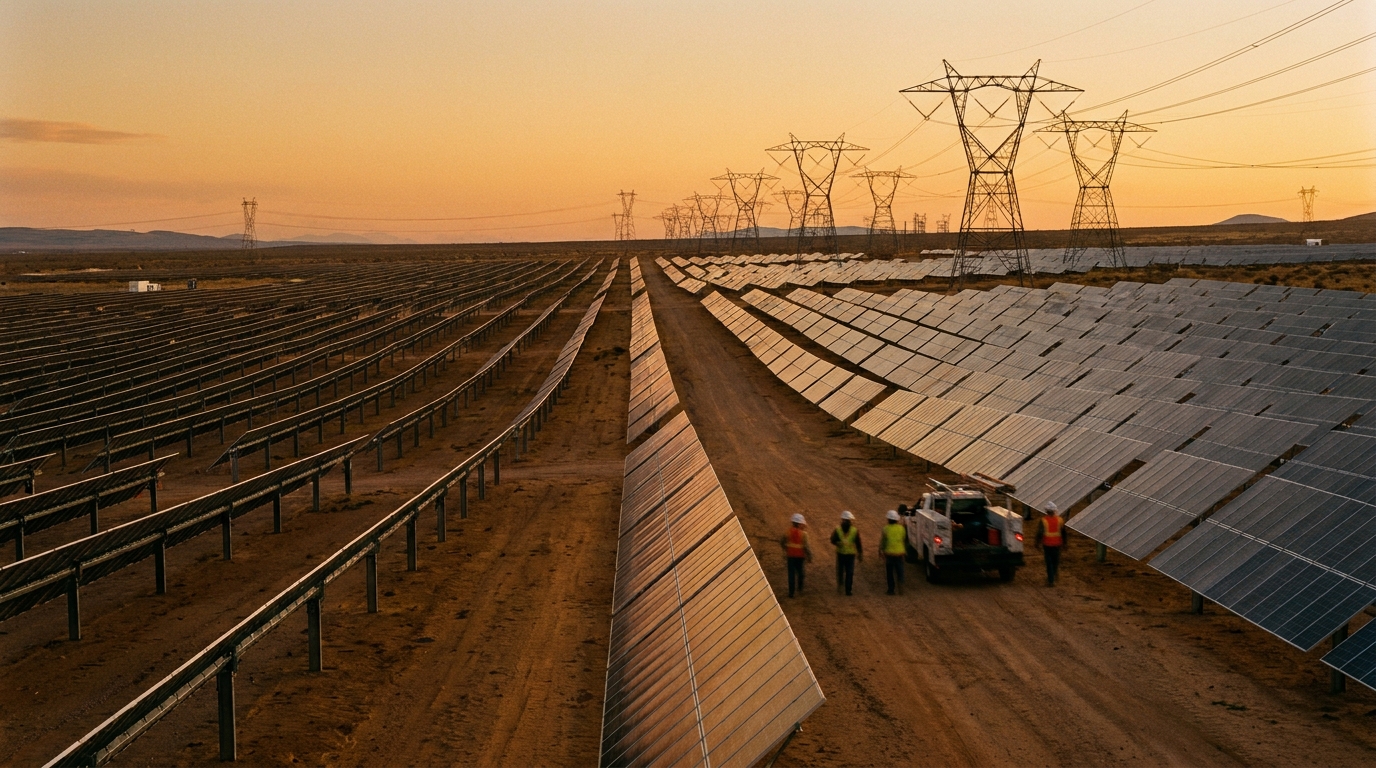
As of June 29, 2026, consultancy Wood Mackenzie published the report "Federal friction: permitting risk across the US utility-scale renewables pipeline," estimating that 92 gigawatts (GW) of early-stage clean energy projects in the United States, 32% of the total pipeline, are exposed to additional federal scrutiny putting $121 billion in investment at risk.
The trigger was a Department of the Interior (DOI) directive dated July 15, 2025, which centralized permitting reviews for wind and solar projects and required approval from Secretary Doug Burgum's office at each stage. Since then, 7 GW on federal lands were cancelled or frozen, and another 80 GW on private land became trapped in bottlenecks through the "federal nexus" mechanism, primarily Army Corps of Engineers wetland permits and Pentagon airspace reviews. Wind is the hardest-hit sector (62% of its pipeline under scrutiny), followed by solar (30%) and battery storage (over 25%), according to Latitude Media.
For the broader region, the U.S. bottleneck is reshaping capital flows. The same institutional funds financing projects in ERCOT, PJM, or CAISO increasingly find Latin American markets, with more streamlined permitting processes, to be a viable deployment alternative. Costs already reflect the strain: solar power purchase agreement (PPA) prices rose 4.6% in Q1 2026 to $64.49/MWh, while wind PPAs climbed 8% to $79.40/MWh, according to LevelTen Energy. In April 2026, a federal judge in Massachusetts issued a preliminary injunction blocking new restrictions, but the ruling did not resolve existing bottlenecks. The SPEED Act (Simplifying Permitting and Ending Endless Delays Act), passed by the House of Representatives in December 2025, aims to shorten environmental review timelines, but it still awaits a Senate vote, as reported by pv magazine Latinoamérica.
While grid operators PJM and MISO work to avoid capacity shortfalls by 2030 (electricity demand is projected to grow 21% that decade), Mexico offers a sharp contrast. In December 2025, the Ministry of Energy (SENER) authorized 20 projects totaling 3,320 MW of renewable generation and 1,488 MW of battery storage under its binding planning framework, attracting $4.752 billion in private investment. For developers with exposure on both sides of the Gulf, Mexico's permitting window represents an alternative that simply does not exist north of the border.
This article was prepared with artificial intelligence assistance from verified sources and reviewed by a human editor before publication.
Sources
- Over US $121 billion in renewable investment at risk as increased federal oversight exposes 92 GW of projects to heightened permitting scrutiny
- As power shortfalls loom, Trump's permitting blockade risks 92 GW of clean energy
- El sector renovable de EE. UU. busca alivio en una reforma de permisos ante trabas que amenazan 121,000 millones de dólares
Related stories
This article was drafted with AI assistance from verified sources and reviewed by a human editor before publication.