Virginia Prices AI Demand Risk at $1.5M per MW
A $1.5M-per-MW security deposit in Virginia and a paper gain at Amazon reveal a fundamental disagreement over how to price the risk that AI electricity demand may not materialize.
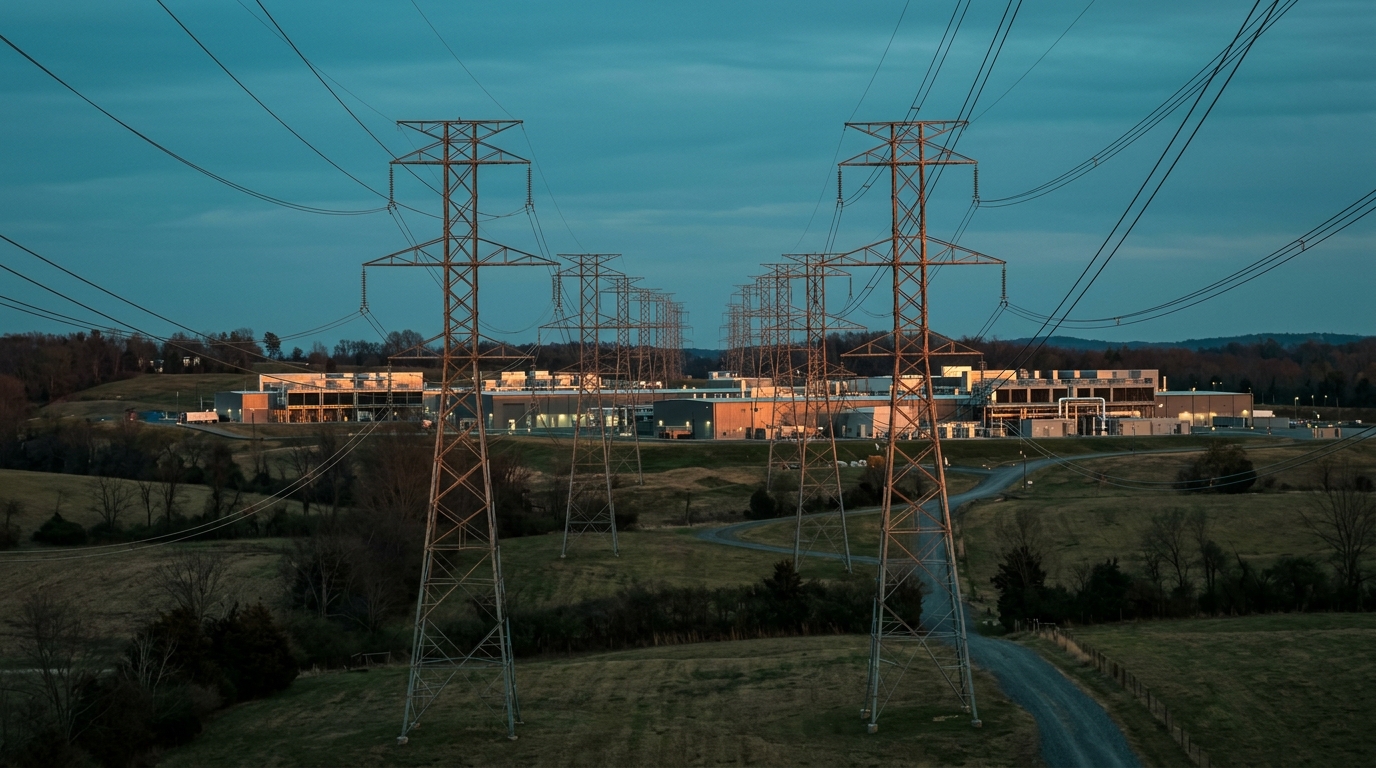
Amazon reported a $551 million accounting gain in its quarterly earnings on electricity contracts it may never fully use, according to a Latitude Media analysis dated August 5. The figure exposes a fundamental disagreement over how to price the risk that AI electricity demand may not materialize.
The gain does not come from selling electricity. Amazon signed contracts of up to 20 years covering roughly 270 million megawatt-hours (MWh), with delivery starting nine years out, for data centers it has not yet built. Because its actual consumption could fall short of its commitments, the company's 10-Q filing treats those contracts as derivatives and marks them to market each quarter. Virginia's State Corporation Commission (SCC) placed a price on exactly that same load-shortfall risk: in November 2025 it approved Dominion Energy's GS-5 tariff, effective from January 2027, which requires data centers of 25 megawatts (MW) or more to post a security deposit of $1.5 million per MW. Regulators across Latin America, including Mexico, face the same question as they negotiate with data center developers.
The disagreement was visible in the numbers: Dominion sought a return on equity (ROE) of at least 10.40%, the Data Center Coalition proposed 8.90%, and the commission split the difference at 9.8%. The tariff also requires 14-year contracts and minimum payment of 85% of reserved capacity. It is the only tariff in the country that sets the security deposit as a flat per-MW price, making it the only public figure that can be multiplied by contracted capacity to quantify exposure. Amazon, among the highest-rated electricity purchasers in the market, demonstrated through its 10-Q that a strong credit rating does not equal demand certainty. Local governments are also responding: on July 22, Loudoun County, home to the largest concentration of data centers in the world, voted to prepare a moratorium on new applications and that same day rejected a 780 MW campus.
The concrete event to watch: on September 15, Loudoun will decide whether to pause new data center applications, after its county attorney warned that a blanket moratorium likely lacks legal grounding. The outcome will set the precedent that regulators in Mexico and Latin America use to negotiate rates and security requirements with data center developers.
This article was produced with AI assistance from verified sources and reviewed by a human editor before publication.
Sources
Related stories
This article was drafted with AI assistance from verified sources and reviewed by a human editor before publication.