U.S. Gas Exports to Mexico Hit Record 7.9 Bcf/d
U.S. pipeline gas exports to Mexico averaged 7.9 Bcf/d in August 2026, a historic high driven by demand from Mexico's power sector.
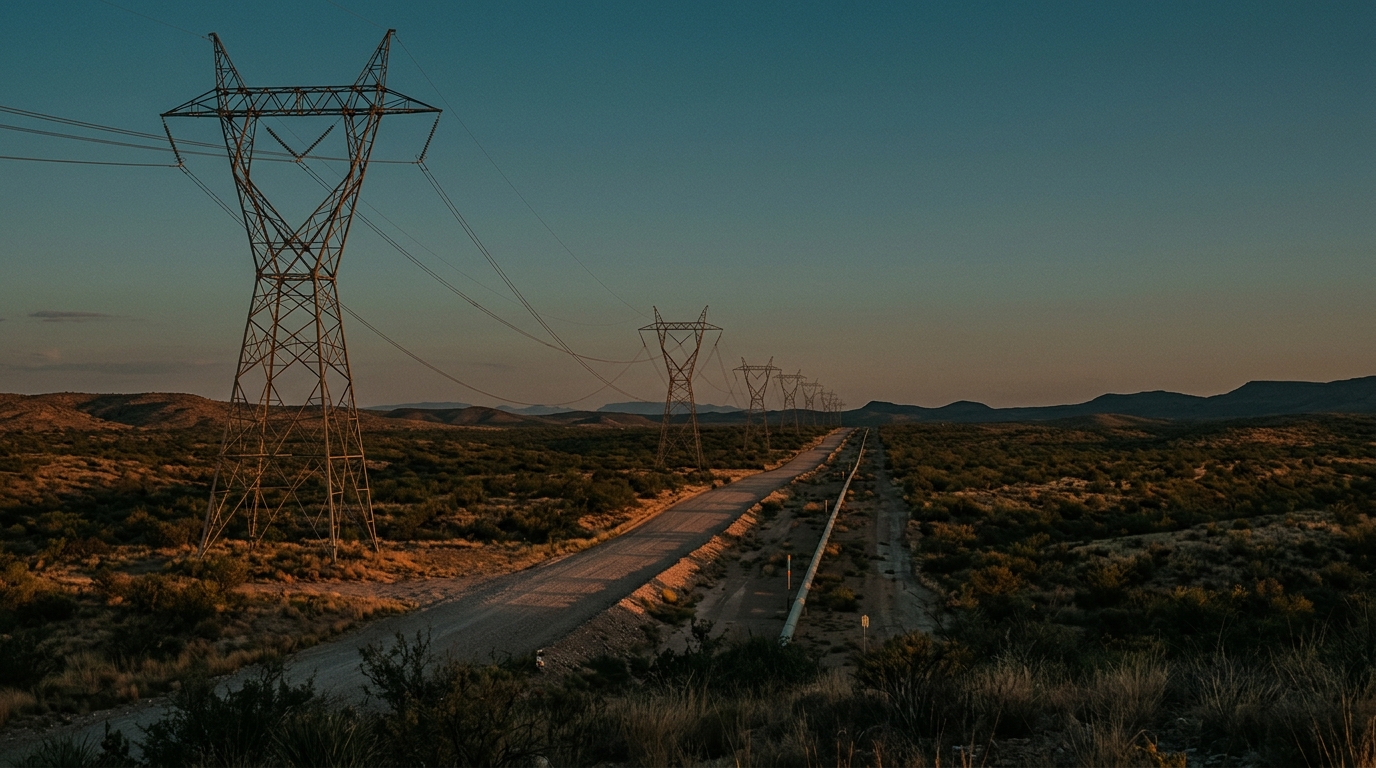
U.S. pipeline natural gas exports to Mexico averaged 7.9 billion cubic feet per day (Bcf/d) in August 2026, their highest monthly level on record, according to an analysis by Wood Mackenzie reported by Global Energy México. The figure surpassed the prior record of 7.5 Bcf/d set in May 2025 and deepens the dependence of Mexico's National Electric System (SEN) on imported gas for power generation.
The record was driven by Mexican electricity demand, which averaged 5.8 Bcf/d in August for generation purposes, also an all-time high. Record flows entered through two Texas corridors: the western corridor, connecting the Permian Basin to central and western Mexico, reached nearly 2.3 Bcf/d on August 13, while the southern corridor, which supplies the country's northeast, surpassed 5.4 Bcf/d on August 26. According to the U.S. Energy Information Administration (EIA), pipeline exports to Mexico averaged 6.4 Bcf/d in 2024, 25% higher than in 2019, with the West Texas and South Texas corridors accounting for 91% of that flow.
The EIA documents that Mexico's total gas consumption rose from 7.7 Bcf/d in 2019 to 8.6 Bcf/d in 2024, with growth concentrated in the power sector, and that the combined capacity of the four import corridors totals 14.8 Bcf/d. Natural Gas Intelligence reports that Wood Mackenzie projects imports near 9 Bcf/d by 2029 and that gas burned for generation will increase from 4.821 Bcf/d in 2025 to 5.278 Bcf/d in 2026. The Energía Costa Azul liquefaction terminal in Ensenada, supplied with Texas gas, began operations in 2026 and adds demand along the Pacific coast. The Mexican Data Center Association reports 1.5 GW of data center projects in development, most of them in central Mexico.
By contrast, Mexico held less than 2.4 days of gas inventory in 2024, compared with 107 days in the United States, according to figures cited by Natural Gas Intelligence, a gap that keeps the debate over underground storage firmly on the agenda. Wood Mackenzie anticipates a seasonal decline in flows toward the end of 2026 and a medium-term upward trajectory driven by combined-cycle capacity expansion; the EIA's monthly export data will reveal the scale of any adjustment.
This article was drafted with AI assistance from verified sources and reviewed by a human editor before publication.
Sources
Related stories
This article was drafted with AI assistance from verified sources and reviewed by a human editor before publication.