U.S. Data Center Developers Turn to On-Site Generation Amid Local Opposition
A survey of 156 developers reveals that one-third of U.S. data centers will operate with on-site generation by 2030, as community opposition has blocked or delayed projects worth more than $64 billion.
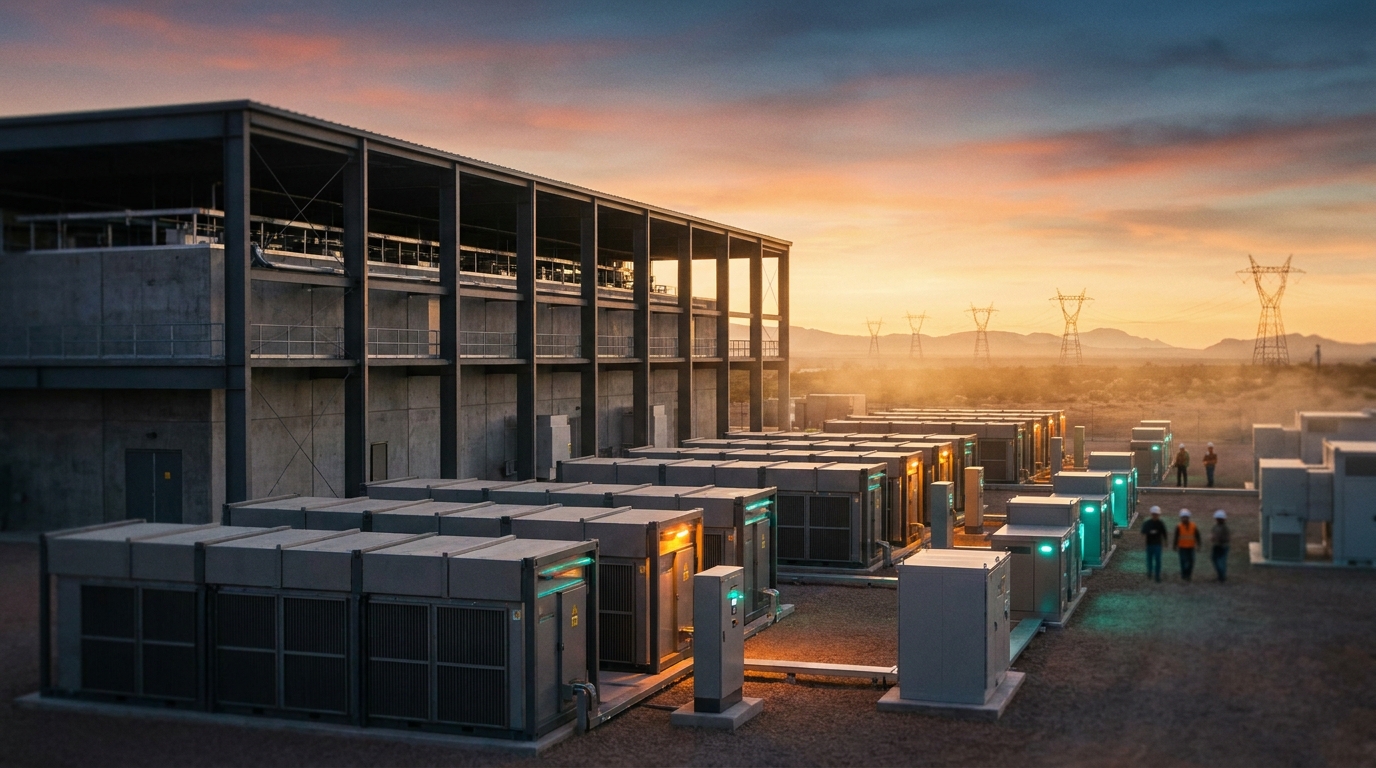
A survey of 156 data center developers and hyperscalers reveals that the industry expects one-third of its U.S. facilities to operate with on-site power generation by 2030, a direct response to community opposition that has already blocked or delayed projects worth more than $64 billion in that country, according to industry data.
The Latitude Media report, based on a Bloom Energy survey of 156 sector participants, documents that 28% of respondents perceive a deterioration in community acceptance over the past six months. In parallel, Forbes reports that in Q1 2026 alone, local opposition blocked or delayed at least 75 projects valued at $130 billion. A Gallup survey cited by Forbes indicates that 71% of Americans oppose an AI data center near their home, with 48% firmly against it. For Latin America, the signal is clear: data center projects seeking to establish themselves in Mexico and the region face an increasingly restrictive permitting environment that mirrors the U.S. pattern.
The Bloom Energy survey shows that power availability dropped 33 points as a site selection factor between June 2025 and mid-2026, falling from 84% to 51% of mentions among the top three criteria. Construction costs (35%), grid upgrade costs (28%), and critical equipment availability (26%) gained weight over the same period. On the community side, on July 18, 142 simultaneous protests took place across 42 states, and at least 18 state bills and 86 local moratoria have been enacted or proposed to halt new developments, according to Forbes. Natalie Sunderland, Bloom Energy's Chief Marketing Officer, noted that "access to electricity remains the greatest constraint on data center growth, but it is not the only problem."
The shift toward on-site generation, with fuel cells, carbon capture, and microgrids, redefines the infrastructure requirements for data centers. For Mexico and Latin America, where several data center projects are at the pre-feasibility stage, the U.S. precedent anticipates a power demand profile different from what was originally modeled: more distributed self-generation and less direct load on the transmission grid.
This article was written with artificial intelligence assistance based on verified sources and reviewed by a human editor before publication.
Sources
Related stories
This article was drafted with AI assistance from verified sources and reviewed by a human editor before publication.