Uruguay Adds 500 MW of Renewables by 2030 with Four Solar Plants
Minister Fernanda Cardona announced the target at the Latam Renewables Congress; the Melo park, 100 MWp and $75 million, is already under construction in Cerro Largo.
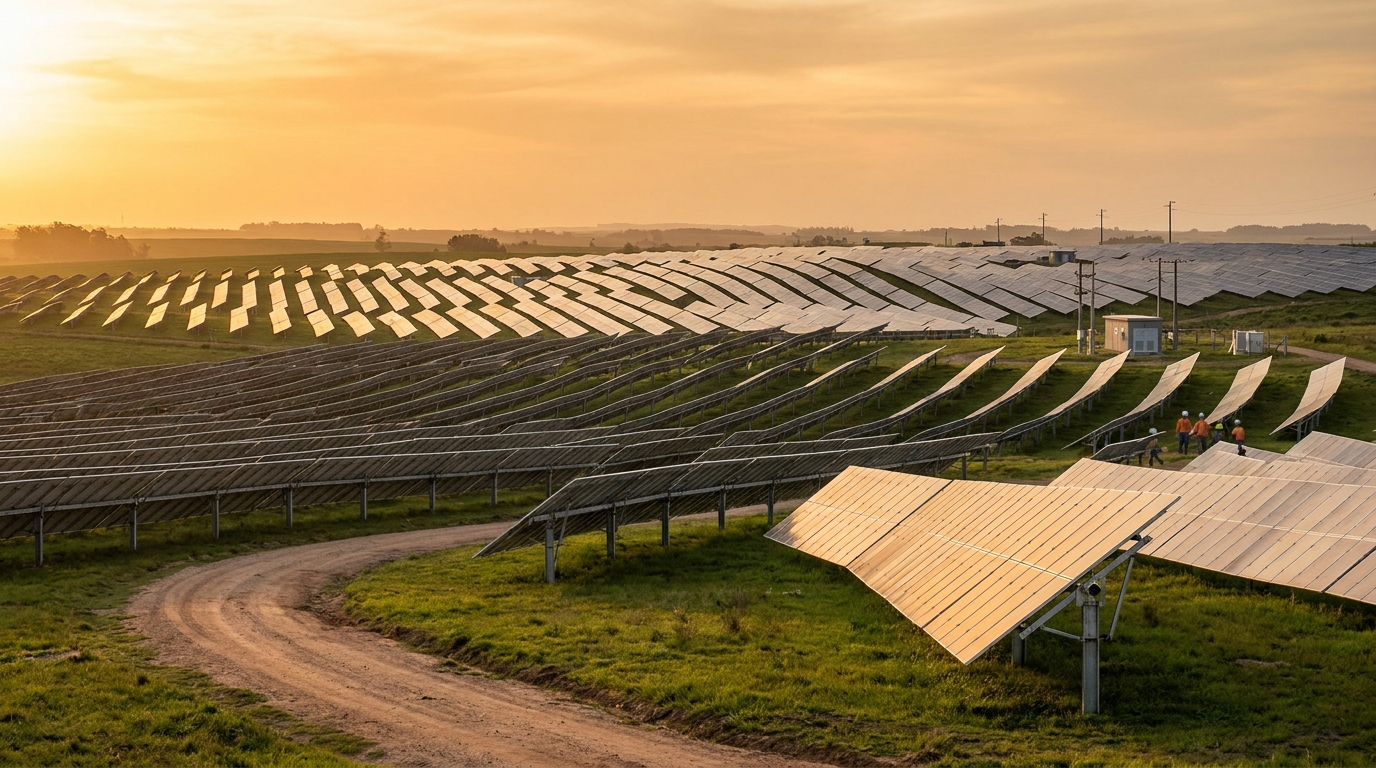
Uruguay will add 500 MW of new renewable capacity before February 2030, announced the Minister of Industry, Energy and Mining, Fernanda Cardona, on July 29 in Montevideo. The plan includes four solar plants; the first, Melo, at 100 MWp and $75 million, is already under construction in Cerro Largo.
The 500 MW target corresponds to the current five-year government term, with an emphasis on solar photovoltaic energy, and was detailed by the minister during the congress organized by the Uruguayan Renewable Energy Association (AUDER). Cardona warned that "it would be a mistake to think the work is already done," according to the official communiqué from the Ministry of Industry, Energy and Mining (MIEM). Uruguay maintains an electricity grid with 97% renewable generation, leading Latin America, but its installed solar capacity closed 2025 at 339 MW, according to the International Renewable Energy Agency (IRENA). The diversification toward solar aims to safeguard supply security against the electrification of transport, where the country has already reached 15% electric urban buses, and projected industrial demand.
The Melo park, managed by state utility UTE, will feature approximately 140,000 solar modules with trackers and will connect to the grid via a 150 kV line. According to pv magazine, the plant will supply around 65,000 homes once operational. The second confirmed plant is a 30 MW photovoltaic project in Río Negro, relocated from the Durazno department due to administrative obstacles; UTE maintains the intention to develop another park in Baygorria at a later stage. The two remaining plants in the four-plant program have no defined location or capacity. Cardona also linked the solar push to the goal of reaching 20% electric urban buses by end of 2026, up from the current 15%.
Uruguay's plan illustrates how smaller regional markets use capacity targets to attract medium-term solar investment. The two plants still missing from the program and the hybridization projects the minister mentioned will define the final profile of the expansion.
This article was written with the assistance of artificial intelligence from verified sources and reviewed by a human editor before publication.
Sources
Related stories
This article was drafted with AI assistance from verified sources and reviewed by a human editor before publication.