Renewables Cut Gas's Grip on Spanish Electricity Prices from 52% to 9%
Ember's 'Decoupled' report: renewables in Spain reduced to 9% the hours in which gas sets the electricity price, generating €10/month in household savings. Implications for Mexico.
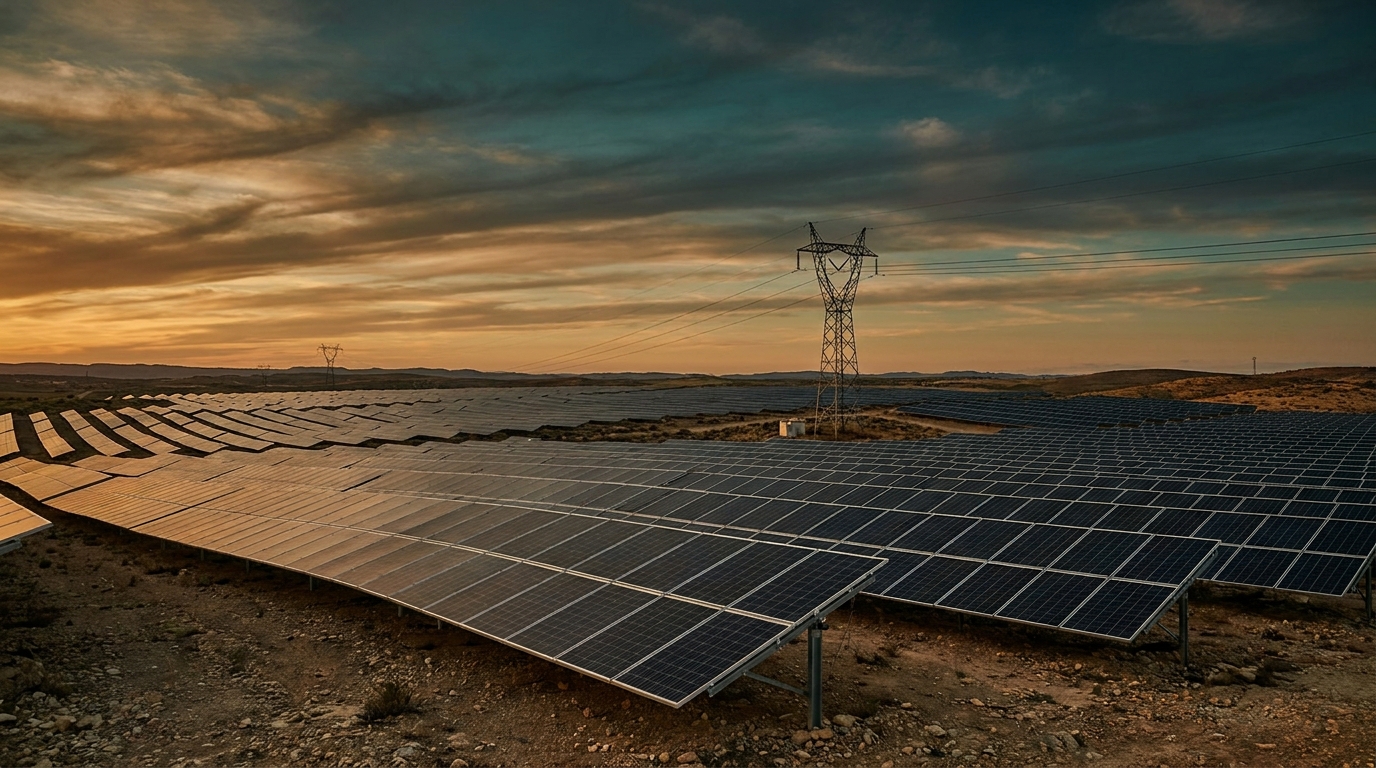
Ember's "Decoupled" report, published June 16, 2026, quantifies the impact of renewable expansion in Spain: in 2021, natural gas dictated electricity prices in 52% of hours; in the first five months of 2026 that figure dropped to 9%, generating estimated savings of €10 per month per household, equivalent to a 19% reduction in the typical electricity bill.
The mechanism is the marginal pricing system that governs European electricity markets: the most expensive technology required to meet demand in any given hour sets the price for all electricity dispatched in that period. For years, natural gas combined-cycle plants occupied that role in Spain, exposing household bills to gas market volatility that spiked after Russia's invasion of Ukraine in 2022. The mass penetration of solar and wind has steadily displaced gas from that position: between 2021 and 2025, Spain's installed renewable capacity grew 37%, according to data from the Ember report as covered by pv magazine; the fall from 52% to 9% in gas's share of price-setting is a direct result of that cumulative growth.
The report also documents the role of storage: Spain's installed battery capacity quadrupled during 2025 and is projected to quadruple again in 2026, extending renewable availability into peak demand hours without recourse to gas turbines. Ember identifies the operational decoupling threshold at the point where renewables surpass 40% of the energy mix. For Mexico, that benchmark carries direct relevance: tensions in the Strait of Hormuz have kept liquefied natural gas (LNG) prices elevated, pressing costs on the National Electricity System. The Guardian frames the Spanish savings precisely against that global pressure, documenting the protective effect that renewable penetration produced for Spanish consumers amid the LNG price escalation.
The next signal to watch is the pace of Mexico's renewable project pipeline: the National Electric System Development Program (PRODESEN) 2025-2039, published by the Ministry of Energy (SENER), projects reaching a renewable penetration threshold comparable to Spain's by 2030; the execution timeline of awarded contracts will determine whether that date holds.
This article was drafted with artificial intelligence assistance from verified sources and reviewed by a human editor before publication.
Sources
Related stories
This article was drafted with AI assistance from verified sources and reviewed by a human editor before publication.
← All news