Solar and Batteries Dominate New U.S. Capacity
The EIA reports that solar and storage accounted for more than two-thirds of capacity added in the first half of the year, with Texas and Arizona leading the way.
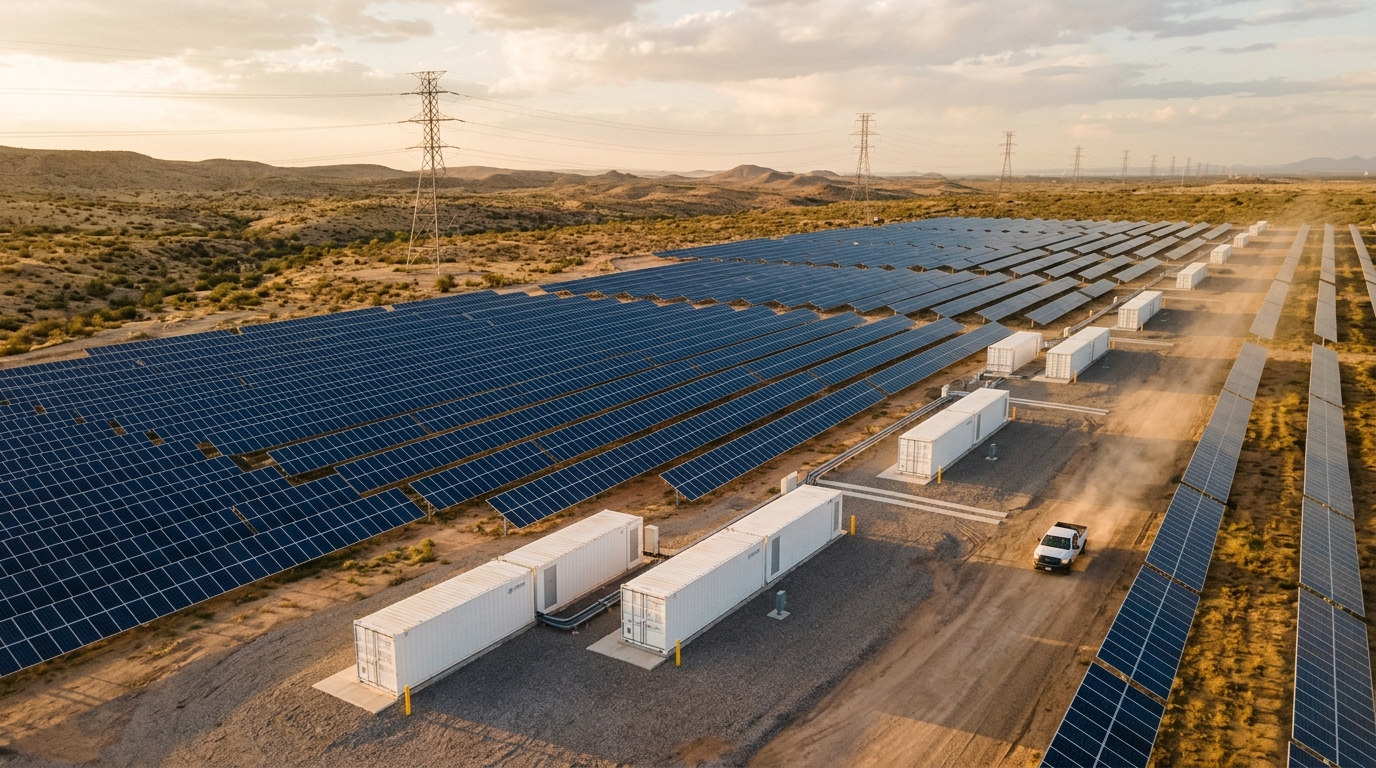
Between January and June 2026, solar and batteries accounted for more than two-thirds of all new electricity capacity added to the U.S. grid, according to data from the Energy Information Administration (EIA) as reported by Canary Media. Combined with wind, the three technologies captured 90% of everything built during the first half of the year.
Construction was concentrated in the southern United States: Texas led capacity additions, New Mexico ranked second driven by SunZia, the 3.65-gigawatt (GW) wind project completed in June and the largest in the country, and Arizona took third place through its expansion of solar and storage, according to the same source. The pace holds despite a more costly environment, one characterized by eliminated tax credits, permitting freezes, and tariffs on imported panels, according to Canary Media. The figures matter for the broader region because that geography, the southwestern solar belt and the ERCOT electricity market, is the one supplying equipment and technical expertise to battery and photovoltaic projects in Mexico and Central America.
Battery storage is the fastest-growing technology. According to the EIA, the U.S. electric system was operating at the close of 2025 with 43.6 GW of battery capacity; in the first half of 2026, operators added 8.3 GW, bringing the total to roughly 52 GW of nameplate capacity. Operators report plans to add another 54 GW over the next two and a half years, with 14 GW in the second half of 2026, 26 GW in 2027, and 14 GW in 2028. The largest storage units are concentrated at solar plants: Bellefield, in California, pairs 500 MW of photovoltaic capacity with 500 MW of batteries and plans to double its capacity this year; Gemini, in Nevada, combines 690 MW of solar with 380 MW of storage.
The next data point to watch is the EIA's preliminary monthly generator inventory, whose upcoming releases will show whether batteries sustain the 2026 pace. Also yet to be resolved is the progress of the large-scale gas plants announced by Amazon and OpenAI, which Canary Media describes as projects not yet finalized.
This article was drafted with artificial intelligence assistance from verified sources and reviewed by a human editor before publication.
Sources
Related stories
This article was drafted with AI assistance from verified sources and reviewed by a human editor before publication.
← All news