Northwest Power Council Projects 14 GW of Clean Capacity by 2032
The Northwest Power and Conservation Council's plan adds 14 GW of wind, solar, and batteries by 2032 in response to data center demand, offering a reference point for Mexico.
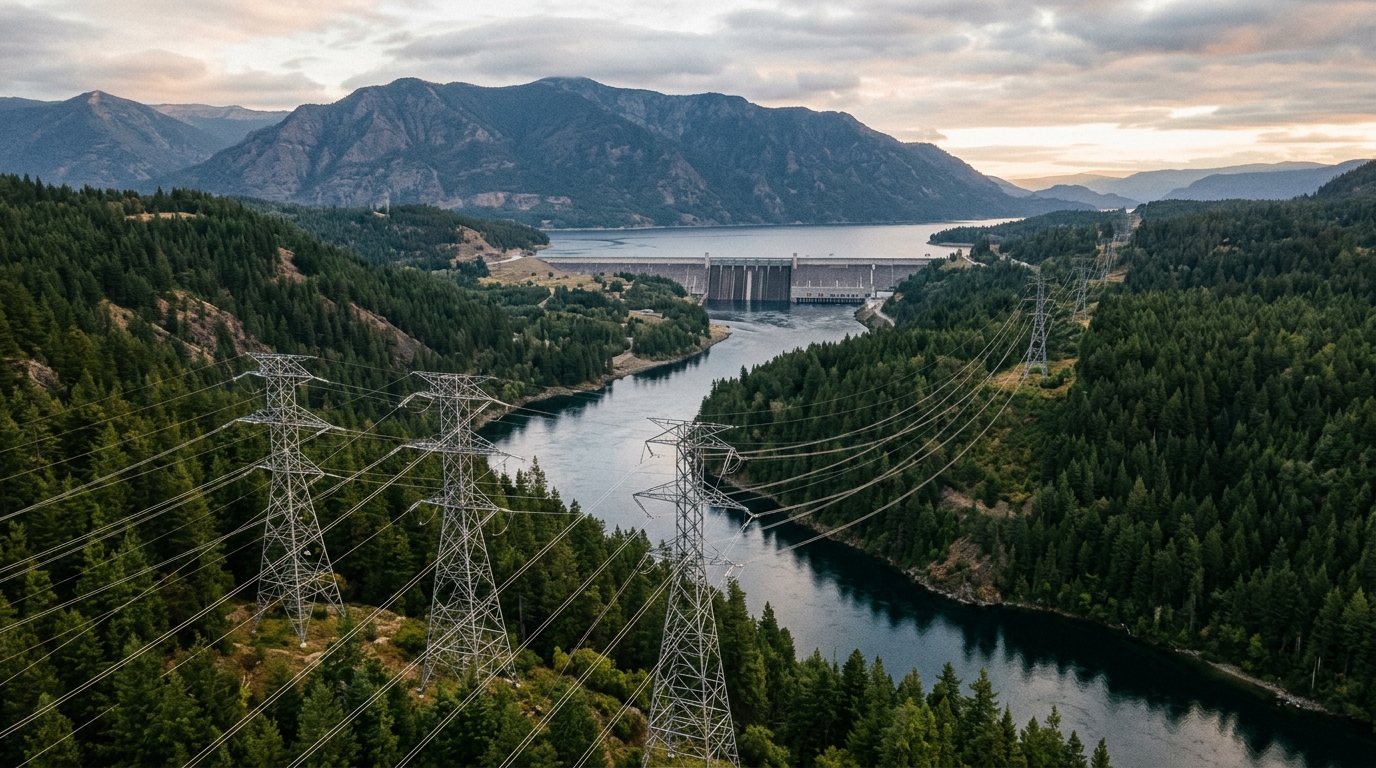
The Northwest Power and Conservation Council (NPCC) projected on August 13 that the Pacific Northwest of the United States will need 14 GW of clean capacity by 2032: 9 GW of wind and solar and 5 GW of batteries, plus approximately 2 GW of gas and 590 MW of demand response.
The draft Ninth Power Plan, released this week, is the path the council considers least-cost for sustaining reliability, at approximately $2 billion per year. It responds to a concentrated demand driver: the expansion of Amazon, Microsoft, and Google data centers in Oregon and Washington, attracted by cheap hydropower and mild temperatures for cooling servers. Jennifer Light, the council's planning director, said storage should ideally be co-located with solar to reduce transmission costs and avoid curtailment of wind and solar generation, according to Latitude Media. The case serves as a reference point for Mexico, where data center demand is also pressuring expansion of the national electricity grid.
Of the 2 GW of gas, most corresponds to projects in Idaho and Montana, as Washington and Oregon have 100% clean electricity laws targeting 2040 and 2045, respectively, though Washington still allows some gas construction. The plan recommends for the first time that data center developers contribute their own storage resources, a scheme similar to what grid operators such as PJM are evaluating. The Bonneville Power Administration (BPA), which controls approximately 75% of regional transmission and supplies one-third of its electricity, is the only entity required to align its operations with the plan; since 2023 it has announced approximately $5 billion to upgrade and expand its grid, including a transmission project to connect Oregon and Nevada. The council also called for strict energy efficiency standards for data centers, particularly in cooling systems.
The draft will be open for public comment until October 16, with hearings in all four states, and the council expects to finalize it in early 2027. The figure to watch is how much data center load actually materializes: the real pace of construction of the projected 14 GW depends on it.
This article was written with artificial intelligence assistance from verified sources and reviewed by a human editor before publication.
Sources
Related stories
This article was drafted with AI assistance from verified sources and reviewed by a human editor before publication.
← All news