Iran Warns Ships in Hormuz; Tanker Traffic Down 68%
The Revolutionary Guard is demanding that all vessels use its approved routes, while daily tanker transit remains well below pre-conflict levels.
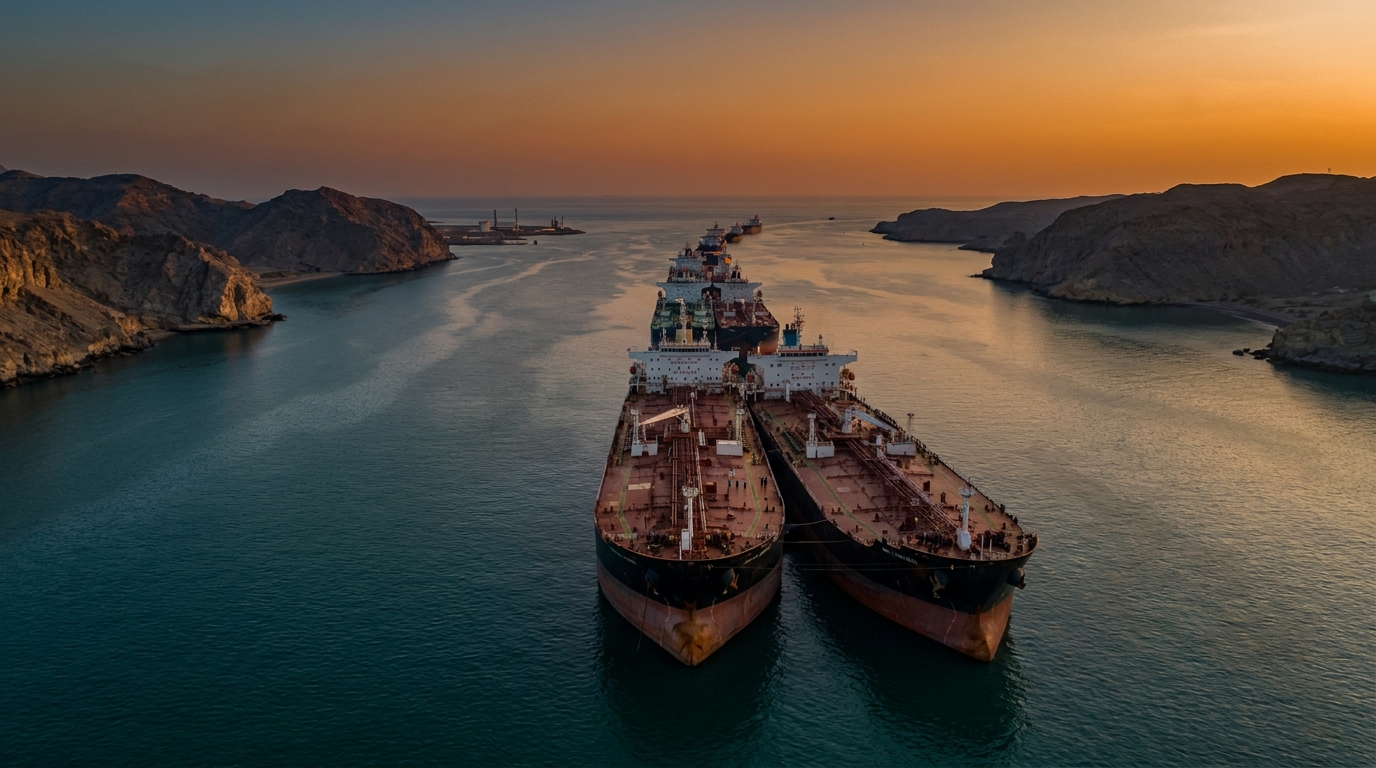
Iran's Revolutionary Guard warned ships in the Strait of Hormuz on Thursday that any vessel operating outside its approved routes will face consequences, Associated Press reported. The warning comes as tanker flow sits 68% below pre-conflict levels, according to the Strait of Hormuz Live Tracker monitor.
The threat emerges under the 60-day ceasefire Washington and Tehran signed in mid-June. The agreement formally reopened the strait, through which roughly 20% of the global crude supply transits, but left transit protocols and demining unresolved. The International Maritime Organization (IMO) estimates around 80 naval mines remain in the main shipping lane. Since the truce, 35 million barrels have left the region, according to data firm Kpler, cited by NBC News. Brent crude, which surged to $126 per barrel in April, now trades around $72, but persistent restrictions at Hormuz maintain an elevated floor for global benchmarks.
Iran requires each vessel to contact the Revolutionary Guard by radio on a designated channel before crossing and has been levying tolls for passage. U.S. Secretary of State Marco Rubio rejected the practice, stating that no country has the right to charge for the use of international waterways, NBC News reported. Reuters reported on July 1 that Tehran fired on four vessels the previous weekend for transiting the Omani route without authorization. On Thursday, at least three more vessels turned back following the new warning. Shipping line Hapag-Lloyd confirmed that all its vessels have safely departed the Gulf, while analysts at Fearnleys noted that most current movement reflects inventory being dispatched, not new cargo.
With mines still in place and an Iranian transit authority operating de facto, normalizing traffic through Hormuz will take weeks. The ceasefire expires in mid-August; Iranian sources told Reuters that Tehran plans to begin charging mandatory tolls at that point. For Mexico, the risk premium on the strait keeps the Mexican Mix price at a level that strengthens Pemex revenues in the second half of the year, though it also raises the cost of gasoline imports the country sources from the Gulf of Mexico.
This article was written with artificial intelligence assistance based on verified sources and reviewed by a human editor before publication.
Sources
Related stories
This article was drafted with AI assistance from verified sources and reviewed by a human editor before publication.