IEEFA: India Scales Distributed Solar from 1.8 GW to 31.5 GW
IEEFA published on August 4 a report showing how distributed solar in India grew from 1.8 GW to 31.5 GW, leading deployment across three countries.
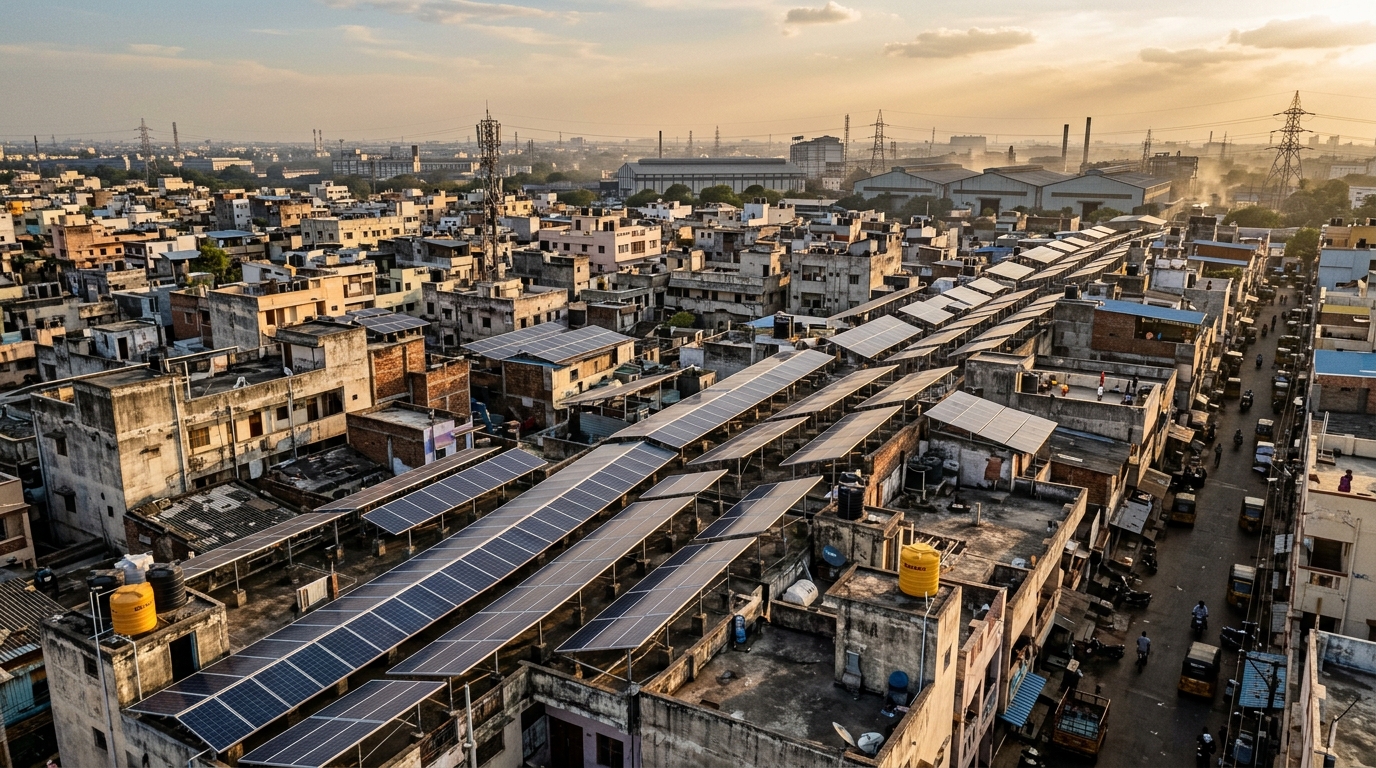
The Institute for Energy Economics and Financial Analysis (IEEFA) published on August 4 a report identifying rooftop solar as the primary driver of distributed energy resources (DER) in Australia, India, and Bangladesh. In India, that capacity grew from 1.8 GW in fiscal year 2018 to 31.5 GW in fiscal year 2026.
DERs are small-scale technologies installed close to the point of consumption: rooftop solar, solar irrigation, biogas, and batteries. The report, titled "Role of Distributed Resources in Energy Transition: A Multi-Country Perspective," compares three deployment models. In Australia, panels cover 40% of households and rooftop solar grew from near zero to 13% of national electricity market generation between 2014 and 2025, while coal's share fell from 75% to 52%. The contrast with India is the figure that matters most for Latin America: growth is driven by subsidies, concessional financing, and public policy, not merely by declining technology costs, according to the report.
In Bangladesh, industrial rooftop solar is the fastest-growing segment: official data report 418.1 MW through June 2026, while IEEFA estimates 667 MW across 239 facilities and close to 1,000 MW when units below 0.15 MW are included, figures reported by The Business Standard. That deployment has modestly reduced daytime electricity demand. In Australia, federal subsidies for residential batteries added nearly 10 GWh of installed capacity in under a year. For India, SolarQuarter cites official estimates of 637 GW of technical rooftop potential and more than 29 million irrigation pumps convertible to solar. The report recommends expanding storage alongside rooftop solar, accelerating smart meter deployment, and improving access to financing for households, farmers, and small businesses.
The comparison across the three countries offers a reference point for Mexico and Latin America: subsidy policy and concessional financing, more than technology cost, explain the scale India has achieved. Battery deployment and smart metering within the region's distributed generation programs will be the indicator to watch.
This article was drafted with artificial intelligence assistance from verified sources and reviewed by a human editor before publication.
Sources
Related stories
This article was drafted with AI assistance from verified sources and reviewed by a human editor before publication.