IEEFA: 30% Battery Mandate Can Unlock Mexico's Wind and Solar Expansion
IEEFA calculates that requiring batteries at 30% of capacity can unlock wind and solar expansion in Mexico and bring the official 32,000 MW target within reach by 2030.
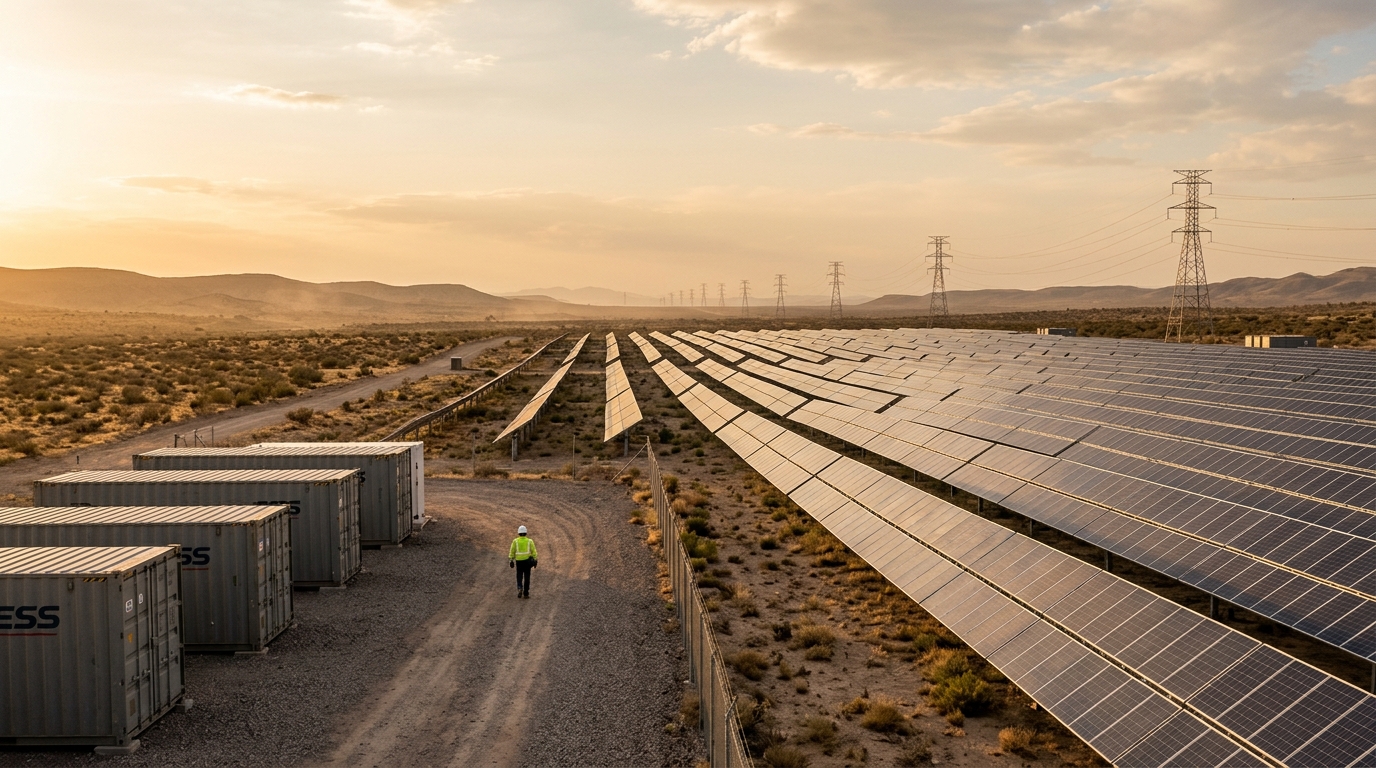
An analysis by the Institute for Energy Economics and Financial Analysis (IEEFA), published on August 10, 2026, concludes that Mexico's new regulatory framework, which requires awarded renewable projects to include batteries of at least 30% of their capacity, can unlock a much larger expansion of utility-scale wind and solar in the country.
The report does not revisit the June procurement announcement but analyzes its forward implications. In that tender, Mexico selected 7,410 megawatts (MW) of utility-scale solar and wind projects from nearly 38,000 MW proposed, according to IEEFA; roughly 6,700 MW are photovoltaic and 700 MW are wind. All must include battery storage equivalent to at least 30% of their capacity, with three hours of duration. The official plan, presented by the Office of the President on June 24, targets 32,000 MW by 2030, of which 70% (22,000 MW) will come from renewable sources. Interconnection studies, contracts, and permits are advancing toward year-end close.
The analysis benchmarks Mexico against the northern border states. In New Mexico, coal and gas generation fell from over 99% of the total in 2001 to 47% in 2025, while utility-scale wind and solar rose from 8% to 52%, according to the report. In Texas, coal and gas dropped from 87% to 58% over the same period, with wind and solar above 34%. IEEFA attributes the shift to the rapid integration of batteries, which reduced prices during peak hours, increased grid stability, and reduced the need for peaker plants. In Mexico, the strongest solar resources are in the north and west, and wind resources in the northeast and Oaxaca, while demand is concentrated in the country's center.
What comes next: interconnection studies and contracts for the 7,410 MW, which the government expects to finalize by year-end. If the storage mandate holds, IEEFA estimates Mexico can add roughly 5,000 MW of batteries by 2030 and accelerate the official 32,000 MW target. That is the figure worth watching.
This article was drafted with artificial intelligence assistance from verified sources and reviewed by a human editor before publication.
Sources
Related stories
This article was drafted with AI assistance from verified sources and reviewed by a human editor before publication.