IDB Approves $204 Million to Connect Bolivia's Isolated Grid to Brazil
The multilateral financing package aims to replace diesel generation in isolated Bolivian Amazon communities through integration with the Brazilian grid and solar-plus-storage systems.
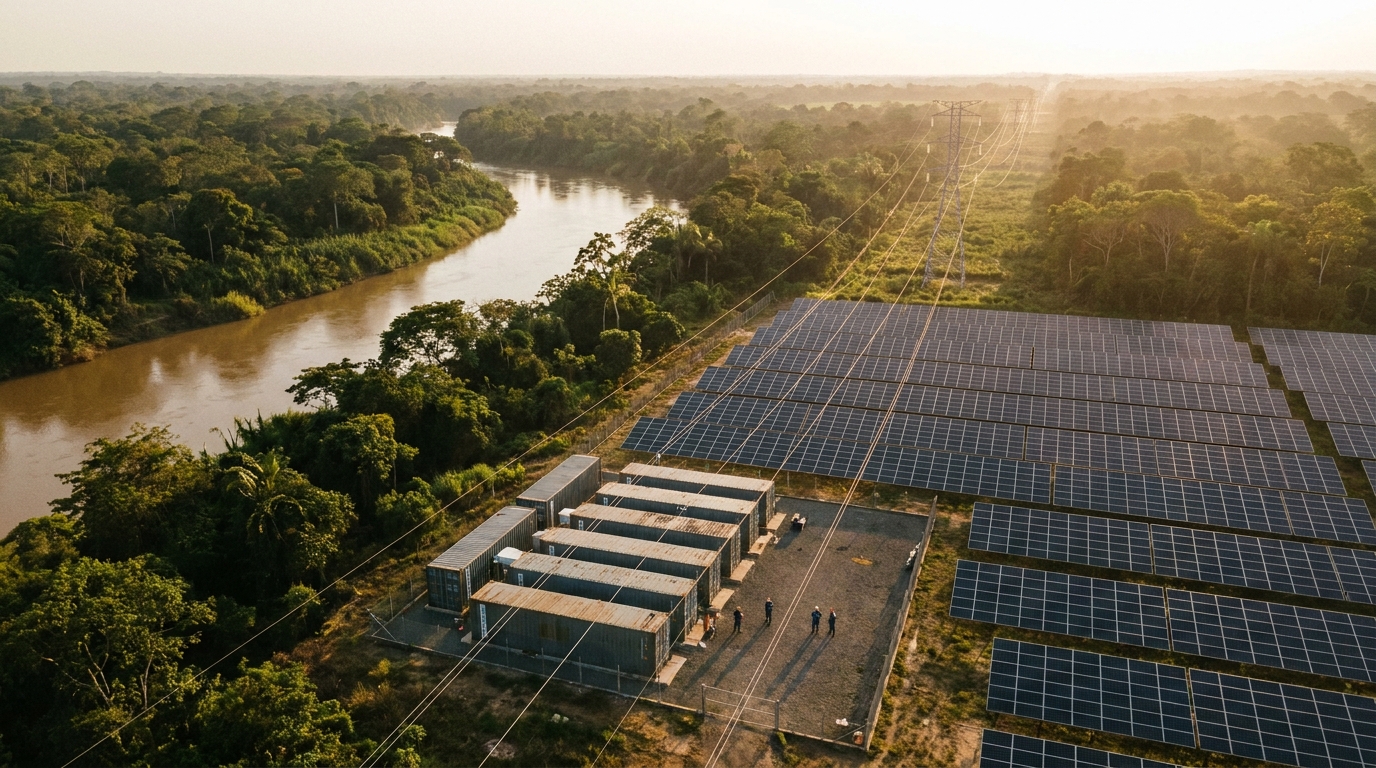
The Inter-American Development Bank (IDB) approved on July 24 a $204.2 million financing package to interconnect the isolated electricity systems of northern Bolivian Amazonia with Brazil's grid. The program, which includes solar plants with battery energy storage systems (BESS) for remote communities in Pando and Beni, will benefit more than 209,000 residents and replace generation from imported diesel.
The cities of Cobija, Riberalta, and Guayaramerín, along with dozens of rural communities in the Bolivian Amazon, currently rely on isolated diesel generation systems, a source that is expensive, logistically complex, and carbon-intensive. The program, framed within the IDB's Amazonía Siempre and Conexión Sur initiatives, will connect Cobija to the distribution system of the Brazilian state of Acre, and Riberalta and Guayaramerín to the Rondônia grid, integrating this region into Bolivia's National Interconnected System for the first time via Brazil. For the region, the project sets a replicable precedent for other Amazonian and Central American border areas facing similar energy isolation challenges.
The financing package combines three instruments: an IDB ordinary capital loan of $142.2 million over 23.5 years at a SOFR-based rate, a concessional credit from the Clean Technology Fund (CTF) of $60 million over 30 years at a fixed rate of 1.33 percent, and a $2 million non-reimbursable grant from the Climate Investment Funds (CIF). Bolivia's national electricity company ENDE (Empresa Nacional de Electricidad) will serve as the executing agency. The program also includes modernization of distribution networks across the three cities, with smart metering systems, control centers, and cybersecurity infrastructure. Solar photovoltaic plants with BESS will supply the most remote communities where grid extension is not feasible. The Bolivian government projects annual fiscal savings exceeding $52 million from reduced diesel imports and a reduction of 150,000 tons of carbon dioxide per year.
The IDB has not yet published an implementation timeline, but the scale of the financing and the involvement of multilateral climate funds suggest that construction and interconnection contracts will be tendered in the coming months. The project will serve as a signal of multilateral appetite for financing grid integration across Latin America, beyond traditional interconnections between larger countries.
This article was drafted with artificial intelligence assistance from verified sources and reviewed by a human editor before publication.
Sources
Related stories
This article was drafted with AI assistance from verified sources and reviewed by a human editor before publication.