Hormuz Closure and U.S. Tariffs Expose Mexico's Dependence on Imported Gas
The Persian Gulf conflict strained global LNG markets just as USMCA uncertainty complicates Mexico's energy infrastructure.
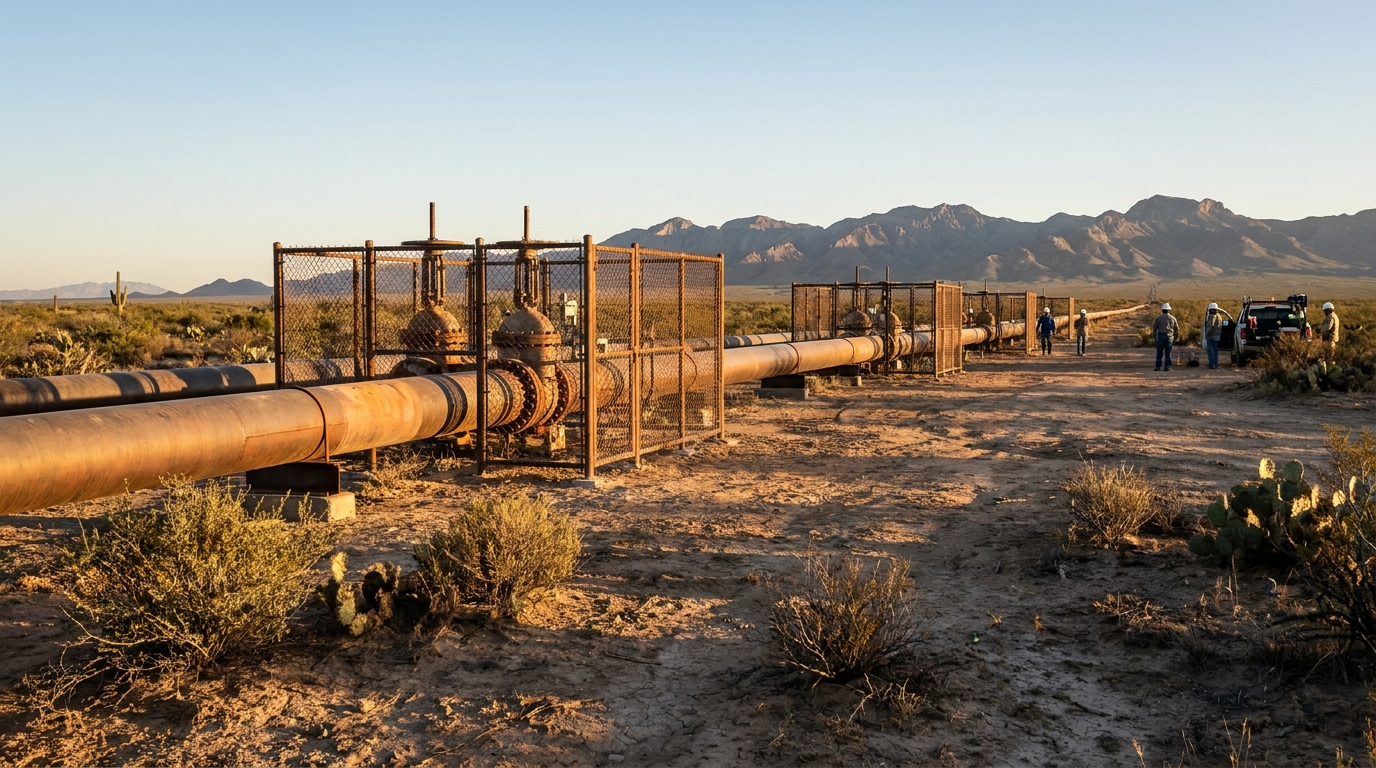
The U.S. Energy Information Administration (EIA) projected in June 2026 that the Strait of Hormuz is operating at effectively closed capacity, with reopening expected in the third quarter of the year. Middle Eastern producers cut more than 11 million barrels per day in May relative to pre-conflict levels with Iran, and the global liquefied natural gas (LNG) market absorbed the blow.
The price shock does not reach Mexico via the Persian Gulf maritime route, but through the market. Most of the natural gas Mexico consumes arrives via pipelines from the United States, under the energy integration framework established by the United States-Mexico-Canada Agreement (USMCA): that dependence means movements in the Henry Hub spot price translate directly into the national import cost. When global LNG markets tighten due to a crisis like Hormuz, pressure rises across the entire supply chain. The Atlantic Council, in its June 12, 2026 analysis, warned that uncertainty over USMCA renewal threatens the integration of continental oil, gas, and electricity markets.
Qatar's LNG facility has remained shut since March, according to the same Atlantic Council; U.S. LNG cargoes have partially covered the shortfall via the spot market. The EIA projects U.S. LNG exports at 17.2 billion cubic feet per day in 2026, with the Henry Hub spot price at $3.60 per million British thermal units (MMBtu). For Mexico, U.S. tariffs on steel and aluminum add a second risk front: according to David Goldwyn of the Atlantic Council, those tariffs complicate energy infrastructure development, raising the cost of expanding import pipelines at a time of growing demand.
The EIA expects the Strait of Hormuz to reopen in the third quarter of 2026, making that the first milestone to watch. The second is the USMCA renewal negotiations: progress on those talks will determine the investment certainty Mexico needs to reduce its structural dependence on imported gas.
This article was drafted with artificial intelligence assistance from verified sources and reviewed by a human editor before publication.
Sources
Related stories
This article was drafted with AI assistance from verified sources and reviewed by a human editor before publication.
← All news