Fervo and Google Sign the Largest Next-Generation Geothermal Deal: 396 MW
Fervo and Google sign the largest next-generation geothermal power purchase agreement: 396 MW from Cape Station in Utah. The purchase can be expanded to nearly 1 GW by 2030.
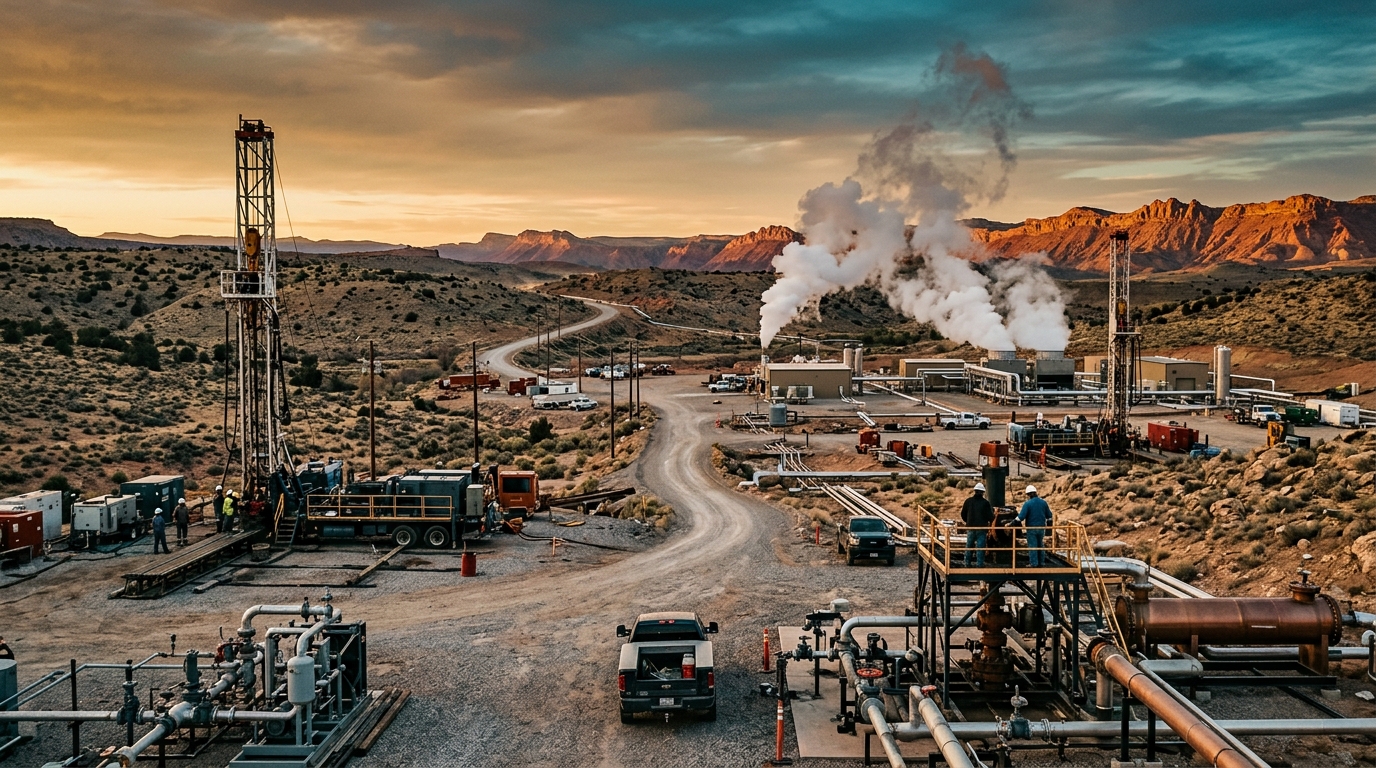
On September 1, 2026, developer Fervo Energy and Google signed the largest power purchase agreement (PPA) for next-generation geothermal energy on record: 396 megawatts (MW) from the Cape Station project in Utah, Canary Media reported.
This is the largest contract for an enhanced geothermal system (EGS), a technology that drills into hot dry rock to generate electricity from underground heat. Houston-based Fervo will invest more than $2 billion in Cape Station and projects it will be the world's largest EGS when it comes online in 2028, Bloomberg reported. Geothermal energy currently accounts for 0.4% of U.S. electricity generation, and its expansion depends on drilling techniques borrowed from the hydrocarbon industry, expertise from the Gulf Basin that companies like Fervo are bringing to new geographies. For the region, the deal signals that firm, clean generation is already competing for large-scale contracts driven by the electricity demand of artificial intelligence data centers.
Fervo is developing Cape Station's first phase at 100 MW and plans to generate test electricity with a 33 MW unit in the fourth quarter of 2026; the contract supports the second phase, of roughly 400 MW, set to operate by 2028. The company estimates capital costs of $7,000 per kilowatt (kW) in phase one and $5,500 in phase two. Google, which will purchase the electricity for a potential data center in Utah, can expand the agreement by roughly 600 MW before June 2030, to nearly 1 gigawatt (GW), and holds a right of first refusal on up to 3 GW of future Fervo plants. The developer's shares rose 15% on the day of the announcement, following its IPO in May; the companies did not disclose the PPA price.
The next milestone is the 33 MW unit Fervo plans to bring online in the fourth quarter of 2026, Cape Station's first real generation. On the horizon, the figure to watch is whether Google exercises its option to expand the purchase by 600 MW before June 2030; the technology company has not yet determined where it will build the Utah data center that would consume that electricity.
This article was written with the assistance of artificial intelligence based on verified sources and reviewed by a human editor before publication.
Sources
Related stories
This article was drafted with AI assistance from verified sources and reviewed by a human editor before publication.