Eight Oil Majors Post $93 Billion in Combined Profits on Crude Price Rebound
Eight of the world's largest oil companies posted combined record profits of $93 billion in the quarter, driven by a crude price rebound; the figure sets a benchmark for export and import prices across the region.
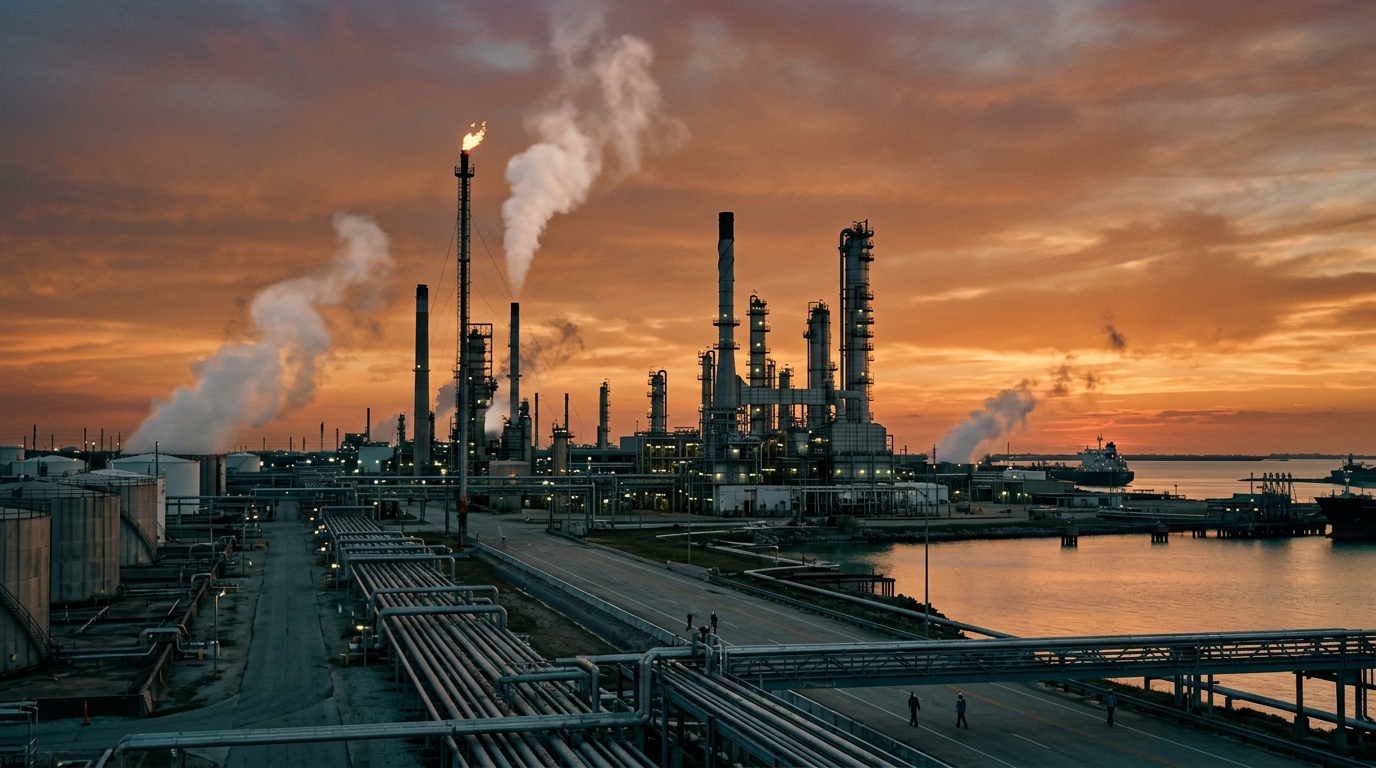
Eight of the world's largest oil companies posted combined profits of nearly $93 billion in the April-June quarter, according to an analysis by The Guardian published on August 4. The figure nearly doubles the $50 billion recorded in the same period of 2025, driven by the crude price rebound following the closure of the Strait of Hormuz.
The eight companies are Aramco, BP, Shell, Equinor, TotalEnergies, Eni, Chevron, and ExxonMobil. AP corroborated on August 4 that European and U.S. oil majors are reporting record profits: ExxonMobil doubled its profit to $14,500 million, with revenues of $116,000 million, and Chevron added $12,000 million. The mechanism is price transmission: Brent, the international benchmark, fell 4.9% to $83.87 per barrel, and the U.S. benchmark crude, WTI, fell 5.4% to $75.98 per barrel, on expectations of a deal to reopen the Strait of Hormuz, through which roughly 20% of the world's oil flows. For the region, the same rebound raised the export value of Mexico's Mezcla crude and increased the cost of imported fuels.
Among the eight, the largest profit was Aramco's: $32,690 million in the second quarter, up 44% from a year earlier, according to AP. Shell reported $9,840 million, its second-highest figure in history, according to The Guardian. Prices remain more than 13% above pre-conflict levels, despite having fallen from a peak above $126 per barrel reached during the escalation. The cost of gasoline, diesel, and aviation fuel is rising in net-importing economies: in parts of Asia, the reduced supply caused by the Ormuz closure led to fuel rationing, according to AP. For Mexico and Central America, the effect arrives through two channels: higher revenues from heavy crude exports and higher costs for imported refined products.
The key variable to watch is the negotiation to reopen the Strait of Hormuz, which on August 4 moved U.S. crude prices by 5.4%. Its outcome will determine the export value of Mezcla crude and the cost of imported refined products across the region.
This article was produced with artificial intelligence assistance from verified sources and reviewed by a human editor before publication.
Sources
Related stories
This article was drafted with AI assistance from verified sources and reviewed by a human editor before publication.