U.S. Imposes 15% Tariff on Polysilicon for Solar Panels and Chips
The order, effective December 4, sets floor prices for solar cells and modules and raises input costs across the regional supply chain.
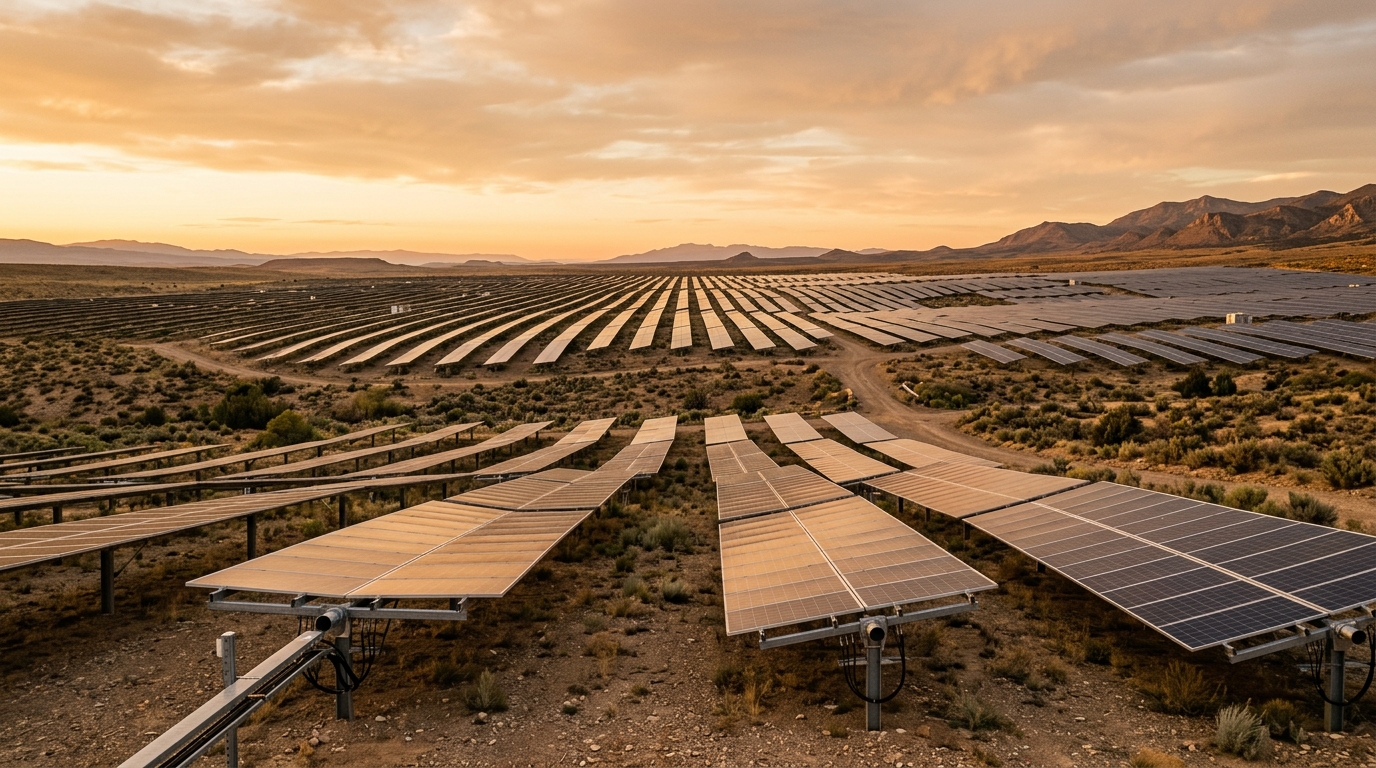
The U.S. government announced on Thursday, August 6, a 15% tariff on imports of polysilicon and its derivatives, effective December 4, according to The Guardian. Polysilicon, an ultrapure form of silicon, is the primary input for semiconductors and most solar panels, and its production is concentrated in China.
The measure stems from an investigation under Section 232 of the Trade Expansion Act of 1962, which allows trade restrictions on national security grounds, and sets minimum import prices effective December 4: $21 per kilogram of polysilicon, $100 per kilogram of ingots and wafers, 22 cents per watt for cells, and 38 cents per watt for modules, according to Canary Media. The United States achieved self-sufficiency in module assembly through incentives under the Inflation Reduction Act of 2022, but continues to depend on imported polysilicon, ingots, and wafers. Its two main polysilicon plants are Hemlock Semiconductor in Michigan and Wacker Chemie in Tennessee. For Mexico and Latin America, the tariff transmits through the supply chain: solar projects in the region source cells and modules from the global market and U.S. suppliers, and the new price floor raises the cost of that segment of the chain.
The price effect is measurable. The average price of a solar module in the U.S. market was 27.1 cents per watt in the Anza Renewables database, making the new floor of 38 cents 40% higher. Installed cell capacity totals 10.6 gigawatts, according to the Solar Energy Industries Association, and only four companies produce them domestically: Qcells, ES Foundry, Suniva, and Silfab. Analyst Pavel Molchanov of Raymond James estimates the floor will leave modules at close to five times the global reference price. China's Foreign Ministry spokesperson Lin Jian accused the United States of stretching the concept of national security and abusing state power against Chinese companies, according to The Guardian.
The key variable to watch is the price trajectory toward December 4, including inventory build-up in the pre-deadline window, a risk flagged by attorney Tim Brightbill, a longtime advocate for solar tariffs. Also worth watching are the incentive programs the Department of Commerce may create for polysilicon manufacturers and exemptions for companies with construction plans approved before January 20, 2029.
This article was drafted with artificial intelligence assistance from verified sources and reviewed by a human editor before publication.
Sources
Related stories
This article was drafted with AI assistance from verified sources and reviewed by a human editor before publication.