Colombia: De la Espriella Wins Runoff with 49.66%, Plans Oil Exploration and Fracking Revival
The president-elect, who takes office August 7, plans to reverse the suspension of exploration contracts and legalize fracking in Latin America's fourth-largest oil exporter.
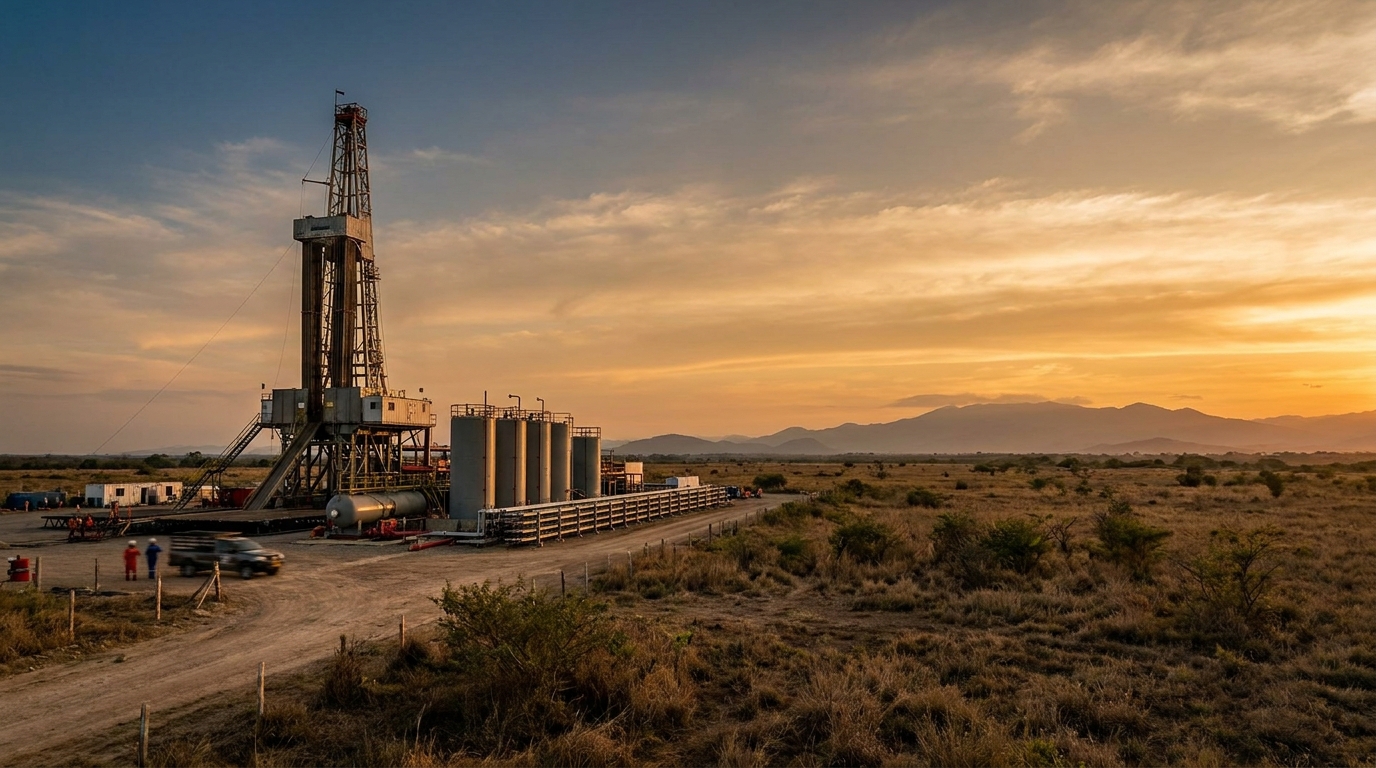
Abelardo de la Espriella won Colombia's presidential runoff on June 21, 2026, with 49.66% of the vote. He takes office August 7. His agenda: reactivate oil and gas exploration contracts and legalize fracking, both suspended under Gustavo Petro's administration.
Colombia is Latin America's fourth-largest oil exporter and the world's sixth-largest coal exporter. Fossil fuels account for roughly 7% of GDP and 56% of the country's exports, according to Carbon Brief. During his 2022-2026 term, Gustavo Petro suspended new exploration and production contracts, banned fracking pilots, and signed Colombia onto the Fossil Fuel Non-Proliferation Treaty. Oil output remained at historically low post-pandemic levels, while solar generation grew more than 630% over the same period, according to Climate Change News.
De la Espriella has pledged to lift oil production to 1.3 million barrels per day, nearly double current output, and has said he will push fracking to the limit, according to Carbon Brief. He also plans to restructure state oil company Ecopetrol and cut the permitting timelines that have stalled hydrocarbon projects. Fiscally, the incoming government inherits tight constraints: 78% of the statutory debt ceiling has been consumed, according to Bloomberg Línea. Foreign direct investment fell by a third, and renewable energy investment dropped 70% over the same period, despite 96% of Colombians supporting solar expansion, Climate Change News reports.
Colombia's election adds to a rightward shift across Ecuador, Bolivia, Chile, Costa Rica, and Argentina over the past 18 months, and coincides with Petrobras reclaiming its position as Latin America's top stock market listing. When De la Espriella takes office on August 7, the question of whether exploration and production capital returns to one of the region's last remaining oil frontiers will start to take shape.
This article was drafted with artificial intelligence assistance from verified sources and reviewed by a human editor before publication.
Sources
Related stories
This article was drafted with AI assistance from verified sources and reviewed by a human editor before publication.
← All news