China Exports $140 Billion in Clean Technology in the First Half of 2026
China's clean-tech exports now account for 6.6% of total exports, more than doubling their 2020 share and widening the manufacturing gap with the United States.
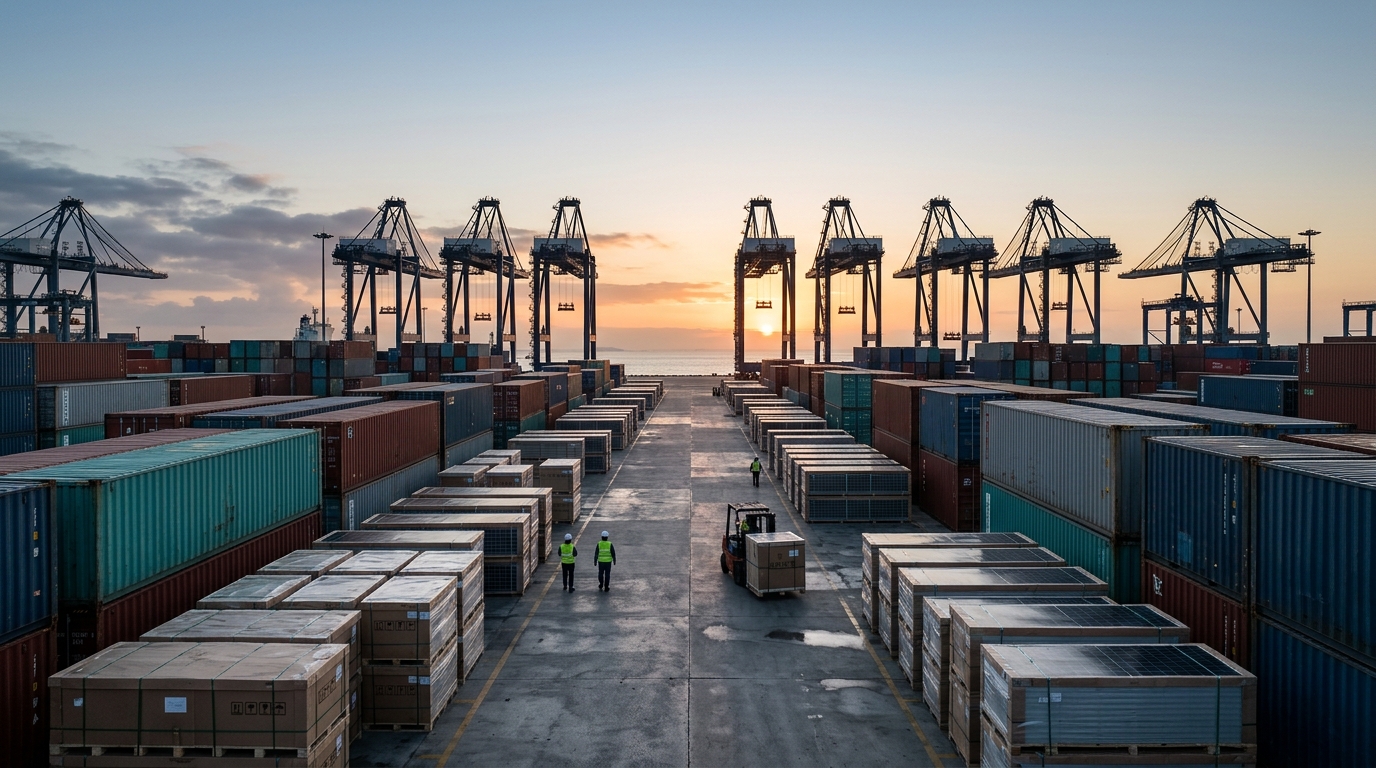
China's clean-technology exports reached $140 billion in the first half of 2026, representing 6.6% of total national exports and more than double the 2.7% share recorded in 2020, according to a report by Ember published on September 8, 2026.
That figure brings solar panel, battery, and electric vehicle manufacturing close to the weight carried by China's three historic export pillars: apparel, furniture, and household appliances. It arrives as Chinese electricity demand grew 5% in 2025, was covered entirely by clean generation, and total consumption set a record of 10.4 trillion kilowatt-hours; solar capacity surpassed coal capacity for the first time, according to data cited by Latitude Media. That outlet frames the figure as a widening of the "energy dominance" gap with the United States: a policy emphasis on exporting oil and LNG, combined with tariffs on clean manufacturing, positions the United States as a commodity supplier rather than a technological competitor to China.
Brazil imported enough Chinese electric vehicles to triple its registration figures in a single year, sub-Saharan Africa increased its Chinese solar panel imports by 37% year over year, and Pakistan purchased more than 50 gigawatts of modules, according to the report. The gap matters for Latin America, whose energy transition depends increasingly on Chinese-origin technology. U.S. tariffs did not slow the expansion; they redirected it toward the Global South. In the United States, 2025 was the first year of net negative clean investment since at least 2012, with a decline of $22 billion compared to 2024, according to Latitude Intelligence data cited by Latitude Media. Muyi Yang, senior analyst at Ember, said the Chinese economy is moving from expanding its clean system to structurally replacing its fossil fleet, a phase the report describes as "building while breaking."
The open question is whether this advantage leads to dependency or industrialization. In Southeast Asia, panel imports are already scaling into local cell and silicon manufacturing; the next indicator to watch is whether Latin American countries purchasing this technology follow the same path.
This article was produced with AI assistance from verified sources and reviewed by a human editor before publication.
Sources
Related stories
This article was drafted with AI assistance from verified sources and reviewed by a human editor before publication.