CFE Reports All-Time Electricity Demand Record of 54,300 MW, Surpassing CENACE Projection
Mexico's National Electricity System reached 54,300 MW on July 23, 2026, an all-time record that surpasses CENACE's own projection for the season. Nearshoring and data centers are the primary drivers.
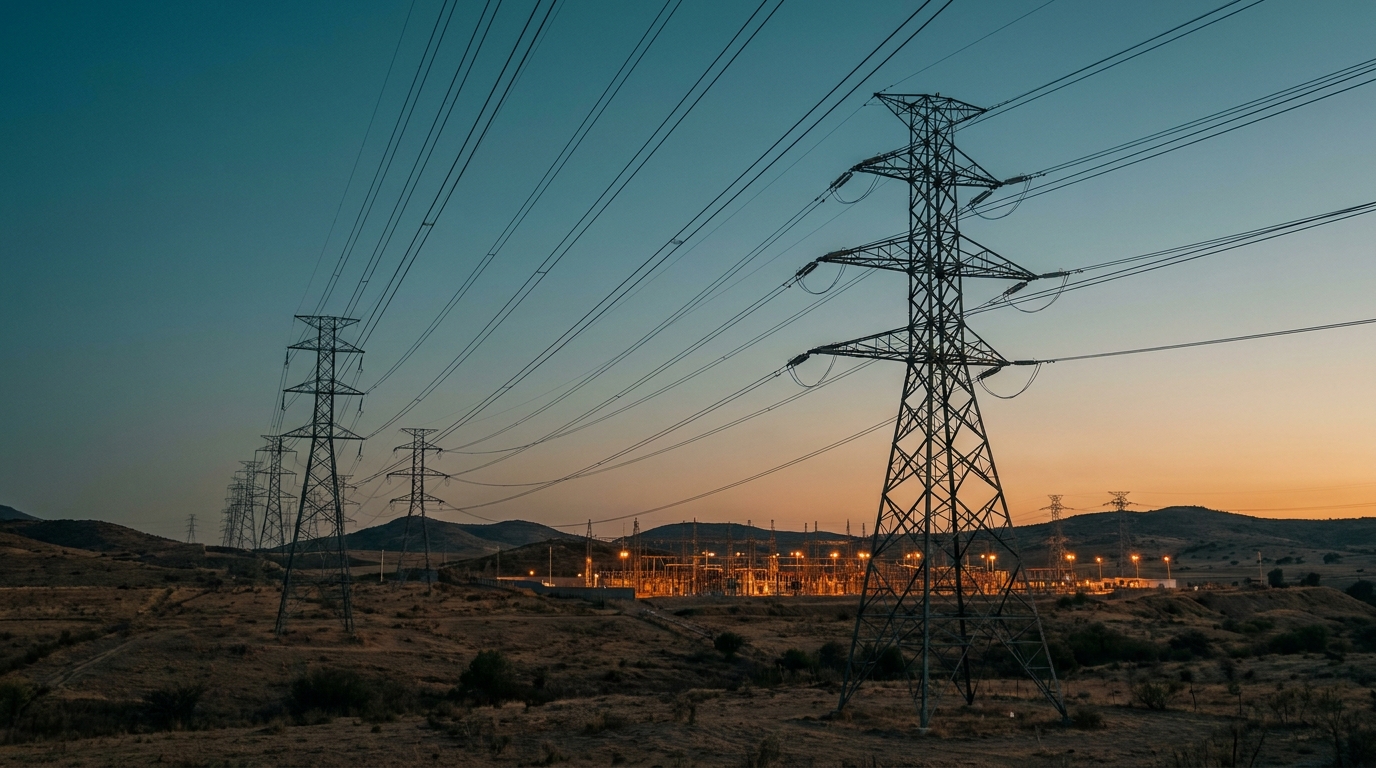
Mexico's National Electricity System (SEN) set a new all-time demand record of 54,300 megawatts (MW) on Thursday, July 23, at 20:22 hours, according to El Financiero. The figure surpassed the previous peak set on June 21, 2023, and exceeded the 54,000 MW that the National Energy Control Center (CENACE) had projected for the summer of 2026.
The announcement was made by Juan Francisco Cuevas Villagómez, Director of Engineering and Infrastructure Projects at the Federal Electricity Commission (CFE), during the Latin American Forum on Refining, Petrochemicals, and Energy Transition (LARPET 2026). The previous record had gone unbroken in 2024 and 2025 due to moderate weather conditions. Current demand growth is no longer a function of population increase. It is being driven by economic digitalization, supply chain reshoring (nearshoring), and the proliferation of data centers, all of which require intensive electricity consumption and continuous cooling. According to the CFE official, a traditional industrial park demands between 10 and 20 MW, while today's data center projects reach between 200 and 300 MW, up to 30 times more.
Mexico has an installed capacity of 93,402 MW (nearly double the observed consumption peak), though not all of that capacity is simultaneously dispatchable. The record was set at 20:22 hours, precisely when solar generation falls to zero and the system becomes fully dependent on combined-cycle plants, which according to the Mexican Institute for Competitiveness (IMCO) supply 61% of the country's electricity, per El Universal. The vulnerability of this evening ramp is particularly acute on the Yucatan Peninsula, identified by CENACE as the system's most sensitive point due to natural gas supply reliability constraints. As a reinforcement measure, the Elvia Carrillo Puerto combined-cycle plant (499 MW) began commercial operation in May 2026, and the federal government has programmed 275 new transmission lines and 524 substation projects between 2025 and 2030 to expand transport capacity and reduce grid congestion.
With summer still underway and the demand record already above projections, system performance through the remainder of the high-temperature season will be a critical indicator of whether Mexico's transmission and generation infrastructure can absorb the accelerating growth in industrial consumption driven by nearshoring.
This article was written with artificial intelligence assistance based on verified sources and reviewed by a human editor before publication.
Sources
Related stories
This article was drafted with AI assistance from verified sources and reviewed by a human editor before publication.