IEEFA: More Carbon Capture Was Cancelled in Europe in 2025 Than Was Financed
IEEFA calculates that 5.4 million tonnes of proposed carbon capture capacity were cancelled in Europe in 2025, versus 4.2 million that reached final investment decision
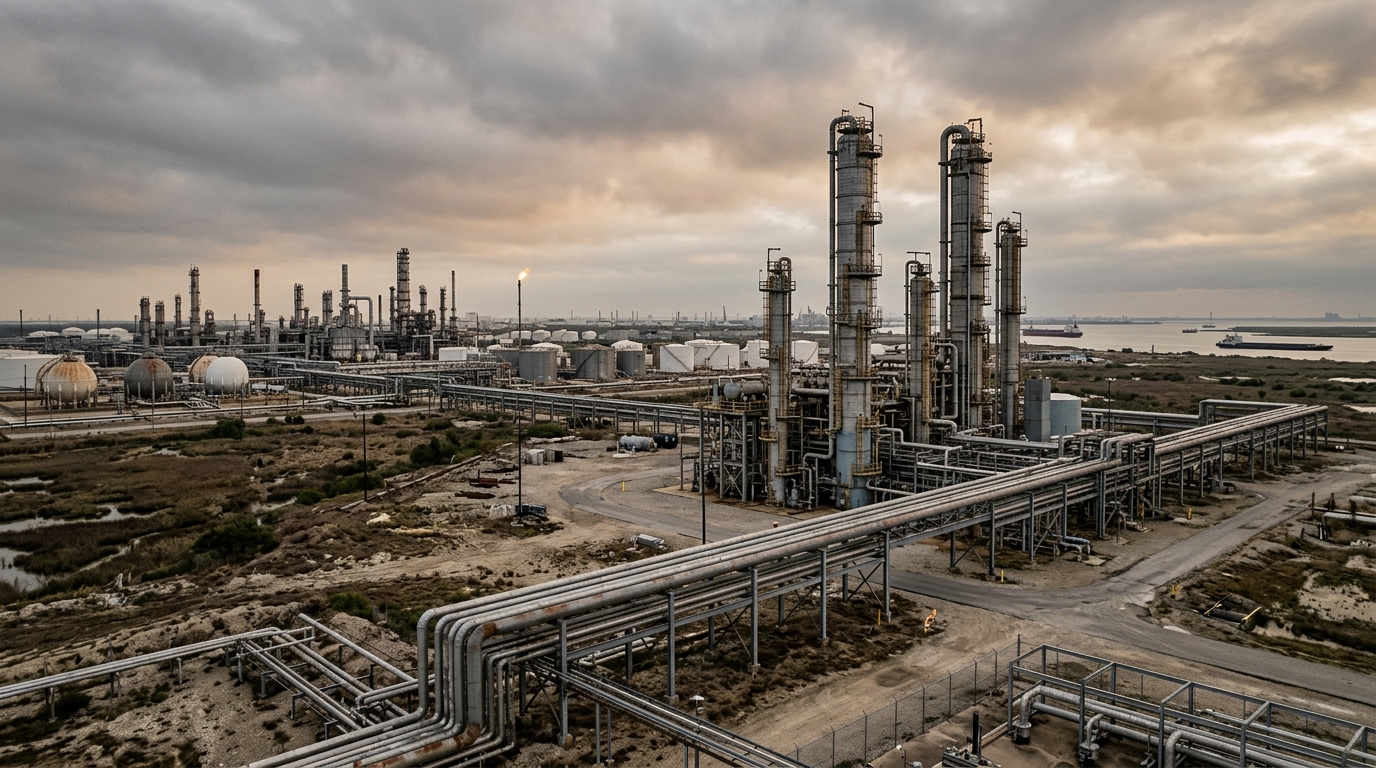
An IEEFA analysis published on 11 August 2026 concludes that carbon capture is failing the capital discipline test. In Europe, during 2025, 5.4 million tonnes (Mt) of proposed annual capture capacity were cancelled, while only 4.2 Mt reached final investment decision, with blue hydrogen accounting for 71% of the cancelled volume.
The trend is not limited to Europe. In the United States, Air Products announced in June that it will not proceed with its blue hydrogen and carbon capture complex in Louisiana, a 4,500-million-dollar project, because expected returns did not meet its profitability criteria. The company anticipates a pre-tax charge of up to 2,900 million dollars. IEEFA estimated that the project could have claimed up to 6,300 million dollars under the federal 45Q tax credit even without net emissions reductions, a case of private returns sustained by public policy. The institute concludes that project announcements should not be read as evidence of a bankable market.
Technical performance compounds the financial risk. The world's largest commercial carbon capture project, Chevron's Gorgon in Australia, stored only 25% of the CO₂ removed from its reservoir, at an effective cost of 265 Australian dollars per tonne, nearly four times the original estimate of 70. In a review of 13 flagship projects, IEEFA found that underperformance was the norm, not the exception. European announcements fell from 100 in 2021 to 24 in 2025, according to IEEFA. On the technology's weight in the transition, the institute calculated, based on the International Energy Agency's World Energy Outlook 2025, that carbon capture, utilisation and storage (CCUS) contributes less than 5% of emissions reductions in a net-zero scenario, while renewables, electrification and efficiency account for more than 82%.
That capital discipline standard is the same benchmark investors will apply to any carbon capture proposal emerging from Mexican refineries or the Brazilian pre-salt. It is worth watching whether the next regional announcements come accompanied by demand contracts and revenue structures, not just subsidies.
This article was drafted with artificial intelligence assistance from verified sources and reviewed by a human editor before publication.
Sources
Related stories
This article was drafted with AI assistance from verified sources and reviewed by a human editor before publication.