California Denies $70 Million for Its Largest Virtual Power Plant
California denied 2027 funding for the DSGS program, its largest virtual power plant, casting doubt on the peak demand management model that Latin America has been watching.
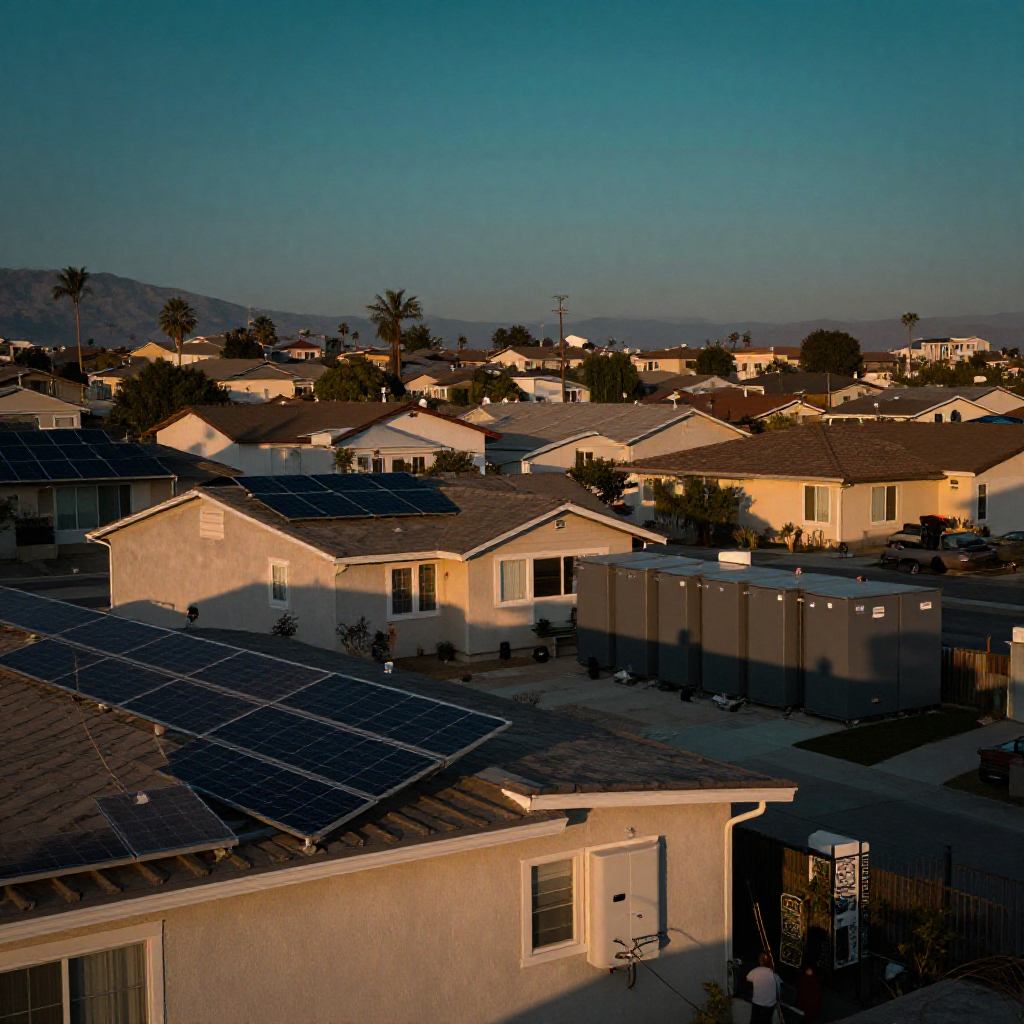
California did not authorize 2027 funding for the Demand Side Grid Support (DSGS) program, the largest virtual power plant in the United States, according to state budget language finalized on August 31, 2026. The program totals more than one gigawatt of collective capacity.
DSGS was launched in 2022 by the California Energy Commission (CEC) and aggregates approximately 130,000 homes with batteries and around 75,000 with smart thermostats and flexible-load devices. In tests organized in July 2025, its resources dispatched more than 539 megawatts of average output over two hours, according to Utility Dive. The final budget language excluded a legislative proposal to transfer $70 million to the program and did not advance the transfer of its oversight to the California Public Utilities Commission (CPUC), a change that clean energy groups viewed as a dismantlement risk. Canary Media reported that, without secure funding, it is uncertain how companies such as Sunrun, Tesla, Leap, and Renew Home will be able to pay participants for supporting the grid.
The decision follows the program's loss of funding in 2024 and 2025, and a $27 million transfer that kept it operating through 2026. A Brattle Group study commissioned by Tesla and Sunrun, the largest participants, projected up to $206 million in net system savings in a scenario where the program operates through 2028. California's government proposed moving enrolled users to the Emergency Load Reduction Program (ELRP), administered by Pacific Gas & Electric, San Diego Gas & Electric, and Southern California Edison, which pays $1 per residential kWh and $2 per non-residential kWh for each emergency event. The outcome is of interest to Mexico and other Latin American markets, where the virtual power plant is viewed as a low-cost reference model for managing peak demand without new generation capacity.
Keeping DSGS under the CEC opens the door to reviving it in early 2027, possibly under a new administration, said a spokesperson for state Senator Josh Becker. California's 2027-28 budget is reviewable until July 1, 2027, when the fiscal year begins.
This article was prepared with artificial intelligence assistance from verified sources and reviewed by a human editor before publication.
Sources
Related stories
This article was drafted with AI assistance from verified sources and reviewed by a human editor before publication.