Brent falls below the $100 threshold for the first time in two weeks
Brent closed below $100 for the first time in two weeks after the US-Iran talks at the UN; the Mexican blend fell to 96.83.
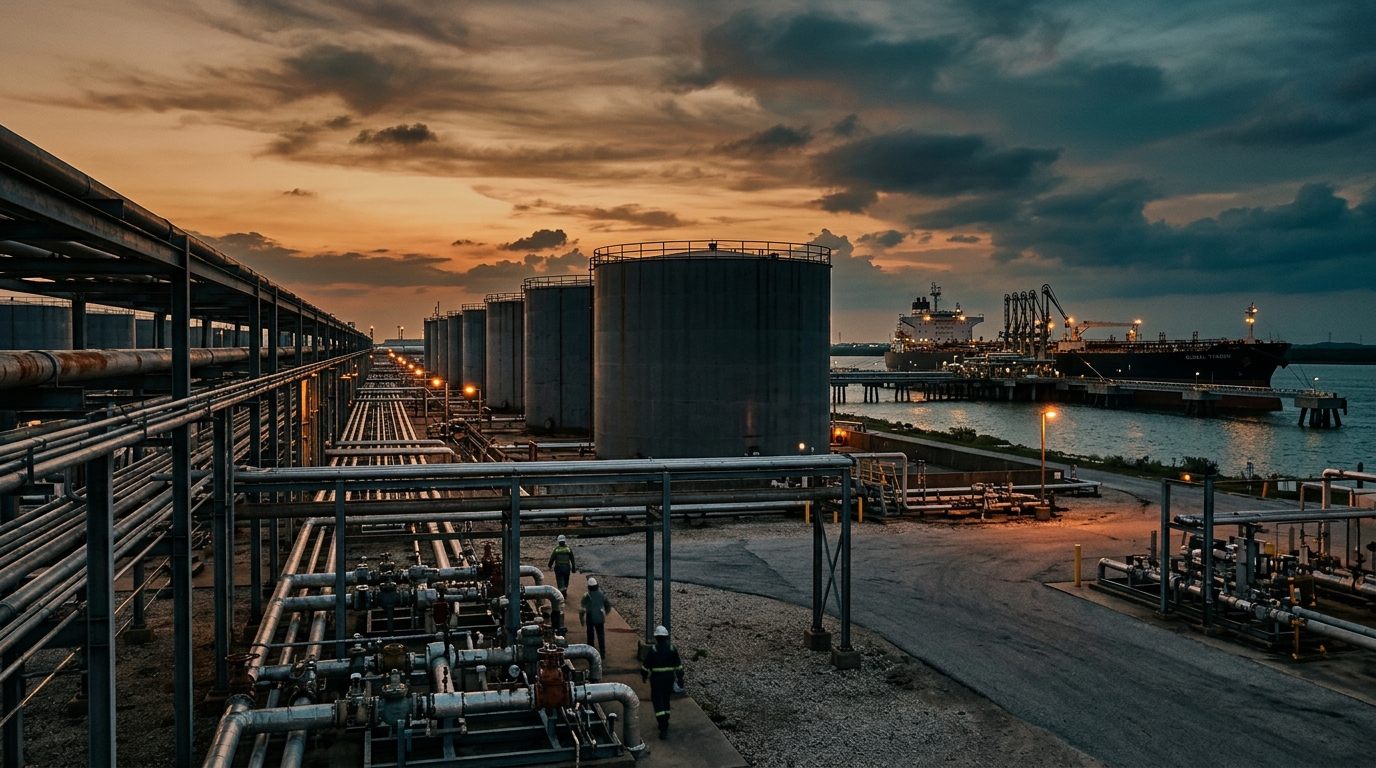
Brent closed on Tuesday, September 22 below $100 a barrel for the first time in two weeks, after three hours of talks between the United States and Iran at the UN headquarters, according to The Guardian. The Mexican export blend closed on Monday, September 21 at 96.83 dollars per barrel, a decline of 4.24%, according to the market report from El Economista.
The talks, mediated by Qatar, brought together Iranian Foreign Minister Abbas Araghchi with White House envoys Steve Witkoff and Jared Kushner. Witkoff described the meetings as encouraging, constructive and successful, according to The Guardian. Iranian Foreign Ministry spokesman Esmail Baghaei confirmed that the talks took place, but did not confirm a change in Tehran's negotiating position, the newspaper adds. On the supply side, satellite data cited by El Economista show an average of 2.9 million barrels per day (mb/d) passing through the Strait of Hormuz over the last six days, compared with 700,000 barrels per day in August. For Mexico, the Mexican export blend is the price benchmark for the crude the country sells abroad and one of the variables the government tracks for its oil revenue estimates.
Brent closed on Monday, September 21 at 100.34 dollars per barrel, a drop of 3.4%, and West Texas Intermediate (WTI) at 95.78 dollars, a decline of 4.51%, both at their lowest level since September 9, according to the same report. In Asian trading on Wednesday, September 23, Brent traded around 98.30 dollars per barrel, a drop of close to 1%, heading toward its sixth consecutive session of losses, according to OilPrice. The decline also accompanies a partial recovery in crude shipments from Saudi Arabia.
The market is watching two signals. The next round of talks between Washington and Tehran, which Donald Trump placed within a near-term timeframe, and the Strait of Hormuz, which Iran said could reopen in seven days if its conditions are met, according to The Guardian. Aramco, for its part, is working to return some 4 million barrels per day through the East-West pipeline, according to OilPrice.
This article was written with the assistance of artificial intelligence from verified sources and reviewed by a human editor before publication.
Sources
Related stories
This article was drafted with AI assistance from verified sources and reviewed by a human editor before publication.