4-Hour Batteries Now Cost Less Than Peaking Gas in 43 Markets
Wood Mackenzie reports that 4-hour batteries now cost less than peaking gas in 43 markets and projects 7 TWh of installed storage by 2035.
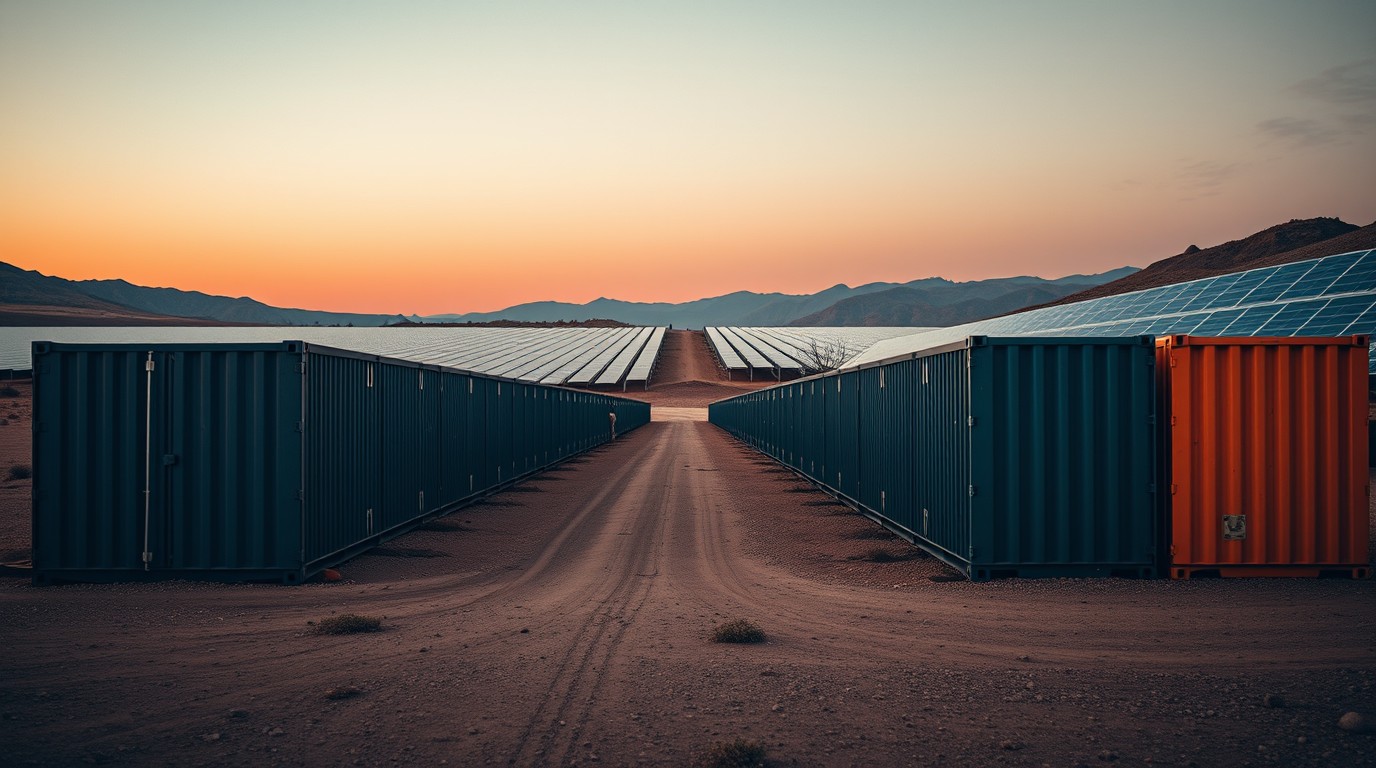
Four-hour batteries now cost less than open-cycle gas turbines in the 43 markets Wood Mackenzie modeled, according to its levelized cost of electricity (LCOE) report published on October 8, 2026. Single-axis tracking solar is the cheapest new source in 43 of 48 markets.
The crossover responds to two pressures, according to the consultancy: gas turbine scarcity and fuel volatility raise the cost of backup, while battery manufacturing expands scale and pushes prices lower. Ahmed Jameel Abdullah, principal analyst at Wood Mackenzie, attributes the shift to that dual movement and argues that storage and solar together are redefining the economics of a power system. In Latin America, pv magazine reports that single-axis tracking solar leads by irradiation, that grid-scale storage LCOE falls 42% by 2060, and that regional storage mandates and grid-stability purchases sustain demand. For Mexico, an importer of storage technology, the data shifts the calculus for the backup capacity contracted for the National Electric System and for industrial demand.
In the Middle East and Africa, utility-scale solar averages 37 USD/MWh, while four-hour storage is priced at 120 USD/MWh in 2026 and is projected at 80 USD/MWh for 2035, 33% less. In Asia Pacific, China's grid storage benchmark is more than 55% below the regional average of 134 USD/MWh, with a projection of 92 USD/MWh toward 2036. In North America, tariffs and import restrictions keep near-term solar costs high, with 168 GW of safeguarded capacity and module prices rising 5% annually through 2030. In its global storage outlook, pv magazine reports that cumulative capacity will exceed 7 TWh in 2035, with growth near 30% in 2026, and describes the commercial and industrial segment as the emerging demand.
The next data point to watch is Wood Mackenzie's global storage outlook webinar on November 3. Another milestone is July 2027: India will require new solar and wind projects to have co-located storage of at least 10% of capacity, with a minimum duration of four hours from 2029.
This article was written with artificial intelligence assistance from verified sources and reviewed by a human editor before publication.
Sources
Related stories
This article was drafted with AI assistance from verified sources and reviewed by a human editor before publication.
← All news