Base Power Raises $1 Billion and Triples Its Valuation to $13 Billion
Base Power closes a $1 billion Series D led by Ribbit and JPMorganChase, lifting its valuation to $13 billion and reinforcing the case for residential battery storage.
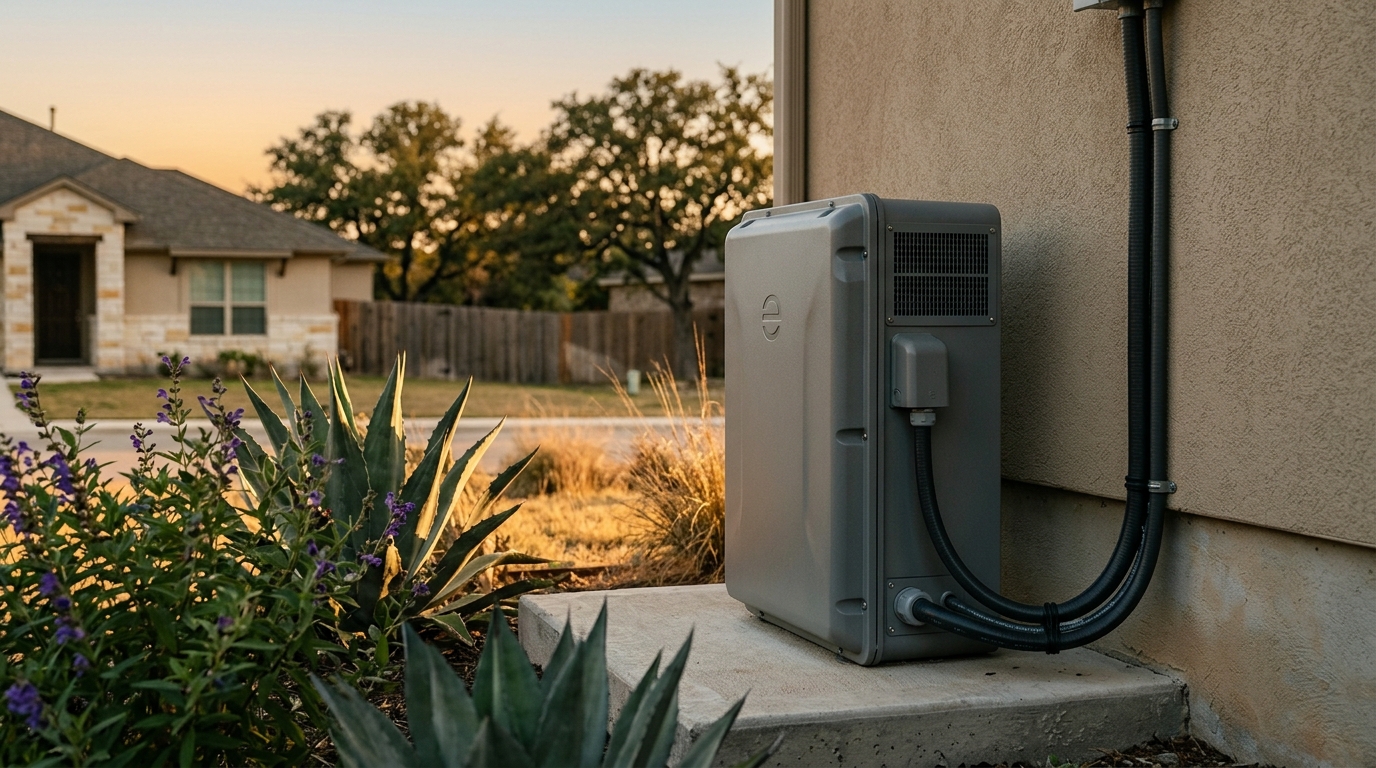
Base Power, the Austin, Texas-based residential battery startup, closed a $1 billion Series D round that lifted its valuation from $4 billion to $13 billion, Canary Media reported on August 5, 2026. The round was led by Ribbit, Addition, Valor Equity Partners, and JPMorganChase's strategic investment arm.
The raise comes less than a year after the company closed another $1 billion round in October 2025, when its valuation stood at $4 billion. The business model installs batteries in homes for an upfront fee of $95 to $695 plus an electricity subscription; in exchange, the company aggregates capacity onto the grid during periods of peak stress. Bloomberg also covered the transaction on August 3, the same day the company announced the close. For the region, the round signals private capital's appetite for distributed storage, a trend that is also accelerating battery deployment across Mexico and Latin America.
In fewer than three years, Base Power has installed batteries in 17,000 homes, mostly in Texas and recently in Illinois, with a fleet totaling more than 500 megawatt-hours of capacity. Its new unit, the Base Core, delivers 20 kilowatts of instantaneous power and stores approximately 40 kilowatt-hours, compared with 5 kilowatts and 14 kilowatt-hours for the Tesla Powerwall. The company has relocated part of its supply chain to Austin, where it already manufactures the Base Core, and has signed a contract to purchase US-made cells beginning at year end. Co-founder and COO Justin Lopas told Canary Media that there is a genuine need for grid capacity in Illinois and Texas, and that distributed batteries add significant capacity.
The figure to watch is the company's installation pace, now backed by a proprietary production line, alongside the mechanisms several states are designing to have data centers pay for distributed capacity. The round positions residential storage as a firm destination for private capital that is also eyeing Latin America.
This article was drafted with artificial intelligence assistance from verified sources and reviewed by a human editor before publication.
Sources
Related stories
This article was drafted with AI assistance from verified sources and reviewed by a human editor before publication.