USMCA Review Begins July 1 with Energy as the Central Negotiating Issue
The USMCA review kicks off July 1 with the energy sector as its central battleground. Mexico's 54% CFE generation mandate defines the trilateral dispute.
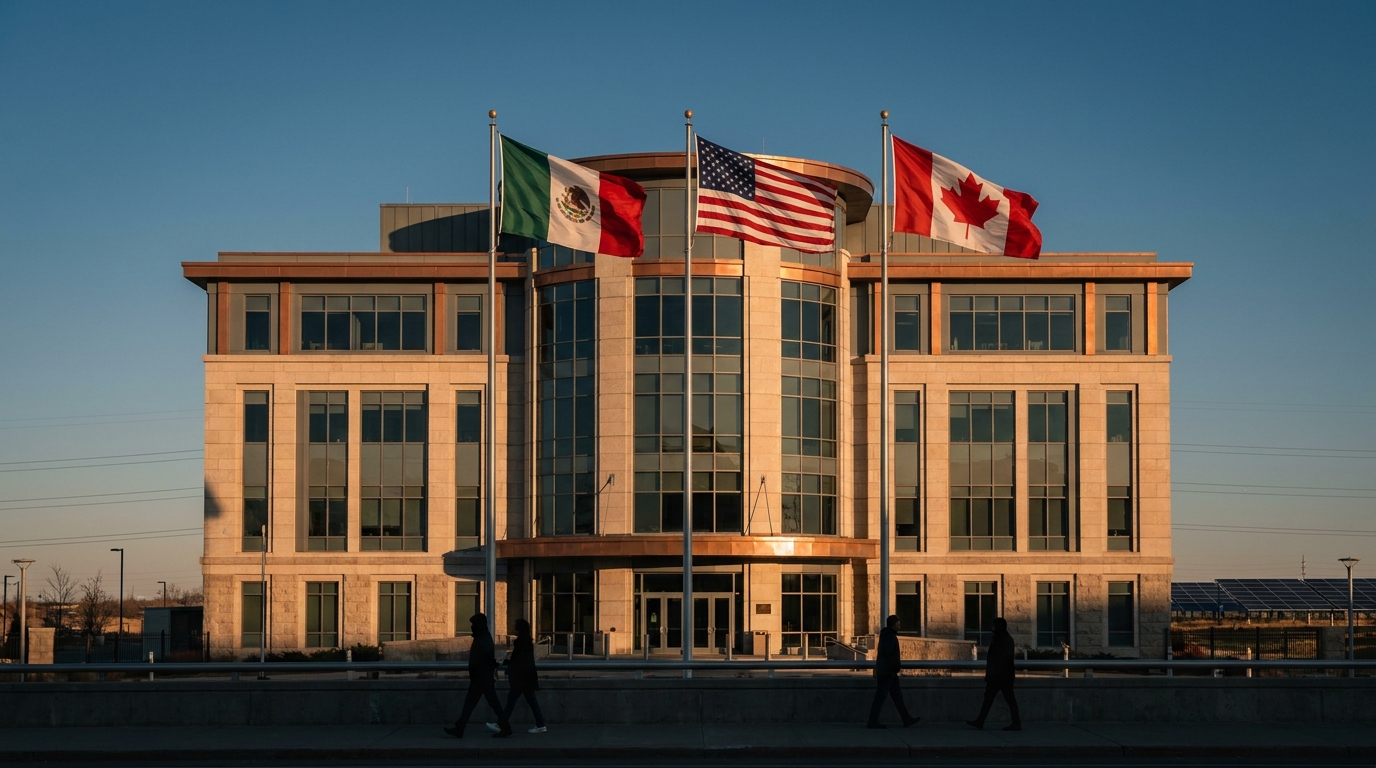
On July 1, 2026, the governments of Mexico, the United States, and Canada will submit their position papers on the future of the United States-Mexico-Canada Agreement (USMCA), in the first mandatory joint review of the accord governing $1.6 trillion in annual trilateral trade. The energy sector sits at the core of the negotiation's central dispute.
Article 34.7 of the USMCA requires that six years after the agreement's entry into force, a milestone reached on this July 1, the three parties must decide whether to extend the treaty for an additional 16 years or let it operate under annual reviews. If no consensus is reached, the agreement remains in force for 10 more years with periodic evaluations, a scenario that Economy Secretary Marcelo Ebrard described as the worst possible outcome on June 24, though he ruled out any withdrawal from the treaty.
Two prior bilateral rounds, held in Mexico City in May and in Washington on June 16 and 17, already addressed agriculture and energy. A third round is scheduled for July 20 in the Mexican capital. According to El Universal, European investors with operations in Mexico are tracking the process closely; Italy's ambassador, Alessandro Modiano, described USMCA continuity as absolutely crucial for companies exporting to the U.S. market.
The dispute centers on Mexico's 2024 and 2025 energy reforms, which reclassified the Federal Electricity Commission (CFE) and Petróleos Mexicanos (Pemex) as public enterprises, set a minimum 54% share for CFE in electricity generation, and granted the state utility priority dispatch on the national grid. The United States and Canada contend that these measures violate the competitive neutrality obligations set out in Chapters 2 and 22 of the USMCA.
Energy Secretary Luz Elena González has argued that Mexico's dependence on Texan natural gas, more than 80% of the country's total consumption, constitutes a national vulnerability. In response, the National Gas Commission (CENAGAS) committed more than 87 billion pesos to expand domestic transmission and storage infrastructure.
The Atlantic Council published a report on June 24 containing nine recommendations to deepen the treaty's institutional implementation, contributing to the debate the review has sparked across the region's policy analysis community.
The trilateral ministerial meeting on July 1, led by U.S. Trade Representative Jamieson Greer and Secretary Ebrard, will set the review mechanism for the coming months. If no consensus is reached in the weeks that follow, the treaty provides for the activation of an energy-sector dispute settlement panel. The third negotiating round is confirmed for July 20 in Mexico City.
This article was drafted with artificial intelligence assistance from verified sources and reviewed by a human editor before publication.
Sources
Related stories
This article was drafted with AI assistance from verified sources and reviewed by a human editor before publication.
← All news