Two in Ten U.S. Storage Projects Are Weighing Operation Without the ITC
The premium on U.S.-manufactured batteries, at $160 to $180 per kWh, means the 30% tax credit does not always pencil out.
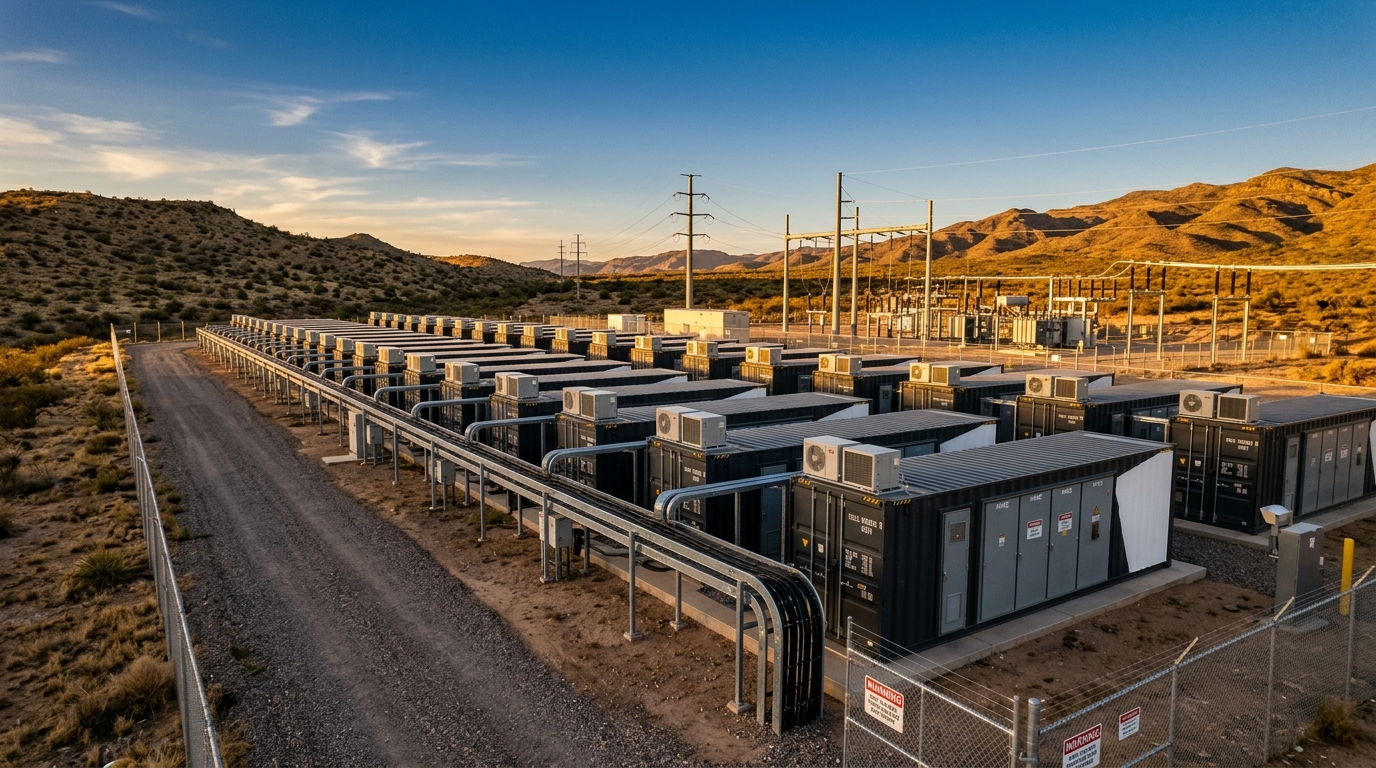
A Latitude Media analysis published on August 28 documented that U.S. storage developers are reassessing whether the 30% investment tax credit (ITC) justifies the premium on domestically manufactured batteries. Two in ten projects are already weighing operation without that benefit, according to Ravi Manghani of the Anza Renewables platform.
The ITC has offered up to a 30% tax credit for battery projects since the Inflation Reduction Act (IRA) extended it to storage in 2022, with requirements such as paying prevailing wages. In 2025, the One Big Beautiful Bill (OBBB) added foreign entity of concern (FEOC) restrictions, which disqualify projects with too much equipment tied to China. The future of that credit is debated within the broader context of the U.S. energy transition: MIT estimates that power-sector emissions will continue declining toward 2035, while models from Energy Innovation, cited by Canary Media, project less than half the reduction anticipated under prior policy. For developers in Mexico and Latin America evaluating their own domestic-content frameworks, the cost dilemma is the same.
Price is the central variable. Chinese battery units start at $70 to $80 per kilowatt-hour (kWh) and reach around $120 per kWh once tariffs, freight, and services are added; units from other countries, subject to lower tariffs, hover around $130 to $140, though they generally fail to meet FEOC rules; U.S.-manufactured units cost $160 to $180, which can be offset by the ITC. On top of that come compliance costs, such as the union labor required by prevailing-wage rules in California and the legal expenses of transferring the credit. Manghani framed it as a math problem: the premium is not recovered simply by subtracting 30% from total cost.
The calculation remains unresolved. The market is waiting for the U.S. Internal Revenue Service (IRS) to clarify what counts as Chinese control and how much foreign debt disqualifies a developer. Samsung SDI and LG Energy capacity will not come online before late 2026. For storage developers in the region, the same math weighs on them before closing financing.
This article was drafted with artificial intelligence assistance from verified sources and reviewed by a human editor before publication.
Sources
Related stories
This article was drafted with AI assistance from verified sources and reviewed by a human editor before publication.