U.S.-Iran Memorandum Reopens Hormuz, Contracts Global Hydrogen Pipeline by 25%
The agreement between Washington and Tehran reconfigured the Strait of Hormuz, but its most lasting effect is measured in cancelled green hydrogen projects and doubled fertilizer prices.
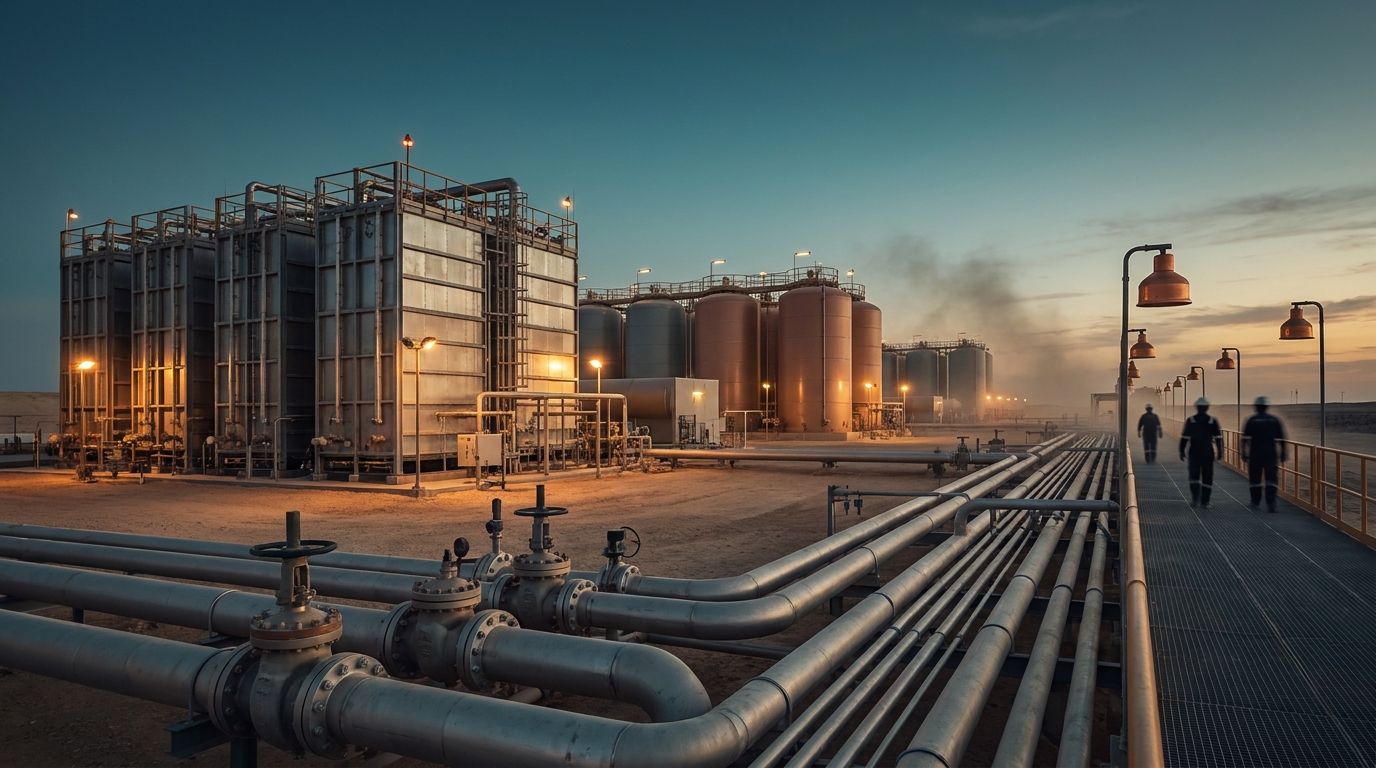
The memorandum of understanding signed on June 19, 2026, between the United States and Iran formalized the reopening of the Strait of Hormuz and ended a blockade that, according to the International Energy Agency (IEA), reduced by roughly 25% the global inventory of low-emissions hydrogen projects with a final investment decision (FID) expected before 2030.
The agreement arrived 70 days after the Washington-Tehran ceasefire, at a moment when global energy markets are absorbing the dual shock of the strait closure and falling crude prices. The Atlantic Council, in an analysis published June 17, notes that the Persian Gulf faces a reconfiguration of its export routes. Iraq, which had already been moving oil by truck through Syria to the Mediterranean, warned that without the reopening it could not cover government salary payments in July. For Mexico, the crude price drop that followed the announcement compresses Pemex export revenue margins, though it temporarily eases pressure on domestic energy subsidy costs.
IEA data published June 18 maps the collateral damage the conflict inflicted on the global energy transition. Global hydrogen demand exceeded 100 million tonnes (Mt) in 2025, yet low-emissions hydrogen production barely reached 1 Mt, a 20% increase that bears no proportion to the required scale. Announced projects for 2030 contracted by roughly 25% in a single year, falling to 27 Mt; those with a final investment decision dropped from 10 Mt to just over 6 Mt. The Middle East region, which contributes roughly one-sixth of global hydrogen production, concentrated much of that contraction. The agency also documents that urea prices, derived from ammonia dependent on regional natural gas, doubled between January and May 2026, raising agricultural input costs in importing markets. China, meanwhile, captured 75% of new electrolyzer installations in 2025, consolidating its manufacturing chain advantage.
The next indicator to watch is the pace at which offtake contracts are restored in Gulf hydrogen projects. Their renegotiation will determine whether projects withdrawn from the FID pipeline return to market before the 2027 auction cycle the IEA anticipates.
This article was drafted with artificial intelligence assistance from verified sources and reviewed by a human editor before publication.
Sources
Related stories
This article was drafted with AI assistance from verified sources and reviewed by a human editor before publication.
← All news