Study Calculates $15.3 Billion Net Value in U.S. Interregional Transmission
An S&P Global study puts the net value of 13 interregional transmission projects in the U.S. at $15.3 billion; PJM leads the benefits.
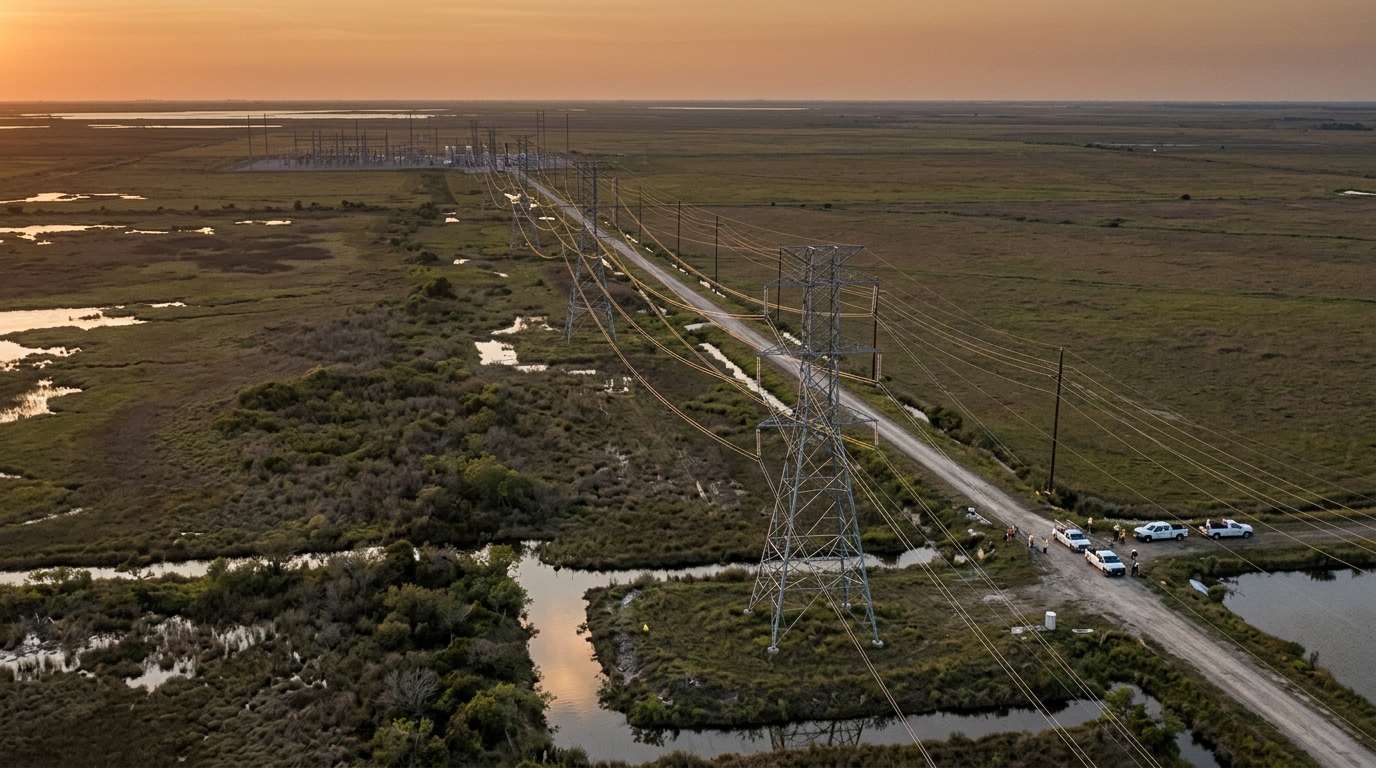
A study by the Electricity Customer Alliance, released on September 1, calculates that 13 inter- and intraregional transmission projects in the Eastern Interconnection of the United States generate net system value of up to $15.3 billion by 2050. Prepared by CERA, part of S&P Global, the analysis finds that these lines reduce retail rates and strengthen reliability.
The demand pressure that this expansion aims to address is also visible in the country's other major electricity market. According to data from the Energy Information Administration (EIA) published on September 3, the average hourly load on the Texas grid, operated by the Electric Reliability Council of Texas (ERCOT), reached a record 74.5 gigawatts (GW) in the week ending August 22 and 73.7 GW the following week. That peak is 10% higher than any week in the summer of 2025, and the last six weeks exceeded the previous record of 70 GW set in 2023. In this context, ERCOT is auditing data center interconnection requests following Governor Greg Abbott's moratorium on new interconnections.
The study crosses two demand levels with two construction scenarios. It identifies 12 high-value projects in the base case and 13 in the high-demand scenario; without constraints on new lines, the net present value under base demand reaches $12.4 billion, with a benefit-cost ratio of 1.77 to 1, and under high demand it reaches $15.3 billion. The largest beneficiary is PJM Interconnection, at $6.7 billion, followed by Southwest Power Pool and MISO South at $1.9 billion, the Southeast at $851 million, and the Northeast at $393 million. The largest component of that value is the reduction in generation capital expenditure, followed by savings in production costs and avoided transmission costs, according to CERA. "Customers need more transmission capacity," said Jeff Dennis, executive director of the ECA.
For Mexico and Latin America, where data center demand is pressing on grid expansion plans, the analysis offers a planning benchmark: evaluating interregional lines by their net benefit to the system, not by cost alone. The next signal will be the transmission permitting debate in the U.S. Congress.
This article was drafted with artificial intelligence assistance from verified sources and reviewed by a human editor before publication.
Sources
Related stories
This article was drafted with AI assistance from verified sources and reviewed by a human editor before publication.