Ukrainian Drones Set Russian Refinery Ablaze; A Third of Refining Capacity Offline
Ukraine struck Russian refineries at Slavyansk and Yaroslavl with 213 drones on June 28, pushing nearly a third of Russia's refining capacity offline.
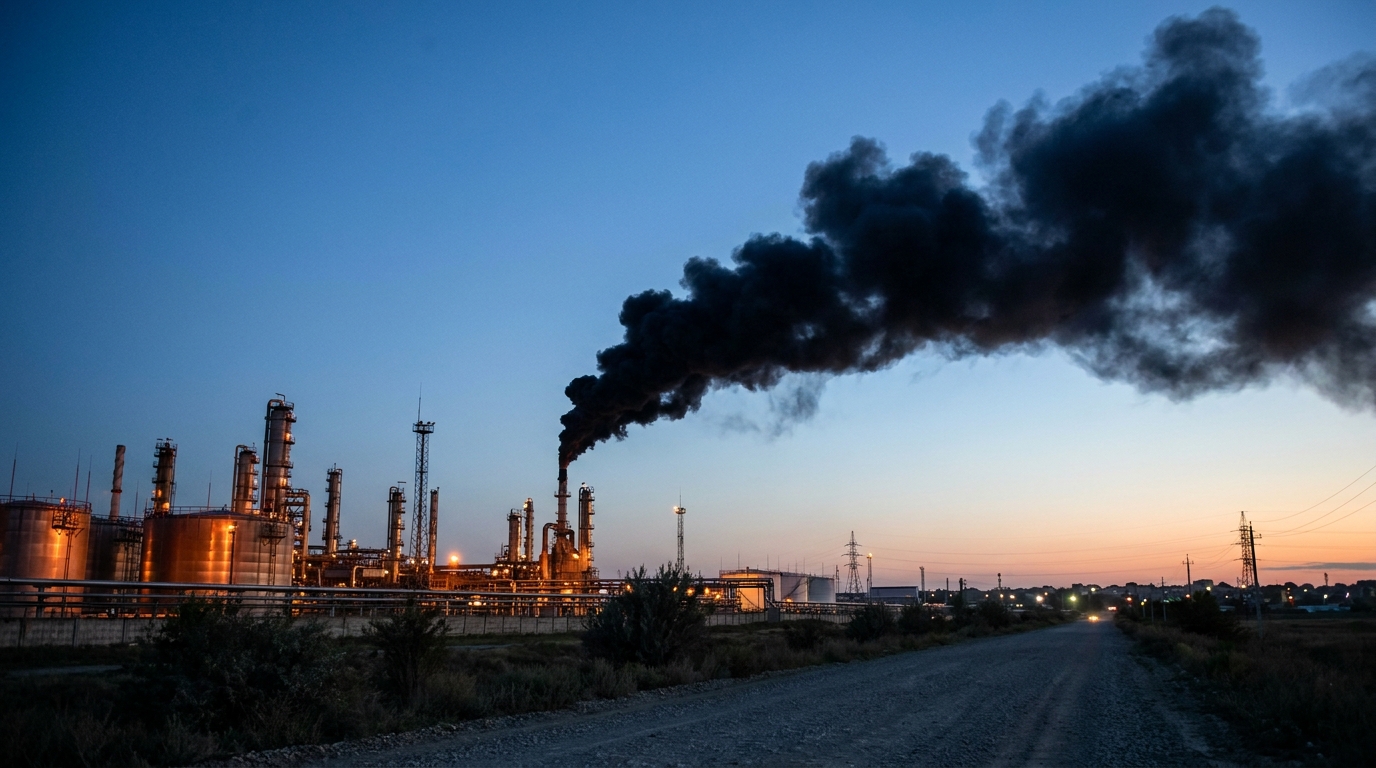
Ukraine launched 213 drones against Russian territory in the early hours of June 28, setting the Slavyansk-na-Kubani refinery in the Krasnodar region on fire and hitting a second facility in Yaroslavl, 700 kilometers from the border. The attack pushes nearly a third of Russia's refining capacity offline.
The overnight offensive, the largest against Russian energy infrastructure in weeks, killed at least one person and injured another in Slavyansk-na-Kubani, while also damaging homes, power lines, and local gas pipelines, according to Associated Press. Ukrainian President Volodymyr Zelensky confirmed the strikes and described the operation as long-range sanctions against the resources that finance Russia's war machine.
The strike adds to a campaign that has paralyzed more than 2.14 million barrels per day (mb/d) of Russian refining capacity since March, nearly a third of the total, according to Energy Intelligence. By mid-June, Russian crude processing had fallen below 4 mb/d, its lowest level in 21 years.
The Slavyansk refinery, with an annual capacity of 4 million tonnes, is one of the largest in southern Russia and supplies fuel to Russian forces in Crimea. The attack also hit the Yaroslavl refinery northeast of Moscow and the Saki thermal power plant on the occupied peninsula.
Russia's refining deterioration coincides with a crisis in the Strait of Hormuz, through which a fifth of global refined product supply passes. Simultaneous pressure on both supply sources has driven up diesel and gasoline premiums in the Atlantic market. Russia has already imposed fuel rationing in Moscow and more than 20 regions, and analysts believe the government is weighing a complete ban on diesel exports.
With nearly a third of Russian refining capacity offline and no clear path to repairs (Western sanctions block access to specialized equipment), the Atlantic diesel market faces a double squeeze that raises fuel import costs for Mexico and Latin America.
This article was drafted with artificial intelligence assistance from verified sources and reviewed by a human editor before publication.
Sources
Related stories
This article was drafted with AI assistance from verified sources and reviewed by a human editor before publication.
← All news