Trump order leaves 23 GW of US batteries waiting on the DOE
The August 26 executive order restricts imported equipment for the high-voltage grid; the Department of Energy defines its scope on December 24.
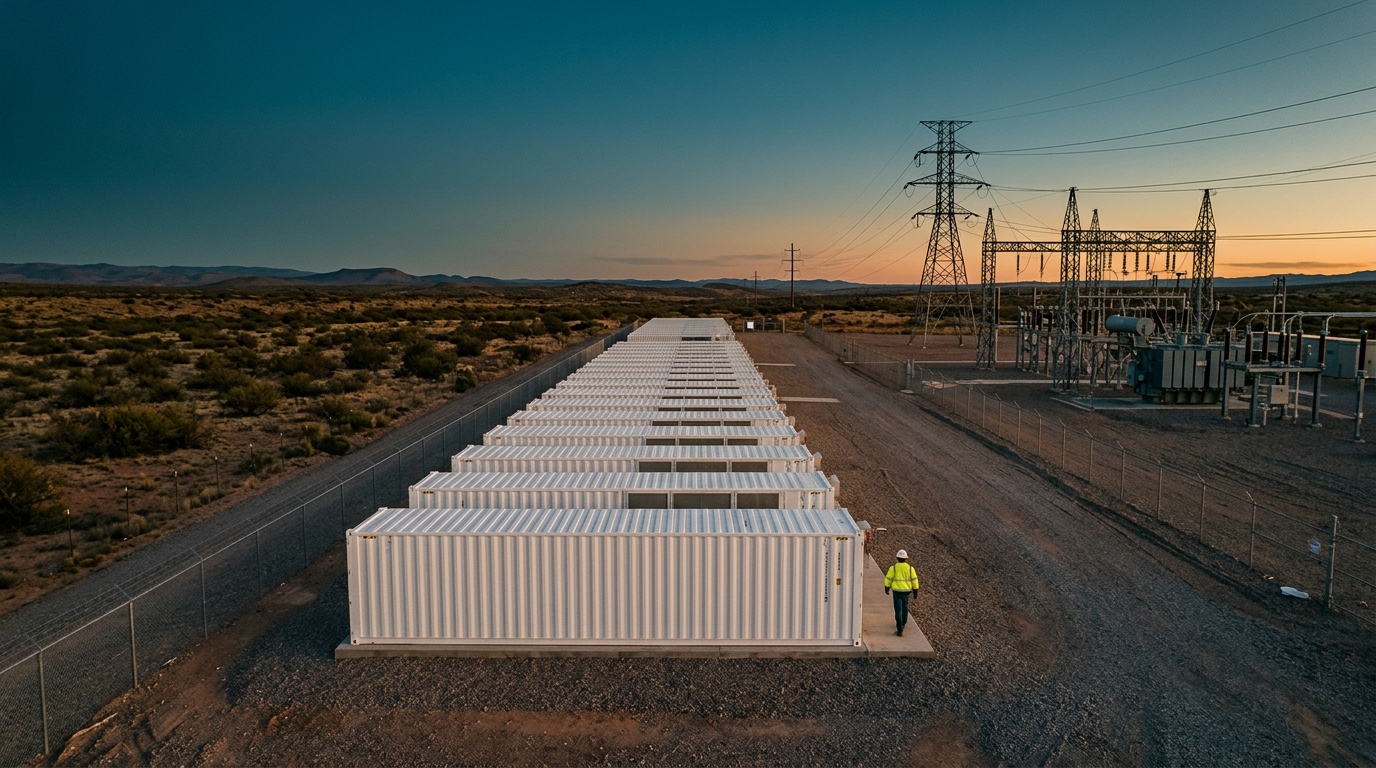
Some 23 GW of utility-scale battery storage projects, already at financial close or under construction in the United States, have been thrown into uncertainty by the executive order Donald Trump signed on August 26, 2026, which restricts imported equipment for the high-voltage grid.
The order declares a national emergency over the risk that foreign-made technology could be used for grid intrusions. It prohibits the acquisition, import, transfer or installation of large-scale power system electrical equipment tied to covered foreign entities, a universe of 24 countries in which China is the relevant supplier. It covers transformers, switchgear, inverters and battery energy storage systems (BESS), plus the associated software and remote access. It applies to transactions initiated from August 26 and also reaches what is already installed: the Department of Energy (DOE) can require existing equipment to be identified, isolated, monitored, disconnected or removed. The agency has until December 24 to publish the rules that set the scope, as Canary Media reports.
China accounts for nearly three-fifths of the lithium batteries installed on the US grid, according to Canary Media, and for about 80% of global cell manufacturing capacity, according to BloombergNEF. On inverters, Chinese-owned plants in Southeast Asia and India supplied nearly 40% of US imports in 2025, according to the same analysis firm. The order follows a record quarter: 20.2 GWh installed in the second quarter of 2026, 10% of the country's storage capacity, according to the Solar Energy Industries Association and Benchmark Mineral Intelligence.
For Mexico the effect is indirect: the transformers and interconnection equipment the United States imports come mainly from Brazil, Canada, Germany, Mexico and South Korea, all outside the list of 24 countries. The counterpart is the supply chain feeding the BESS projects that back solar and wind in the National Electric System (SEN), largely financed and supplied from the United States.
BloombergNEF expects delays and cancellations of battery projects while developers wait for DOE guidance and review contracts already signed. The December 24 rule will define which equipment is shut out of the US market and, with it, the cost of integrating renewables in the region.
This article was written with the assistance of artificial intelligence from verified sources and reviewed by a human editor before publication.
Sources
Related stories
This article was drafted with AI assistance from verified sources and reviewed by a human editor before publication.