Texas Takes 43% of U.S. Venezuelan Crude Imports; Flow Surges to 575,000 b/d
Texas accounts for 43% of Venezuelan crude imported by the United States, with flows rising from 110,000 to 575,000 barrels per day between January and June 2026.
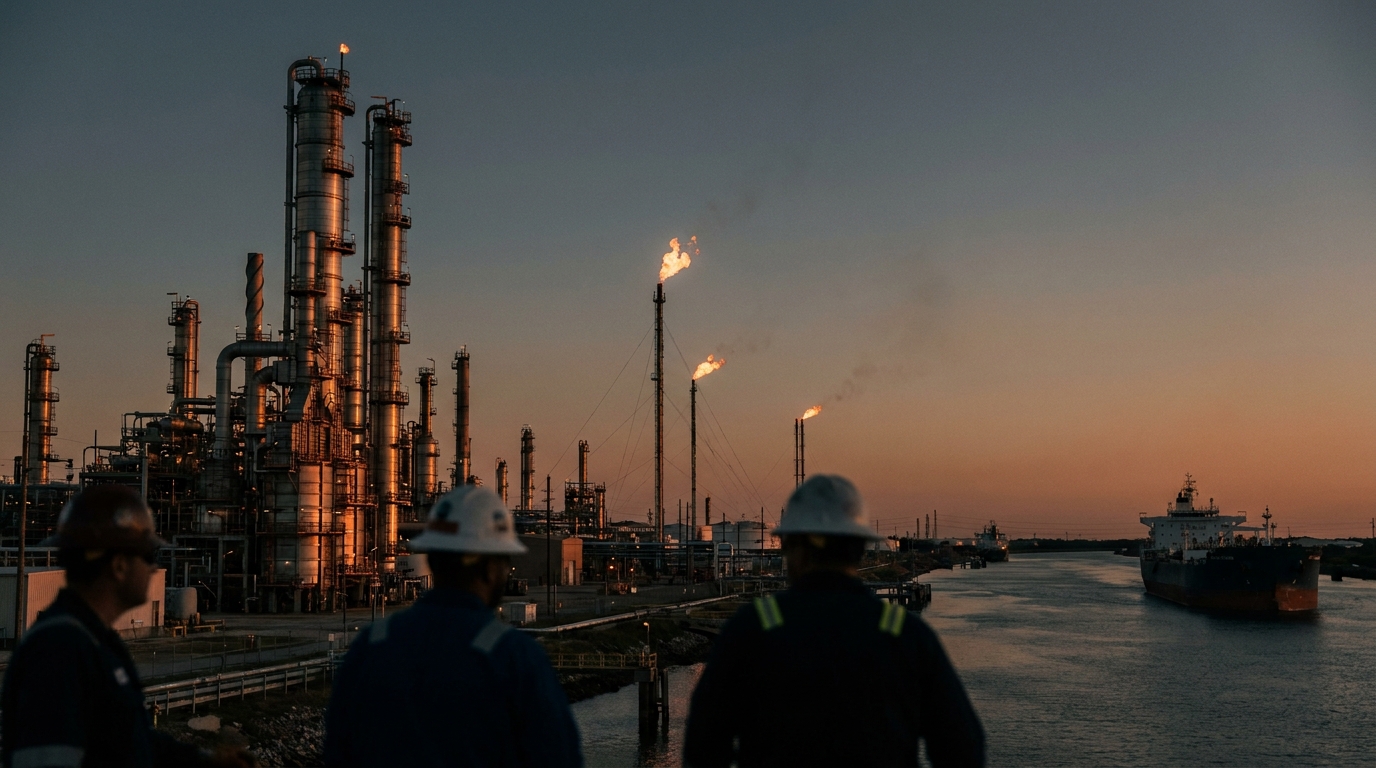
Texas Gulf Coast refineries received 43% of Venezuelan crude imported by the United States so far in 2026, according to S&P Global Commodity Insights. The flow rose from 110,000 barrels per day (b/d) in January to 575,000 b/d in June, the highest volume since 2018.
The surge reflects disruption to Middle Eastern crude supply following the intermittent closure of the Strait of Hormuz since February 2026. Saudi Arabia and Iraq accounted for more than 12% of Texas and Gulf Coast crude imports in 2025, but those volumes have virtually disappeared, according to The Texas Tribune. The International Energy Agency (IEA) described the disruption as the largest in global oil market history. Brent crude prices exceeded $100 per barrel in late July, according to The Guardian, while Asian governments extended fuel subsidies and drew on strategic reserves. For Mexico, the realignment carries direct implications: Texas refineries processing that Venezuelan crude supply gasoline and diesel to the Mexican market.
More than 10 refineries in Texas are equipped to process heavy Venezuelan crude, a grade that requires coking and desulfurization units not all plants possess, according to S&P Global's analysis. Louisiana received 39% of Venezuelan crude imports, while the remainder was distributed between Mississippi and Delaware. Venezuelan production stands at around 1 million b/d, with approximately half destined for the U.S. Gulf Coast. Analyst Kyle Bertamini of Enverus projects Venezuelan production will reach a plateau of 1.15 million b/d in 2027, driven by agreements with Chevron and other international firms, though he does not expect significantly higher volumes until the early 2030s.
Texas's dependence on heavy Venezuelan crude will remain elevated as long as the Strait of Hormuz stays closed. The IEA estimates that Middle Eastern production will not recover to pre-disruption levels until early 2027, keeping Venezuela as a key supply source for U.S. Gulf Coast refineries and, by extension, for Mexico's refined-products market.
This article was written with artificial intelligence assistance from verified sources and reviewed by a human editor before publication.
Sources
Related stories
This article was drafted with AI assistance from verified sources and reviewed by a human editor before publication.