Super El Niño Cuts 33.3 TWh of Hydropower in Brazil and Lifts Gas Demand
NOAA assigns a 75% probability to a historic Super El Niño, and Brazil has already lost 33.3 TWh of hydropower, with upward pressure on regional gas.
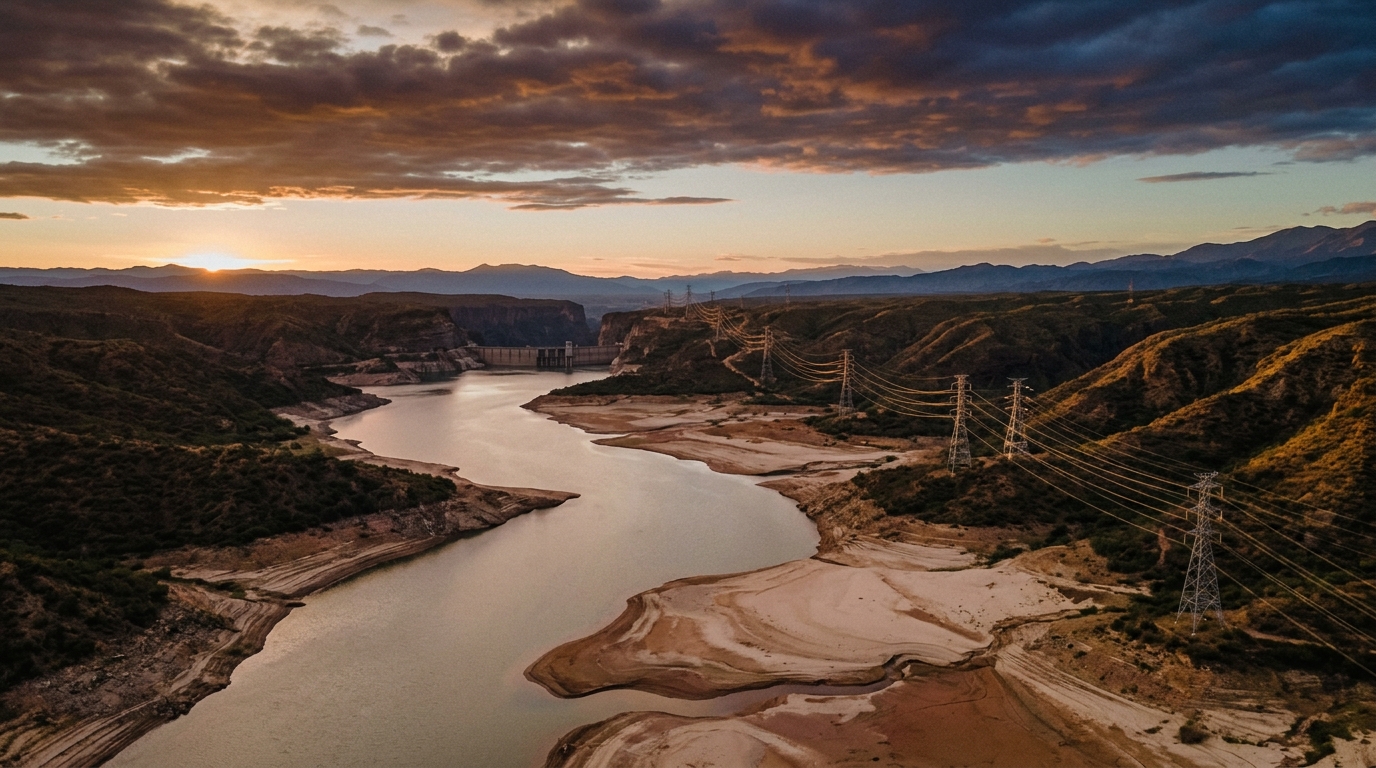
The Super El Niño is already leaving its mark on hydropower generation in Latin America. Brazil had accumulated 33.3 TWh less than its climate norm through August 2026, and Bloomberg Intelligence's scenario sees another 49.5 TWh of losses by the end of the year.
The official diagnosis was published on September 10: NOAA's Climate Prediction Center assigns a 75% probability to a historic episode in the October-December 2026 season, with values of +2.5 °C or higher in the quarterly index, and more than 90% probability of a very strong event. Sea surface temperature anomalies in the eastern equatorial Pacific exceeded +3.0 °C. The Oceanic Niño Index (ONI) estimated by Citi reached about 2.3 °C in early September, above the 2 °C threshold that defines a Super El Niño. Johanna Chua, an analyst at the institution, wrote that "we are now firmly in 'Super El Niño' territory."
Colombia is where the costliest signal is concentrated. Acolgen estimates the cost of rationing at between COP$175 billion and COP$204 billion per hour, with manufacturing, mining and commerce, about 24% of GDP and 30% of the country's employment, among the most exposed sectors. A Fedesarrollo study cited by the association calculates a 1.5 percentage point cut in growth and the loss of some 230,000 jobs. On a regional aggregate, Bloomberg Intelligence values the impact at about 150 million barrels of oil equivalent, 4.1% of primary energy consumption in Brazil, Argentina, Colombia and Chile. Brazil absorbs 135 million, 5.6% of its primary demand. The counterpart is thermal backup: during drought, gas- and coal-fired generation rises from about 30% to more than 50% of Colombia's mix, and Acolgen estimates increases of between 3% and 5% in household bills.
Citi sees Mexico as having benign food inflation dynamics and lower exposure to the phenomenon. The channel that does cross the region is the one Acolgen documents in Colombia: less water in reservoirs shifts generation toward thermal plants that consume imported gas and puts upward pressure on spot prices. The next hard data point comes on October 8, with a new discussion from NOAA's Climate Prediction Center on the phenomenon.
This note was drafted with the assistance of artificial intelligence from verified sources and reviewed by a human editor before publication.
Sources
Related stories
This article was drafted with AI assistance from verified sources and reviewed by a human editor before publication.