Servers Displace Autos as Mexico's Top U.S. Export, Up 179%
Servers grew 179% and are now Mexico's largest export to the U.S., but they depend on Asian inputs. The Atlantic Council proposes rules of origin reform under USMCA.
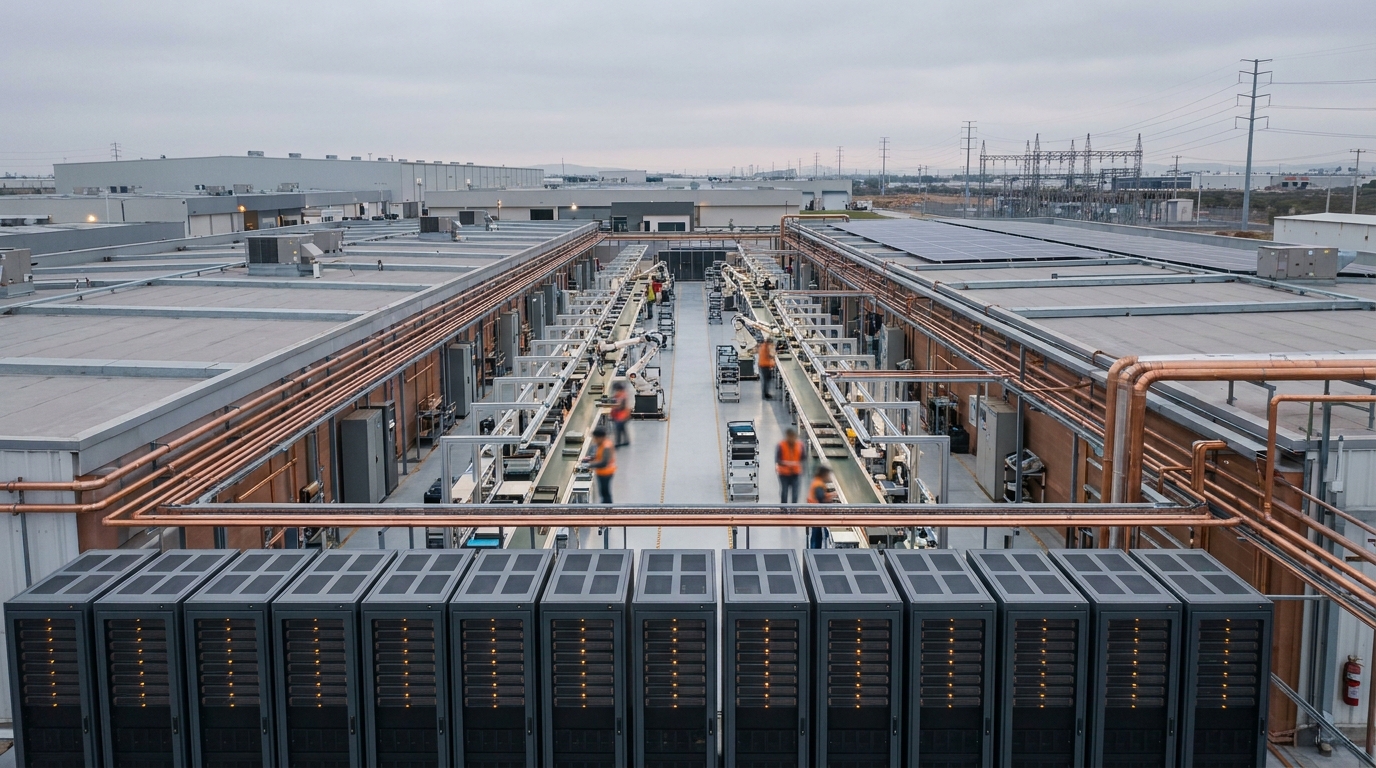
Servers displaced vehicles as Mexico's leading export to the United States in 2025, with year-over-year growth of 179 percent, according to an Atlantic Council analysis dated July 23. Mexico's total exports to the U.S. reached a record $545 billion, 5.8 percent above 2024 levels.
The surge tracks the wave of U.S. investment in data centers that began in late 2022, following the launch of ChatGPT. The Atlantic Council warns, however, that domestic value added in the sector is minimal: in visits to plants assembling AI servers in Mexico, researchers found that of more than two thousand suppliers, none were Mexican except those providing packaging, transport, and services. All remaining components (motherboards, chips, memory modules, power supplies) come from Asia and qualify under USMCA through the current tariff-classification rules, which for the electronics sector do not require a specific regional value content (RVC) percentage, unlike the automotive sector, which requires 75 percent.
The third USMCA review round, held July 21-23 in Washington, is already addressing the U.S. proposal to tighten rules of origin. Teams also discussed the rapid-response labor mechanism, which Mexico considers unilateral, and regional content requirements, with the Mexican government calling unacceptable any rule mandating exclusively U.S. content, according to El Universal.
The think tank proposal, authored by Matthew Kwasiborski and Jason Marczak, outlines a phased integration: 5 percent RVC by 2030, 10 percent by 2035, with further increases thereafter. The goal is for companies such as Celestica, Foxconn, Lenovo, Quanta, and Wistron (currently assembling in Mexico with nearly all-Asian inputs) to substitute a portion of those components with regional suppliers, including the new semiconductor complexes in Arizona and Texas. The authors draw a parallel with the automotive industry: when NAFTA transitioned to USMCA, the RVC required for vehicles rose from 62.5 to 75 percent, and Mexico's auto-parts sector did not collapse; it expanded.
The third round concluded without definitive agreements, but the president of the Business Coordinating Council, José Medina Mora, projected key definitions by late 2026 or early 2027. The direction negotiations take on rules of origin for electronics will determine whether Mexico captures a larger share of the value chain or remains an assembler of externally sourced inputs.
This article was produced with artificial intelligence assistance from verified sources and reviewed by a human editor before publication.
Sources
Related stories
This article was drafted with AI assistance from verified sources and reviewed by a human editor before publication.