Saudi Arabia Halts 7 Million-Barrel East-West Pipeline After Attacks from Iraq
Riyadh preemptively halted its main export route outside the Strait of Hormuz after drone attacks that left people injured.
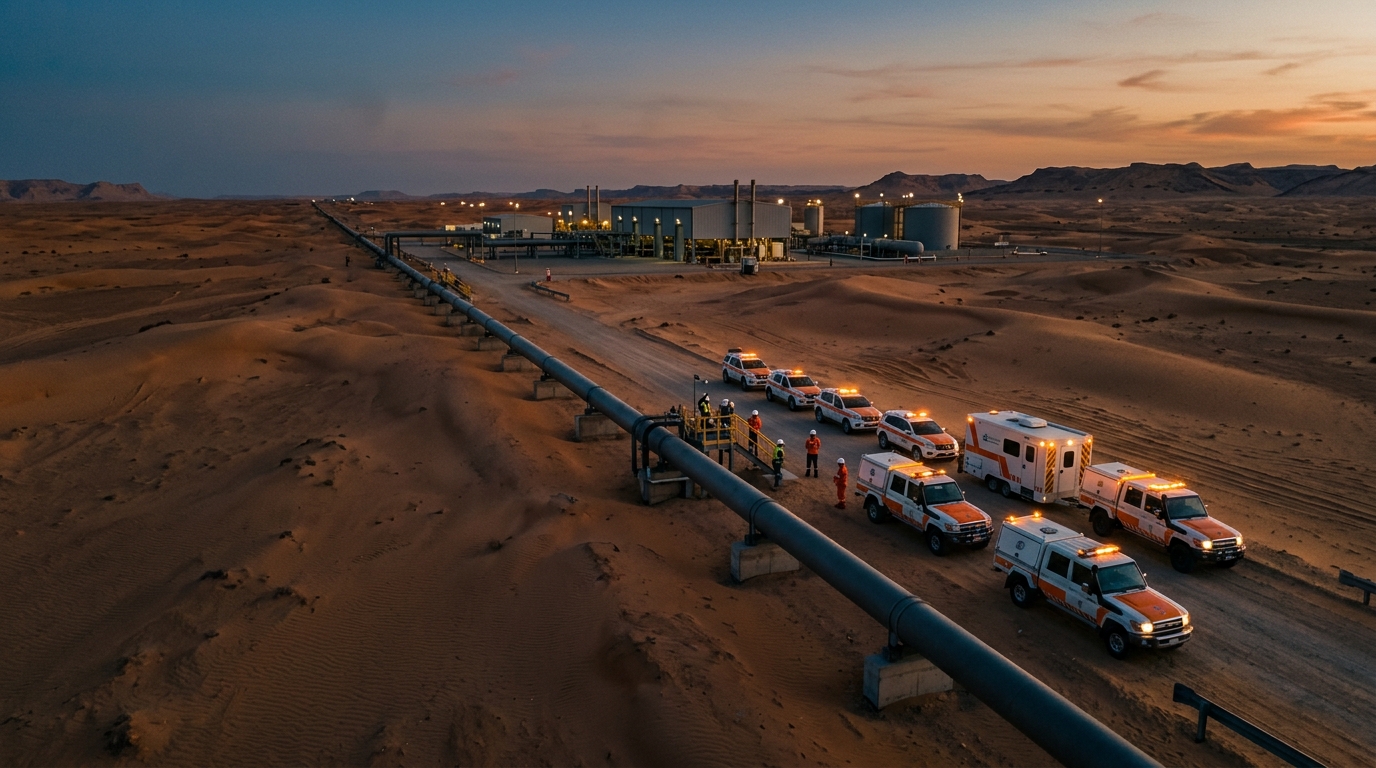
The Saudi Ministry of Energy said on Friday, September 11, 2026, that it had preemptively halted the East-West pipeline, with a capacity of 7 million barrels per day (mb/d), after several drones launched from Iraq struck the route in the Riyadh and Medina regions, leaving people injured and causing material damage.
The pipeline runs about 1,200 kilometers from Abqaiq, near the Gulf, to the port of Yanbu on the Red Sea, and serves as Saudi Arabia's main route for exporting crude without depending on the Strait of Hormuz. According to El Financiero, the attack occurred on the morning of Thursday, September 10, and the shutdown was announced a day later. The Guardian reported that the office of Iraqi Prime Minister Ali al-Zaidi confirmed that the drones took off from Iraqi territory and that the commander of the southern province of Maysan was dismissed; Baghdad condemned the attacks. Riyadh said that, at Baghdad's request, it decided not to respond for now.
Crude prices topped $100 per barrel this week, their first crossing of that threshold in months, and U.S. diesel surpassed $6 for the first time on Friday, according to CNBC. The same report indicates that prices ended the week up more than 8%. Amin Nasser, CEO of Saudi Aramco, had said last month that the East-West pipeline did more to cushion the supply disruption than the release of emergency reserves. In parallel, Yemen's Houthis took Perim Island in the Strait of Bab al-Mandab after declaring a naval blockade against Saudi Arabia in July. For Mexico, that international reference is what supports the price of the Mexican export blend and, with it, Pemex's revenue from foreign sales.
The Saudi Ministry of Energy said that emergency teams are assessing the pipeline's safety and that any news will be announced in due course. The resumption of pumping and the outcome of the Iraqi investigation are the next points to watch, along with the effect on crude prices.
This note was written with artificial intelligence assistance based on verified sources and reviewed by a human editor before publication.
Sources
Related stories
This article was drafted with AI assistance from verified sources and reviewed by a human editor before publication.