Peak Energy Opens California's First Sodium-Ion Battery Factory at 4 GWh Scale
With 4 GWh annual capacity and $71 million in investment, this is the first domestic grid battery manufacturing venture outside the lithium supply chain.
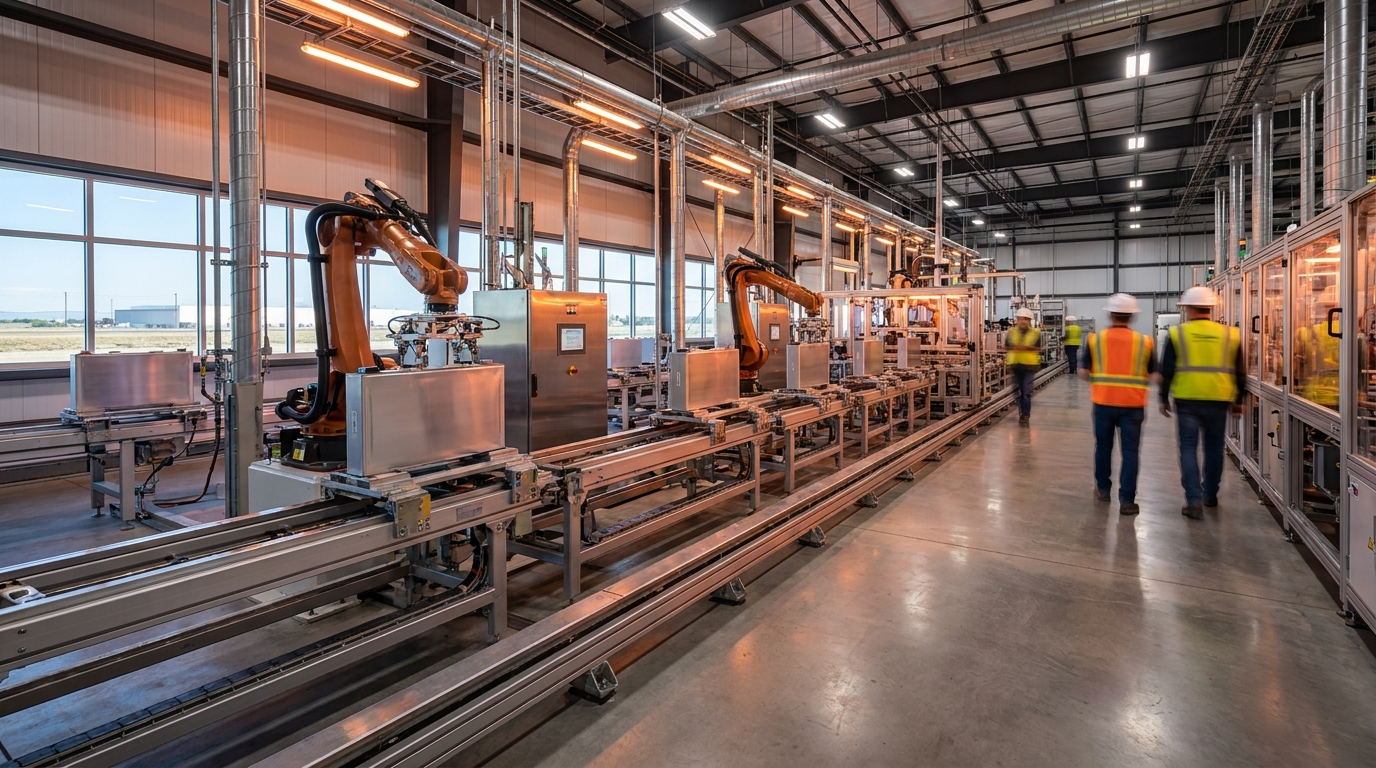
Peak Energy, a startup founded in 2023, opened on July 8 in Sacramento, California, the first commercial sodium-ion battery plant for grid storage in the United States. The facility has annual production capacity of 4 GWh, represents an investment of $71 million, and projects 249 jobs over five years.
Sodium-ion technology uses sodium, an abundant and low-cost material, instead of lithium, nickel, or cobalt, reducing exposure to supply chains concentrated in China. According to CBS News Sacramento, sodium-ion cells are less flammable than lithium cells and operate across a wider temperature range without significant degradation, eliminating the need for costly refrigeration and fire suppression systems. Cameron Dales, co-founder of Peak Energy, told CBS News that sodium-ion's chemical structure makes the batteries more resistant and less prone to ignition than their lithium counterparts. The plant opens at a moment of record demand for stationary storage in the U.S., driven by artificial intelligence data centers and the accelerated integration of solar and wind power.
The facility occupies 18,000 square meters at Metro Air Park, near Sacramento International Airport, and new positions will carry an average salary above $90,000 annually, according to the Sacramento County Office of Economic Development. The company chose Sacramento following a nationwide search, citing proximity to Silicon Valley, available manufacturing talent, and support from state and local governments. Peak Energy already holds agreements with Jupiter Power, Energy Vault, and RWE Americas for approximately $1.1 billion in orders, according to Canary Media. The company received a $10.5 million tax credit from California's CalCompetes program and closed a strategic alliance with General Motors to develop the next generation of sodium-ion cells.
The Peak Energy plant represents the first commercial validation of sodium-ion technology for grid storage in the Western world, in a landscape where lithium battery manufacturing is dominated by China. The figure to watch is the production start date in 2027 and whether the model can be replicated across other OECD markets seeking to diversify supply chains beyond lithium.
This article was drafted with artificial intelligence assistance from verified sources and reviewed by a human editor before publication.
Sources
Related stories
This article was drafted with AI assistance from verified sources and reviewed by a human editor before publication.