New Jersey Ties Data Center Interconnection to Funding Home Energy Upgrades
New Jersey enacted the first U.S. law to condition data center grid interconnection on funding residential energy upgrades.
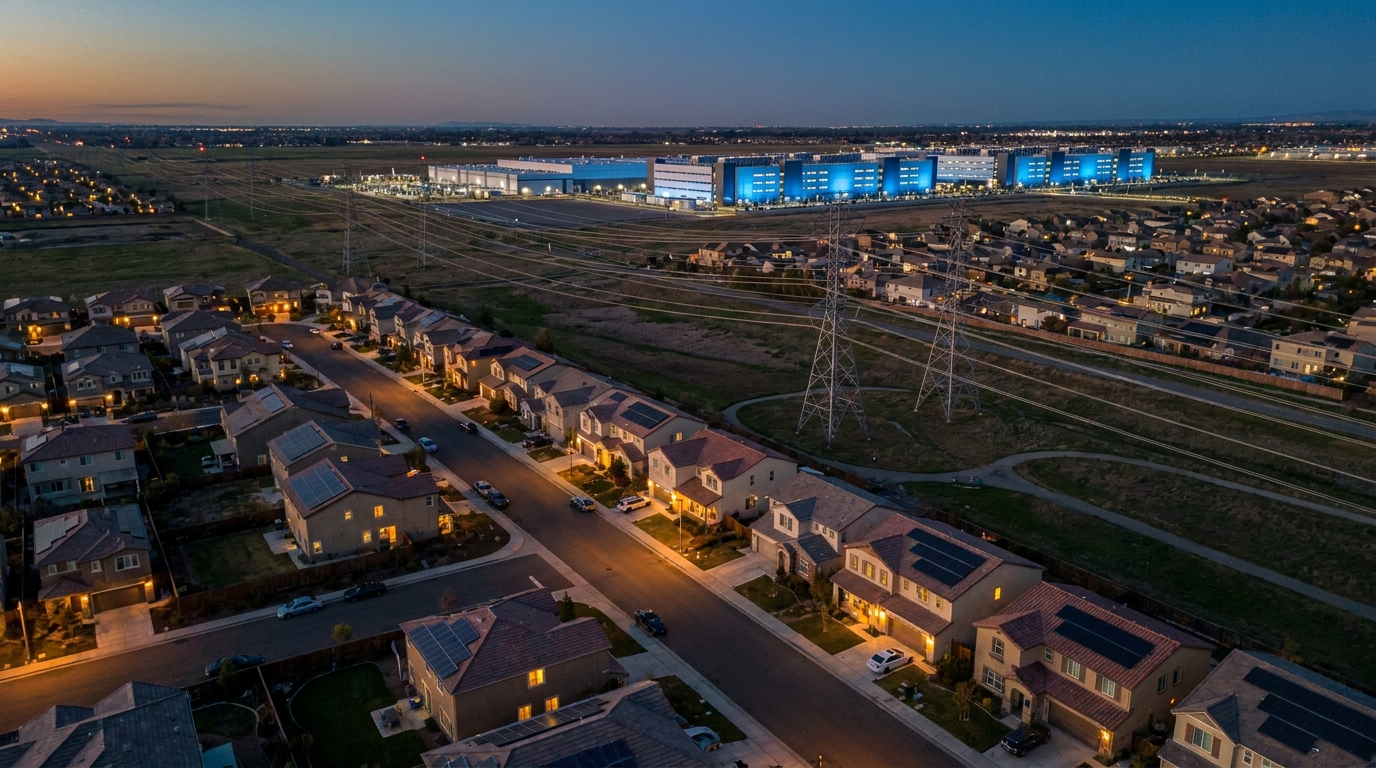
New Jersey has become the first U.S. state to condition data center grid interconnection on funding residential energy upgrades. Governor Mikie Sherrill signed the Data Center Fair Share Act on July 7, creating an unprecedented mechanism for voluntary residential demand reduction in exchange for priority in the interconnection queue.
The law responds to the surge in data center electricity demand in the state, which accounted for 70% of New Jersey's new load over the past year, according to PJM data reported by NJ Spotlight News. The legislative package aims to contain a 20% rise in residential tariffs that consumers have faced since June 2025. The core mechanism operates as an inverse virtual power plant (VPP): data centers hire aggregators to install heat pumps, solar panels, and batteries in homes; the utility verifies the capacity freed up and, in return, the operator earns priority in the interconnection queue. The law also creates a separate rate class for data centers consuming more than 50 megawatts (MW) and requires them to curtail demand before residential customers during periods of grid stress.
According to Canary Media, Rewiring America, the organization that shaped the program's design, estimates that New Jersey has 85,000 single-family homes with electric resistance heating and 422,000 with electric water heaters that qualify to receive the data-center-funded upgrades. Per-household savings range from hundreds to thousands of dollars annually. Nationally, Rewiring America calculates that residential upgrades could offset more than 93 gigawatts of projected AI-driven demand. New Jersey's Board of Public Utilities has one year to establish program standards; utilities will then have an additional 180 days to submit proposals. Under that timeline, the first households will receive equipment by mid-2028. California, Colorado, Illinois, Pennsylvania, and New York are studying legislation with similar mechanisms.
The New Jersey model sets a precedent with implications for Latin America, where data centers are also straining grids with limited capacity. In Mexico, Querétaro added 298 MW of new demand from this sector in 2026. The New Jersey experience, the first structured attempt to channel data center pressure into residential efficiency investment, will be closely watched by regulators and digital infrastructure developers across the region.
This article was drafted with artificial intelligence assistance from verified sources and reviewed by a human editor before publication.
Sources
Related stories
This article was drafted with AI assistance from verified sources and reviewed by a human editor before publication.