Strait of Hormuz Crisis Brings Forward 0.5% Drop in Global Fossil Emissions
Carbon Brief's analysis attributes the 0.5% drop in 2026 fossil emissions to demand destruction from the Hormuz crisis, not to the transition.
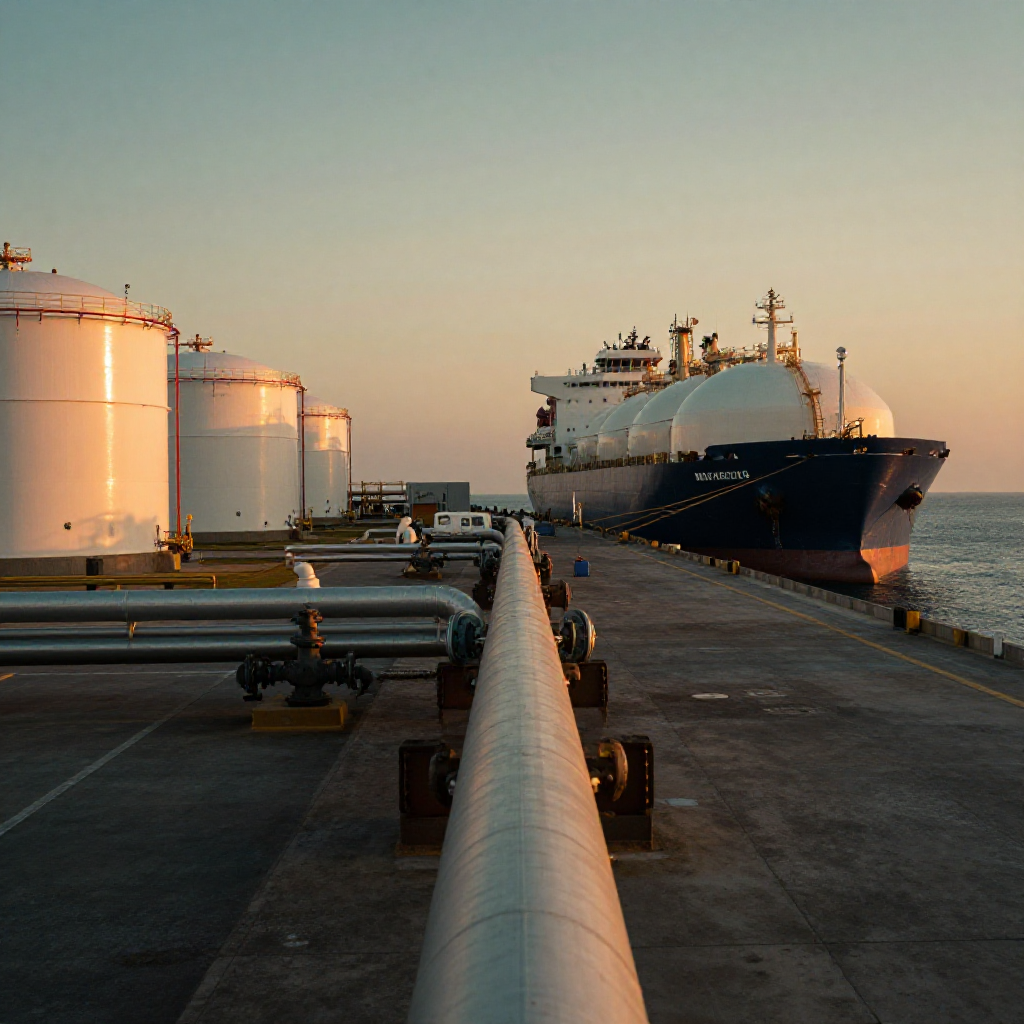
Global fossil fuel emissions will fall by around 0.5% in 2026, a decline that comes not from the energy transition but from the demand destruction caused by the Strait of Hormuz crisis, according to an analysis by Carbon Brief published on September 16, 2026.
Carbon Brief bases its estimate on the most recent forecasts from the International Energy Agency (IEA). The shift is abrupt: in January 2026 the IEA projected a rise of 930,000 barrels per day (b/d) in oil demand; by September it estimates a drop of 2,500,000 b/d, equivalent to 2.4% versus 2025. Gas also reversed course, from projected growth of 2.0% to a contraction of 0.6%, while coal rises 1.2%. In parallel, the Institute for Energy Economics and Financial Analysis (IEEFA) argues in its September 2026 edition that the liquefied natural gas (LNG) surplus that was supposed to make the market cheaper has been delayed, not cancelled.
The IEA calculates that the conflict in the Middle East will remove close to 140 billion cubic meters (bcm) of accumulated LNG supply between 2026 and 2030. IEEFA estimates the time needed to restore flows through Hormuz once the conflict ends at more than six months. Liquefaction capacity under development keeps growing: more than 220 million tonnes of capacity is scheduled to come online between 2025 and 2030, 40% above 2024 capacity, and roughly 345 bcm per year of new export capacity is listed for the same period. For Mexico, which imports most of the natural gas it consumes by pipeline from the United States, the transmission mechanism is direct: imported gas competes with an LNG market whose prices remain under pressure, and that pressure feeds through to the cost of power generation and to industry.
What comes next: the IEA's forecasts for 2027 no longer anticipate an oil rebound above 2025 levels, but rather essentially flat consumption for two years. The path of gas in 2027 will depend on whether LNG prices ease.
This piece was drafted with the assistance of artificial intelligence from verified sources and reviewed by a human editor before publication.
Sources
Related stories
This article was drafted with AI assistance from verified sources and reviewed by a human editor before publication.