Gulf Digital and Water Infrastructure: A Unique Risk Architecture, Warns Atlantic Council
The Gulf concentrates 283 data centers and desalination plants in an active conflict zone. Atlantic Council warns they share the same systemic risk.
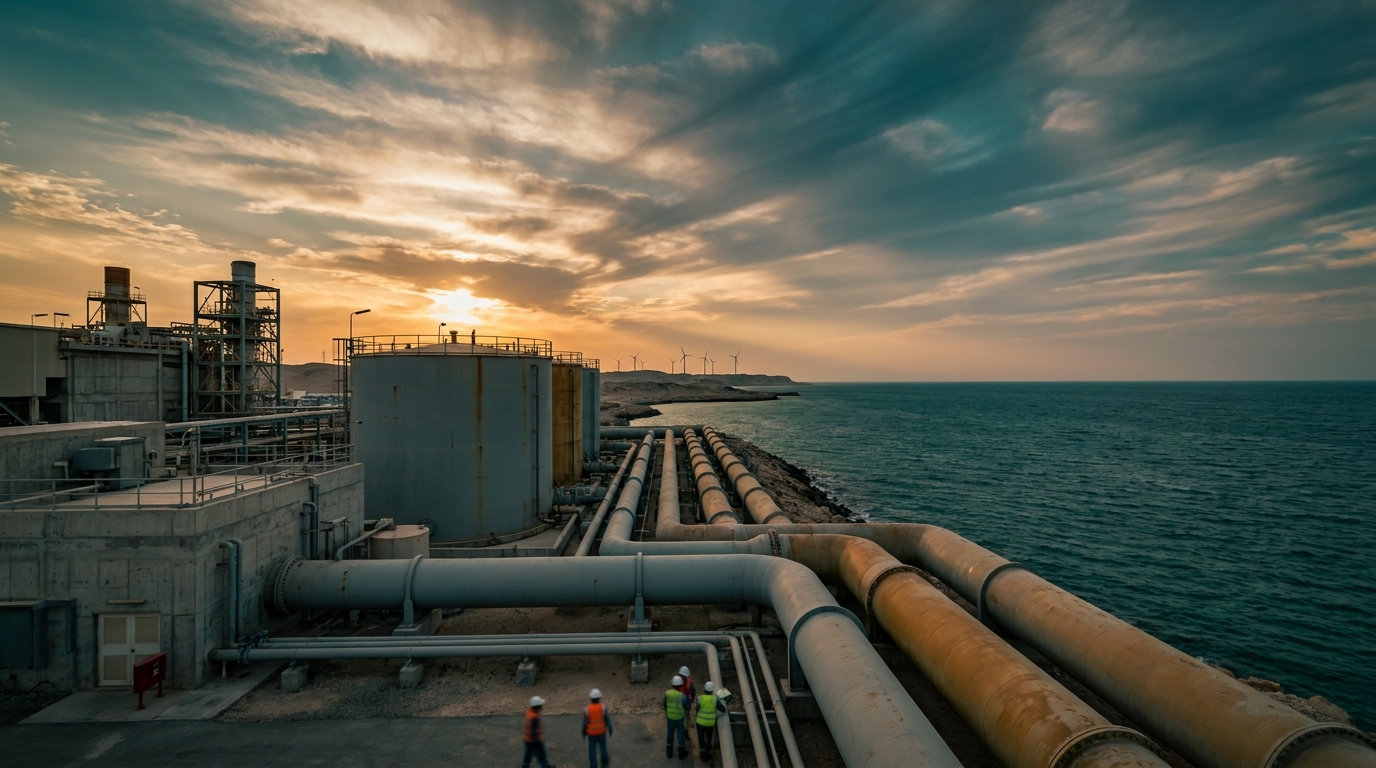
The digital and water infrastructure of the Gulf states (data centers, submarine cables, and desalination plants) operates as a single risk architecture in the face of the conflict with Iran, according to an Atlantic Council analysis published on July 21. The interdependence of these systems means that an attack on the power grid is also an attack on the region's water supply and computing capacity.
Since the conflict began on February 28, 2026, Iranian drones struck Amazon Web Services (AWS) data centers in the United Arab Emirates and Bahrain, which the Atlantic Council describes as the first confirmed military attack on a global-scale cloud provider, while projectiles hit desalination and power generation plants in Bahrain and Kuwait. Both countries obtain close to 90 percent of their water from the sea. In April, media outlets linked to Iran's Revolutionary Guard published a detailed map of the Gulf's submarine cables and cloud infrastructure. Alcatel Submarine Networks declared force majeure on March 12 and suspended its cable laying and repair operations in the area.
The Gulf hosts 283 data centers, according to the Stimson Center, but the region has only two to four cable repair ships across the entire Middle East, out of a global fleet of 63. Repairing a submarine cable takes at least 40 days and costs between one and three million dollars. The concentration of digital infrastructure in an active conflict zone amplifies the exposure of global institutional funds, including those financing energy projects in Latin America, because insurance, credit spreads, and oil futures discount the geopolitical risk premium of the entire Gulf basin on a daily basis, the Atlantic Council notes.
The analysis argues that Gulf resilience must be designed as an integrated system (water, energy, data, and connectivity) rather than in separate layers. The direction of the new terrestrial cables toward Iraq, Syria, and Turkey (SilkLink, FIG, and WorldLink projects, with estimated investments of 2,000 million dollars) will be an early signal of where critical regional infrastructure is being reconfigured.
This note was drafted with artificial intelligence assistance from verified sources and reviewed by a human editor before publication.
Sources
Related stories
This article was drafted with AI assistance from verified sources and reviewed by a human editor before publication.