Google Closes 1.9 GWh Battery Deal as Molten Salt Diversifies Solar Storage
Google closes a 1.9 GWh battery deal for the largest solar-plus-storage project in the United States, while molten salt, heat, and sand technologies expand the options beyond lithium.
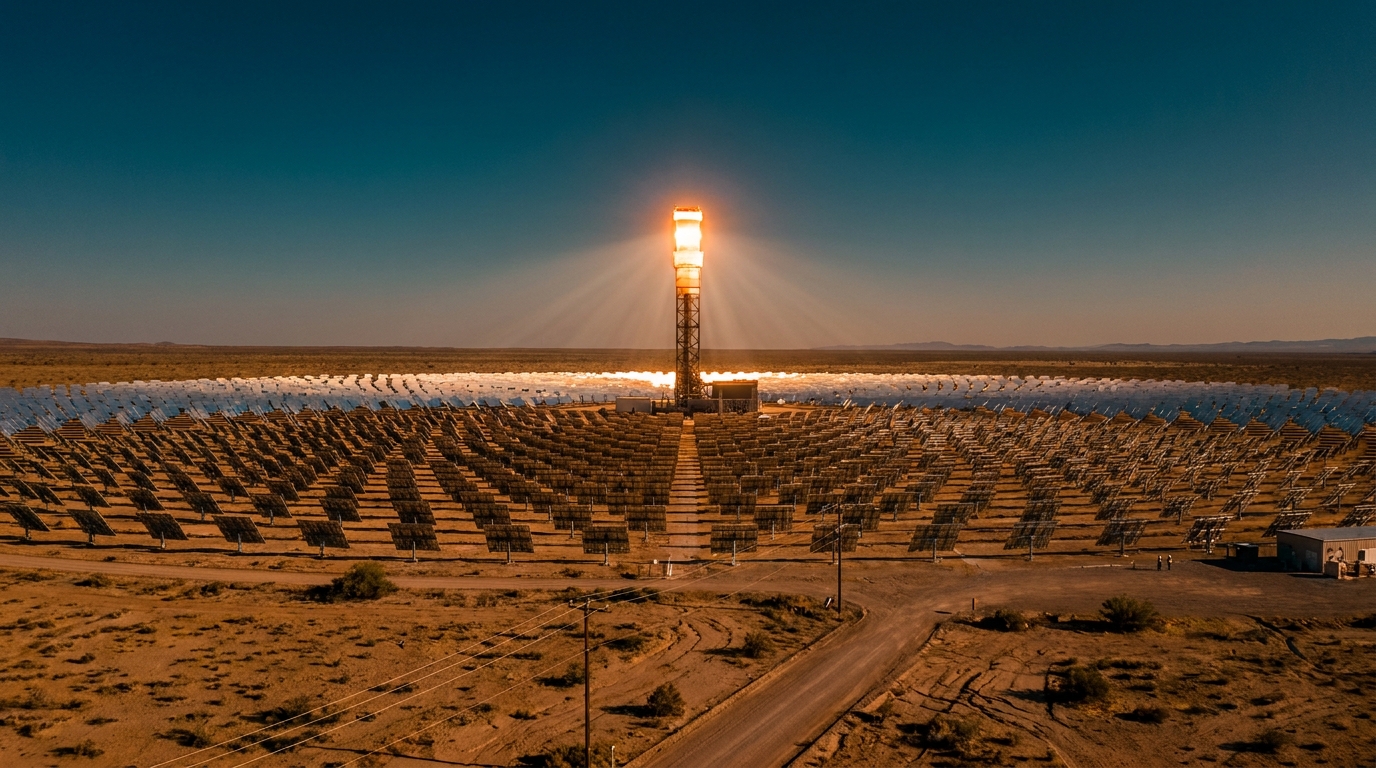
Energy storage, not generation, has become the defining variable determining which solar projects secure long-term contracts. Google closed in July 2026 the purchase of 1.9 GWh in batteries for the largest solar-plus-storage project in the United States, while molten salt, heat, and sand technologies expand the options beyond lithium.
The Steel River Energy Center, developed by Cypress Creek Energy in Mississippi County, Arkansas, will feature 1.6 GW of solar capacity and 1.9 GWh of battery storage across its first two phases, according to Canary Media. The developer secured $3.5 billion in financing in June 2026 with Barclays, BNP Paribas, Santander, and Wells Fargo. The project will use First Solar panels manufactured in Alabama and LG Energy Solution batteries, and will inject approximately $300 million into the local tax base over its useful life. Electricity from the first two phases will flow to the Entergy Arkansas grid, which supplies Google's data centers in the region.
At the same time, a portfolio of lithium-alternative storage technologies is advancing toward commercial scale. In Denmark, Hyme Energy and Sulzer launched in 2026 a 1 GWh molten salt system operating at 600°C that can store electricity for up to two weeks, as reported by The Guardian. In Finland, Polar Night Energy installed a sand battery (2,000 tonnes of crushed soapstone) with 100 MWh of thermal capacity, enough to cover nearly one month of summer heating. In the United Kingdom, Highview Power is building in Manchester a 300 MWh liquid air battery capable of delivering 50 MW for six hours. Crescent Dunes, in Nevada, has been operating for a decade using potassium and sodium salts heated to 560°C via 10,000 heliostats.
The technological diversification of storage and the scale of corporate contracts (Google is not the only data center operator securing batteries to back its consumption) are redefining the timelines and viability of renewable energy projects. The critical variable is no longer how much solar capacity is installed, but how much energy can be stored.
This article was written with artificial intelligence assistance based on verified sources and reviewed by a human editor before publication.
Sources
Related stories
This article was drafted with AI assistance from verified sources and reviewed by a human editor before publication.