FORGE Launches 90-Day Circulation Test for Enhanced Geothermal in Utah
FORGE, the DOE laboratory, launched a 90-to-120-day continuous circulation test in Utah on August 12 to validate the commercial viability of enhanced geothermal systems.
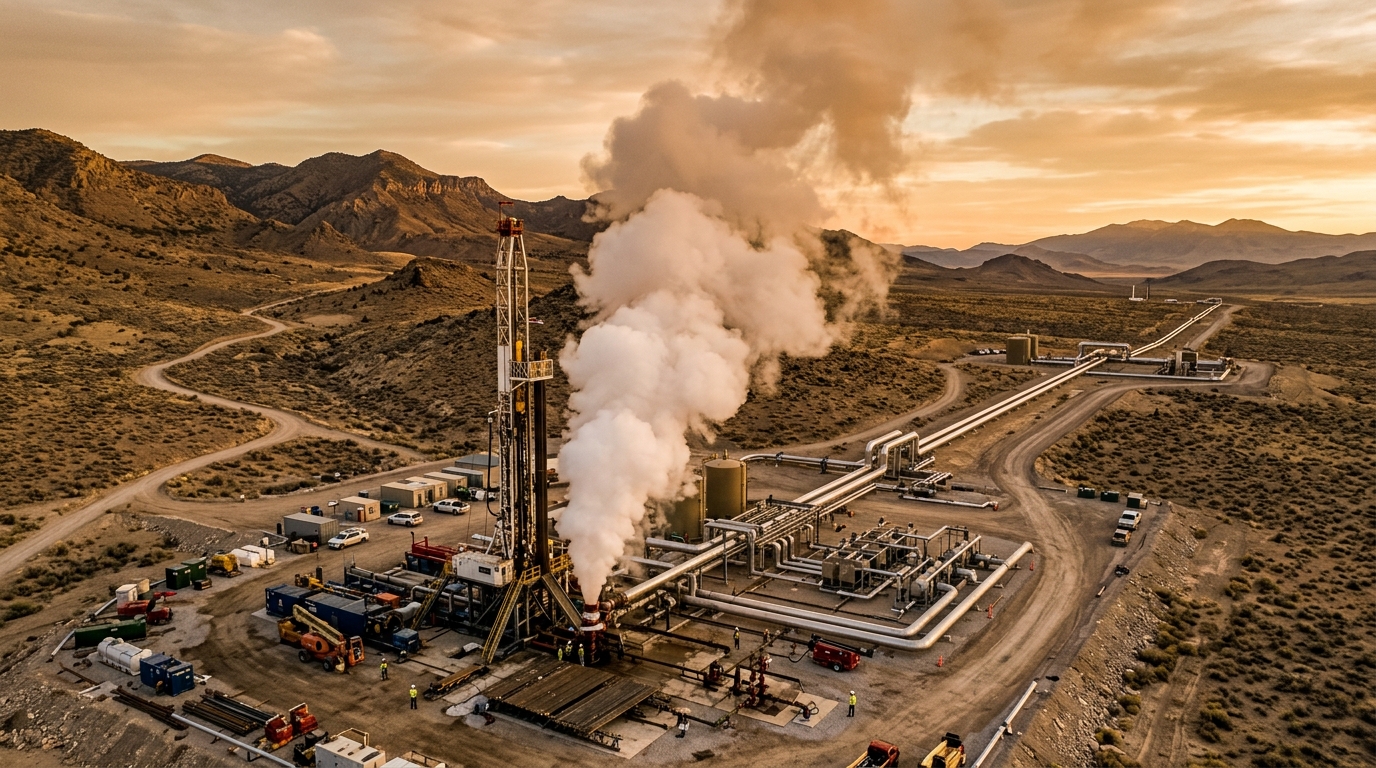
The FORGE (Frontier Observatory for Research in Geothermal Energy) field laboratory, funded by the U.S. Department of Energy (DOE) and managed by the University of Utah, launched a 90-to-120-day continuous circulation test on August 12 to validate the commercial viability of enhanced geothermal systems (EGS), according to Utility Dive.
The extended circulation assesses reservoir performance under continuous flow and will measure thermal decline and water loss, variables that determine whether long-duration generation is economically viable, said Kristie McLin, FORGE's principal investigator. The DOE characterized the test as a significant milestone: only a handful of EGS projects worldwide have reached this stage. Federal support for geothermal remains firm even as the DOE scales back backing for other renewable programs, according to Bloomberg. For the broader region, the technology is transferable: vast stretches of Mexico, Chile, and Central America concentrate subsurface heat outside traditional hydrothermal fields.
FORGE is the world's only full-scale field laboratory for EGS and publishes all of its technical data. The technology remains in the early stages of commercialization. Fervo Energy is developing the first commercial-scale EGS project in the United States, the 500 MW Cape Station plant, which is expected to begin delivering electricity to the grid this year. The company went public in May, and its stock has shed 56% from its initial high. In its most recent quarterly report, Fervo disclosed temporary transmission constraints for 2027 that led it to cut its revenue estimate for that year to $63 million, down from $79 million, according to Jefferies analysis cited by Utility Dive.
The test, which may extend to 120 days, will deliver results toward year-end. The next milestone to watch is Cape Station's grid connection and whether reservoir performance confirms that hydraulic fracturing can sustain commercial generation outside volcanic zones, including the geothermal potential of Mexico and Central America.
This article was drafted with artificial intelligence assistance from verified sources and reviewed by a human editor before publication.
Sources
Related stories
This article was drafted with AI assistance from verified sources and reviewed by a human editor before publication.