FCC Bans New Foreign Power Inverters; Domestic Makers Cover Just 7% of Market
The rule targets only new models; already-certified inverters remain on sale and pressures manufacturers to relocate assembly to the United States.
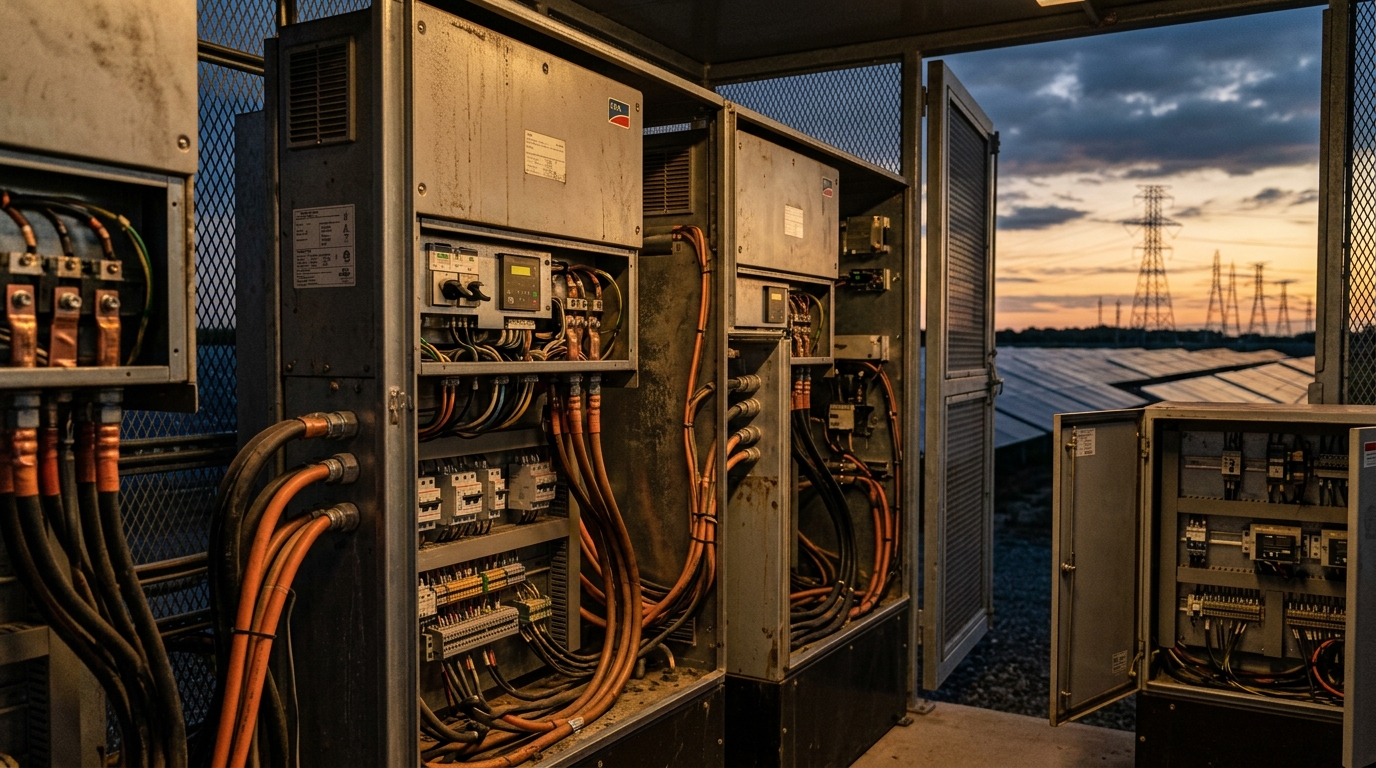
The Federal Communications Commission (FCC) added foreign-manufactured power inverters to its Covered List of equipment banned over grid security risks, effective July 29, 2026. Inverters convert the direct current produced by solar panels and batteries into alternating current; domestic manufacturers cover only 7% of the U.S. market, according to Department of Energy data cited by pv magazine.
The restriction applies to new authorization requests, not to foreign models already approved, which remain on sale, according to Canary Media. An interagency body convened by the White House determined that the wireless connectivity of smart inverters enables remote firmware updates to be pushed; in January 2026, the Department of Energy had inspected 30 Chinese inverters without finding malicious hardware. The measure arrives as the U.S. added 50 GW of solar, wind, and battery capacity in 2025, representing 92% of all new capacity, and the EIA (Energy Information Administration) projects solar will account for 51% of new 2026 capacity. Because the same global supply chain serves projects in Mexico and Latin America, pressure to relocalize assembly extends across the region.
Analysts at TD Cowen and Jefferies describe the immediate impact as minimal: already-certified inverters remain available. The real cost materializes when manufacturers launch new hardware generations, which will require fresh FCC authorization. More than 58,000 MW of solar and storage projects have interconnection scheduled for next year. Replacing a banned inverter with a domestic unit counts as a material modification and triggers a re-study, according to pv magazine. The exception path is a conditional approval from the Department of Homeland Security (DHS) or Defense, provided the manufacturer commits to a plan with a timeline to move assembly to U.S. plants.
Wood Mackenzie warns that currently approved products will eventually become obsolete, meaning each new hardware generation will pass through FCC review. Upcoming product rounds from Sungrow, Chint Power Systems, SMA Solar, and Fronius will define how the supply chain serving Mexico and the region reconfigures.
This article was drafted with artificial intelligence assistance from verified sources and reviewed by a human editor before publication.
Sources
Related stories
This article was drafted with AI assistance from verified sources and reviewed by a human editor before publication.