Data Center Forecasts Are Overstating Gas and Transmission Demand in the US
IEEFA finds data center forecasts inflate gas demand by 5x. Latitude Media reports a transmission slowdown for the same reason. A direct warning for Mexico.
The Institute for Energy Economics and Financial Analysis (IEEFA) documented on June 25 that natural gas consumption forecasts for data centers, used to justify two new pipelines totaling $5.2 billion in the southeastern United States, exceed grid operators' own base scenarios by a factor of five.
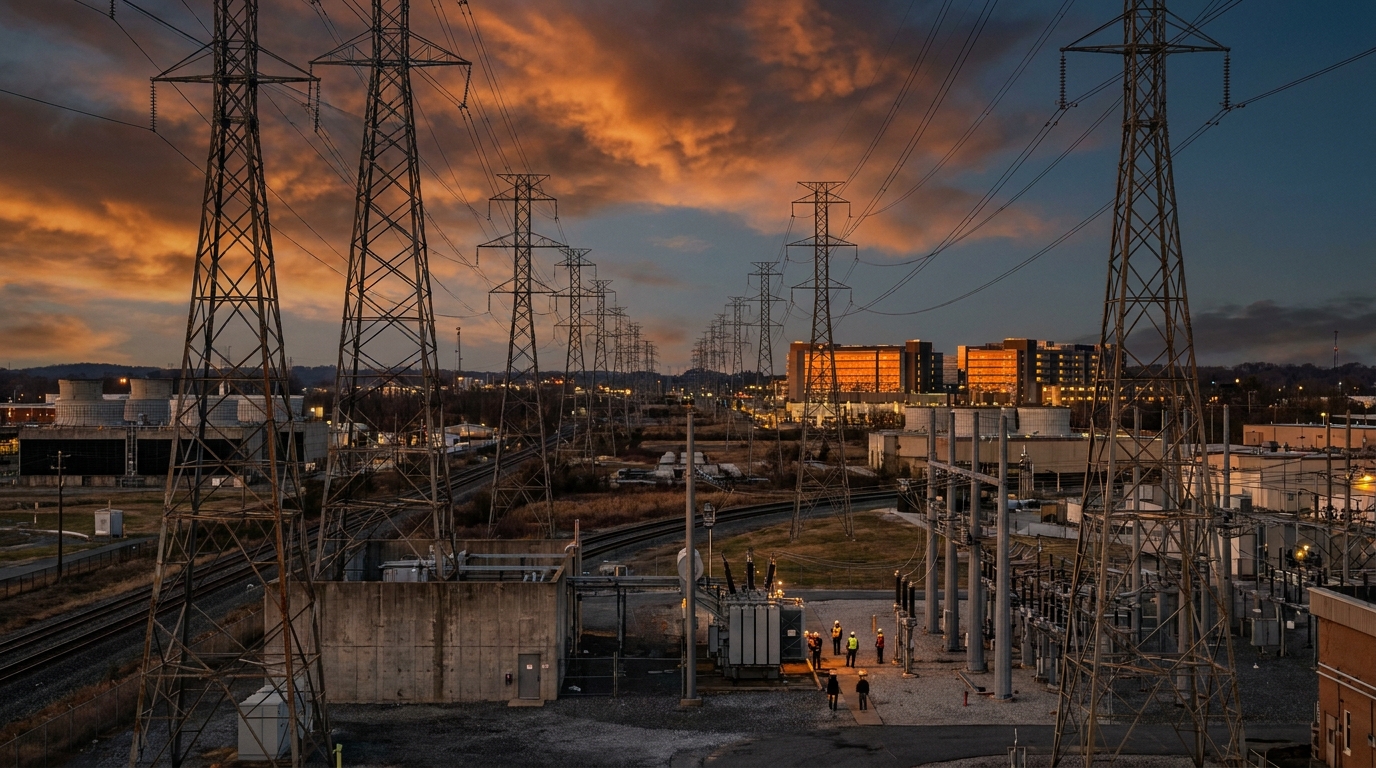
The same day, Latitude Media reported that the Mid-Atlantic Resiliency Link (MARL) transmission line, a $960 million, 160-kilometer NextEra project connecting Pennsylvania, West Virginia, Maryland, and Virginia, faces a regulatory setback. Consumer advocates are challenging whether the concentrated demand from data centers in northern Virginia justifies spreading costs across all users of the PJM regional grid, the mid-Atlantic transmission operator. Maryland filed a formal complaint with the Federal Energy Regulatory Commission (FERC) in May 2026, arguing that costs should be assigned directly to the zone where large consumers are located.
The IEEFA report puts numbers to the gap. Kinder Morgan projects, in its high-growth scenario, a natural gas deficit for electricity generation of 2.45 billion cubic feet per day (bcf/d) by 2035, to justify the Mississippi Crossing (MSX, $1.7 billion) and South System Expansion 4 (SSE4, $3.5 billion) pipelines. The base scenario shows a deficit of just 0.46 bcf/d, less than 15 percent of the proposed new capacity. Regional natural gas demand also declined by an average of 0.78 percent annually between 2017 and 2025.
On the transmission side, the MARL episode exposes a problem that extends well beyond this single project. The United States went from building 6,400 kilometers of high-voltage lines in 2013 to an average of just a few hundred kilometers per year in recent years. The slowdown is not only about permitting: it is an interstate dispute over who pays when new load concentrates in a single zone.
For Mexico, the pattern is a direct warning. As nearshoring accelerates data center installations along the northern industrial corridor, the Centro Nacional de Control de Energía (CENACE) and the Secretaría de Energía (SENER) will face the same forecasting dilemma: modeling demand with their own verifiable assumptions, not with developers' projections. The update to the Programa de Desarrollo del Sistema Eléctrico Nacional (PRODESEN) will be the first real test of that rigor.
This article was written with artificial intelligence assistance based on verified sources and reviewed by a human editor before publication.
Sources
Related stories
This article was drafted with AI assistance from verified sources and reviewed by a human editor before publication.
← All news