Corpus Christi closes Stage 3, adding 3.1 Bcf/d of LNG capacity
The Cheniere terminal in Texas tops 3.1 billion cubic feet per day and now ranks behind Sabine Pass, with another expansion under construction toward 2028.
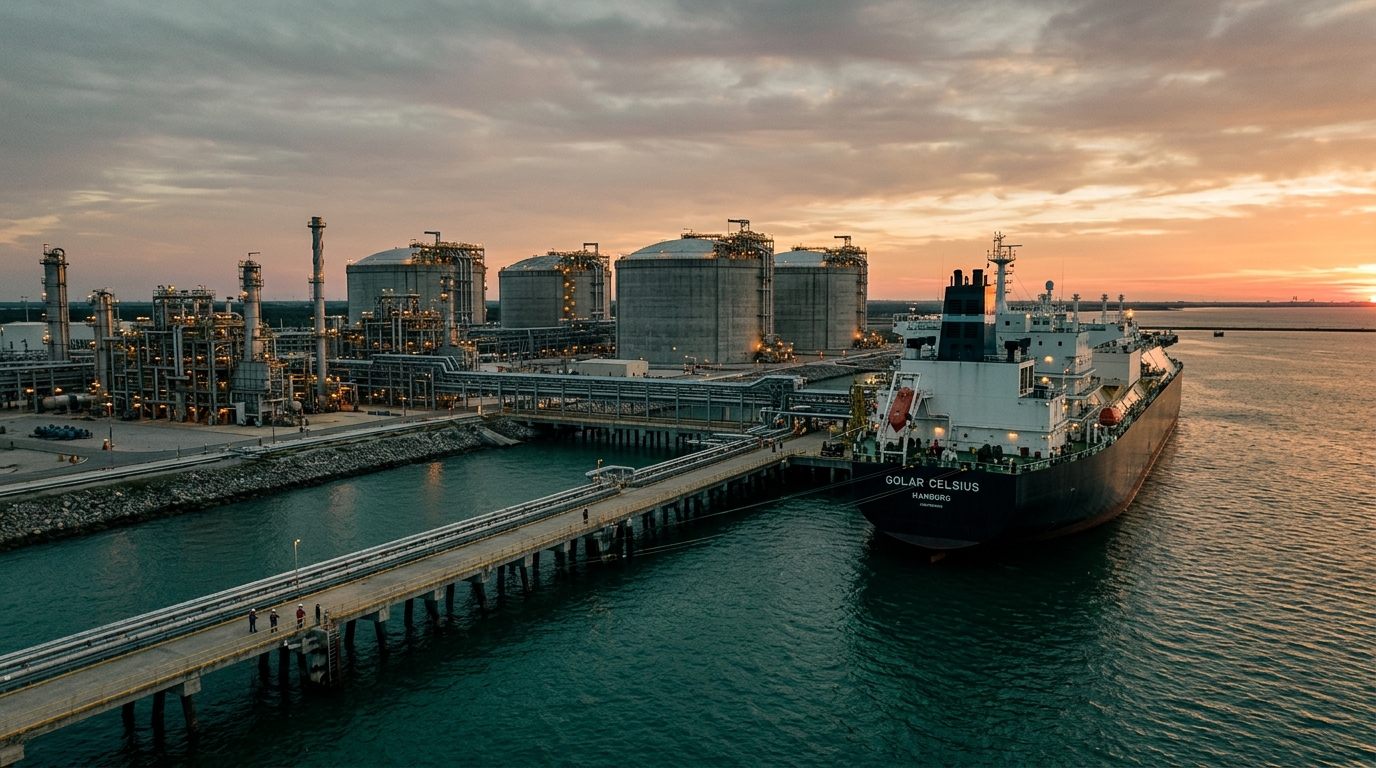
Cheniere Energy took control of the seventh and final liquefaction train at its Corpus Christi Liquefaction Stage 3 (CCL Stage 3) project on August 28, 2026, lifting the nominal capacity of its San Patricio County, Texas terminal to 3.1 billion cubic feet per day (Bcf/d), according to the U.S. Energy Information Administration (EIA).
The EIA specified on September 15 that Stage 3 contributes 1.3 Bcf/d nominal and 1.5 Bcf/d peak across seven midscale trains, and that Corpus Christi thereby became the country's second LNG export terminal, behind Sabine Pass in Louisiana, which stands at 3.6 Bcf/d nominal and 4.6 Bcf/d peak. Bloomberg reported on August 31 that the move raises Cheniere's production capacity by more than 20%, to roughly 56 million tonnes per annum (mtpa) across its two Gulf plants. The South Texas hub sits on the same corridor that carries the cross-border pipelines supplying the Mexican market, including the route to Los Ramones and the Sistrangas system that feeds CFE; more supply on the Gulf Coast shapes regional differentials.
The expansion adds to a cycle of growing capacity along the U.S. Gulf Coast. The EIA reported on September 1 that U.S. LNG exports averaged 17.4 Bcf/d in the first half of 2026, up 23% year over year, and projects 17.3 Bcf/d for the second half and 18.7 Bcf/d for the first half of 2027. Cheniere also reported the production and export of its 5,000th LNG cargo, and has accumulated more than 340 million tonnes since 2016. At the same complex, the Corpus Christi Liquefaction Midscale project is building two additional trains with 0.4 Bcf/d nominal and 0.5 Bcf/d peak, expected in 2028.
The next thing to watch is the startup of the two Midscale trains in 2028 and how Stage 3 gradually ramps up its volumes during the shoulder season, when power demand in North America falls. The EIA keeps its summary of LNG terminals in operation, under construction and approved on its website.
This article was written with the assistance of artificial intelligence based on verified sources and reviewed by a human editor before publication.
Sources
Related stories
This article was drafted with AI assistance from verified sources and reviewed by a human editor before publication.