Commonwealth Fusion Raises $1B More, Bringing Total Capital to $4B
The round, the largest in the fusion sector since 2021, confirms the shift of institutional capital (pension funds, sovereign wealth funds, and infrastructure partners) toward commercial fusion in the 2030s.
Commonwealth Fusion Systems (CFS), the nuclear fusion firm that emerged from MIT, announced on July 30, 2026, a capital round of $1 billion. With this, total capital raised since 2018 reaches $4 billion, approximately 30% of all global investment recorded in the fusion sector.
This is the largest single round among fusion companies since CFS itself raised $1.8 billion in 2021, according to Canary Media. The majority of the new capital came from institutional investors (pension funds, sovereign wealth funds, and industrial infrastructure partners), a broadening of the funding profile that marks the transition from venture capital to project capital.
CFS already has two buyers with power purchase agreements (PPAs) signed before the plant exists: Google (200 MW) and Italian oil company Eni. Both are also investors in the company and together cover more than half of the projected generation of the ARC plant, the 400 MW commercial reactor CFS is building in Chesterfield, Virginia.
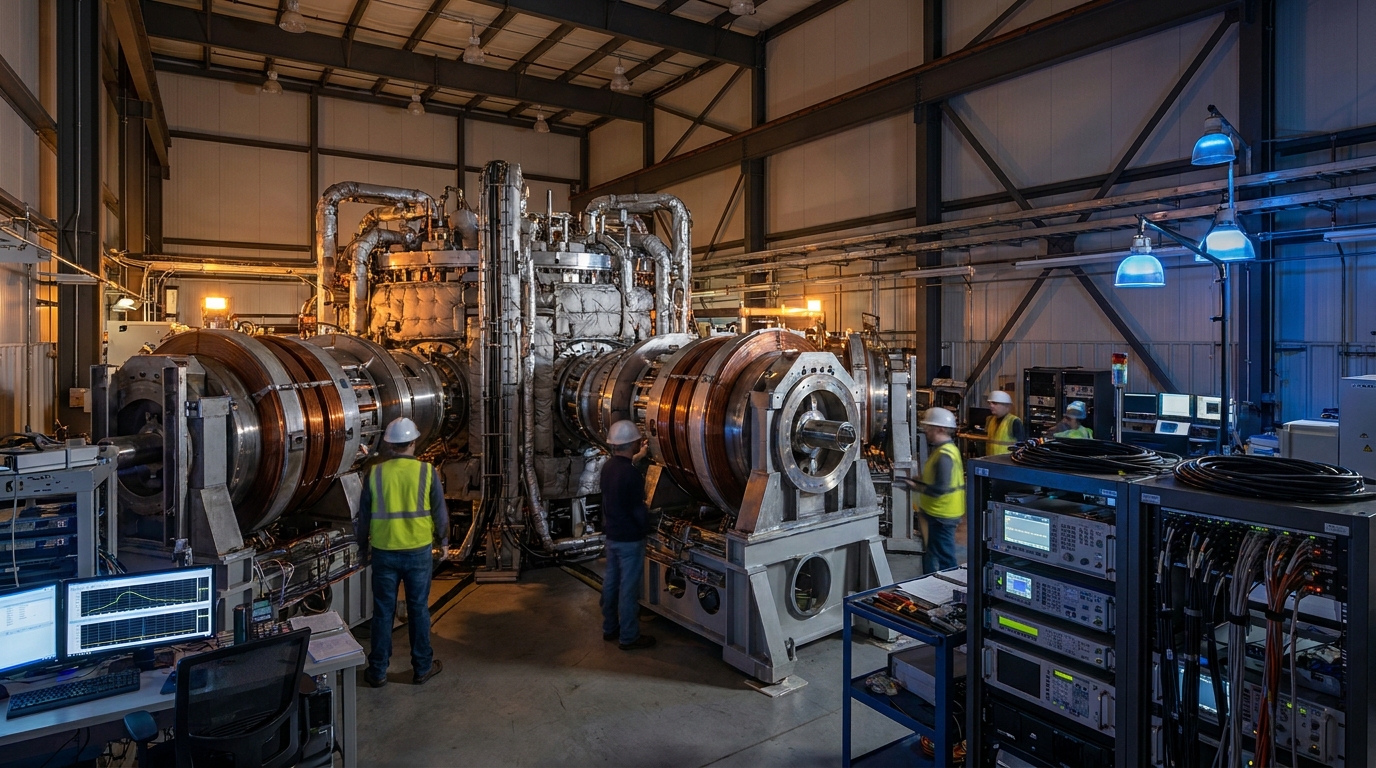
The new financing accelerates the two phases of CFS's plan. The first is SPARC, the demonstration reactor being assembled in Devens, Massachusetts: it is 80% complete and the company expects to achieve first plasma and net energy gain (Q>1) in 2027, reported Canary Media. The second is ARC, the Fall Line Fusion Power Station, which will inject 400 net MW into the PJM grid, the largest wholesale electricity market in the United States, for which CFS has already submitted an interconnection application.
The funds will be used to complete SPARC and to accelerate site engineering, the supply chain, and the final design of ARC. The company estimates it will need billions more, but not tens of billions, to complete the Virginia plant by the mid-2030s, according to Bloomberg.
The round confirms that large institutional investors now treat fusion as an energy infrastructure asset class, not a long-term scientific bet. The next milestone will be SPARC's ignition in 2027: if it achieves net energy gain, the commercial fusion timeline will shift from aspirational to contractual.
This article was written with artificial intelligence assistance from verified sources and reviewed by a human editor before publication.
Sources
Related stories
This article was drafted with AI assistance from verified sources and reviewed by a human editor before publication.