Chinese Battery Manufacturing Capacity Set to Outpace Global Demand by 2030, Carnegie Warns
A Carnegie Endowment report projects that China's battery cell manufacturing capacity will exceed global demand by 2030, with significant implications for energy storage projects across Latin America.
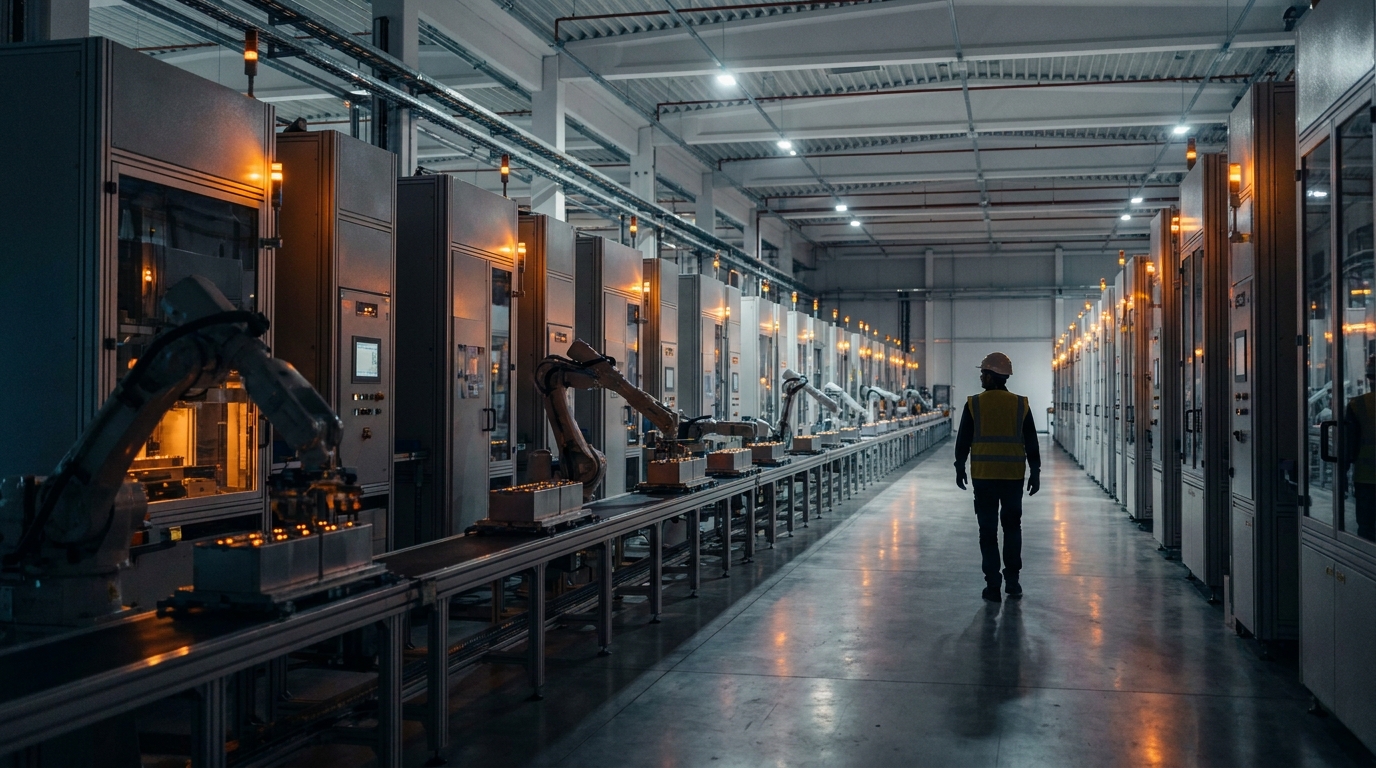
China's battery cell manufacturing capacity would reach between 5,862 and 6,720 GWh by 2030, surpassing the upper bound of projected global demand at 5,100 GWh, according to a report by the Carnegie Endowment for International Peace published in late June 2026.
The report estimates that combined OECD capacity would reach just 1,881 GWh in the baseline scenario, roughly one-third of China's output, while emerging markets such as India and Indonesia would contribute another 217 GWh. China controls approximately 98% of global production capacity for lithium iron phosphate (LFP) battery cells, the dominant chemistry for stationary storage systems. For Latin American markets accelerating storage deployment, including Mexico, Chile, and Brazil, China's oversupply dynamic carries dual consequences: Chinese LFP cells are 24% to 50% cheaper than European alternatives, lowering the cost of battery energy storage system (BESS) projects, but concentrating supply in a single origin.
Chinese battery exports exceeded $6 billion per month in 2025, with nearly half of that volume destined for Europe, according to the report. Carnegie stops well short of recommending a full decoupling. The document proposes selective cooperation with Chinese companies through joint ventures, particularly in anode production, where few alternative producers exist outside China, as reported by pv magazine. It also urges the United States, Europe, Japan, and South Korea to coordinate their industrial policies and support sodium-ion battery manufacturers outside China, a technology in which China projects more than 500 GWh of manufacturing capacity by 2030, according to the same study.
Carnegie indicated that a second installment of the study will detail the national battery strategies of six economies, including China, the United States, Europe, and South Korea. For storage developers in Latin America, the direction of those policies will shape the availability and cost of the technology underpinning their BESS projects.
This article was written with artificial intelligence assistance from verified sources and reviewed by a human editor before publication.
Sources
Related stories
This article was drafted with AI assistance from verified sources and reviewed by a human editor before publication.