Chile Tenders 2,835 GWh of Backup Power with Batteries, No Coal or Diesel
15-year contracts for regulated customers; natural gas remains allowed but coal, petcoke, diesel, and fuel oil are excluded from the process.
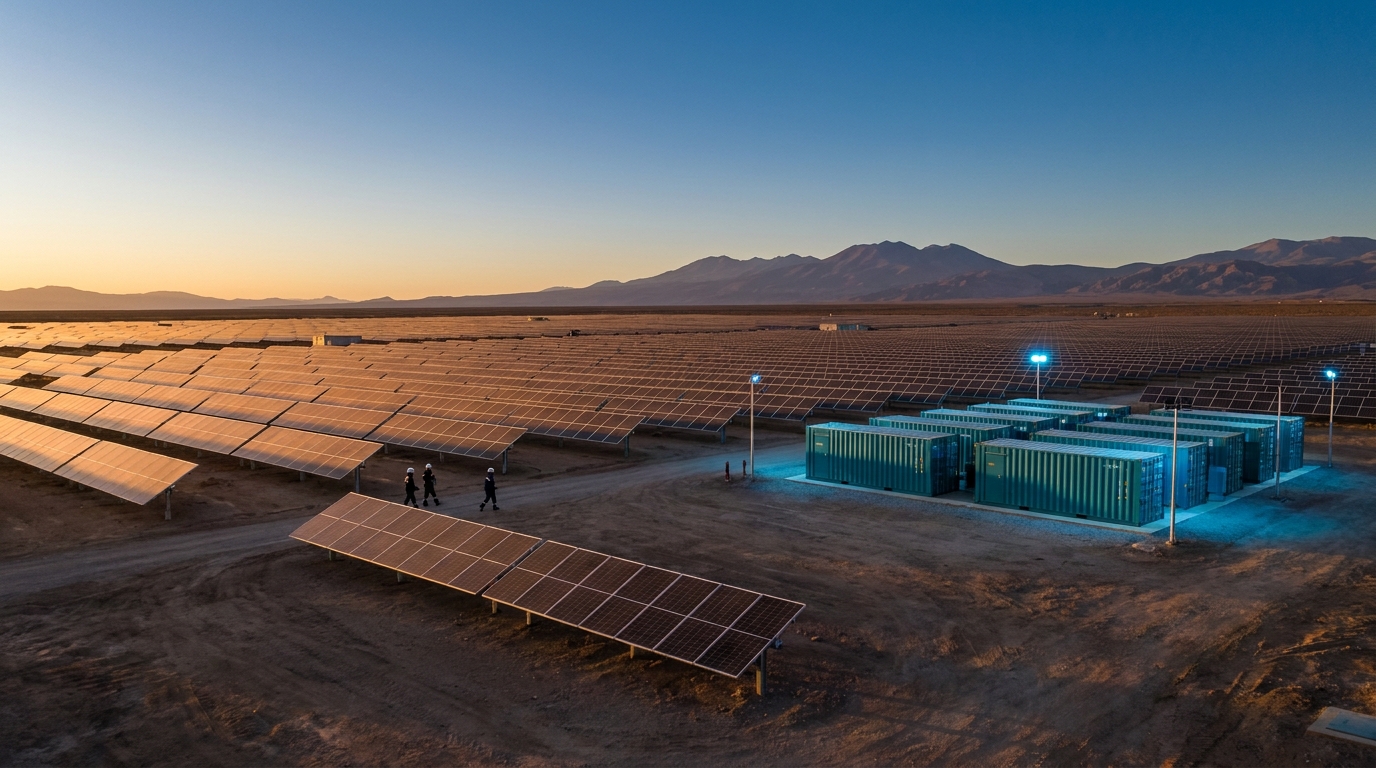
Chile's National Energy Commission (CNE) launched the 2026/01 supply tender on July 21, putting 2,835 GWh per year out to bid for regulated customers under 15-year contracts. The process excludes coal, petcoke, diesel, and No. 6 fuel oil, and for the first time recognizes battery energy storage systems as eligible backup assets.
Chile joins Colombia as the second market in the region to leverage tender design to accelerate grid-scale storage instead of relying on fossil-fuel backup generation. The Colombian auction, awarded on July 20, is battery-exclusive; Chile's tender is technologically neutral but draws an environmental boundary: it permits natural gas, solar, wind, hydroelectric, and storage while barring four fossil fuels. The volume is split into two blocks, 1,575 GWh and 1,260 GWh, with supply starting in 2029 and 2030, respectively, across four zones of the National Electric System (SEN) that serve the country's distribution companies. The central zone, which includes Enel and Chilquinta customers, accounts for roughly 63% of the total.
The final bidding terms, reported by pv magazine, raise the bar relative to the June draft. The obligation to guarantee supply continuity after an early contract termination increased from 36 to 48 months. Awardees must report any event that compromises grid interconnection, and those using non-bank financing must submit a backup contract at least 18 months before the maximum commercial operation date. For storage systems, injection is calculated using a single daily charge-and-discharge cycle, without optimized economic dispatch. Non-conventional renewable projects must declare their energy output under a P90 scenario, meaning a 90% probability that actual production meets or exceeds the committed volume.
With this design, Chile sends a price signal to storage developers across Latin America: a 2,835 GWh annual market where batteries compete on equal footing. The industry's response will be measured on December 4, 2026, when the bid window closes, with award scheduled for January 13, 2027.
This note was drafted with AI assistance from verified sources and reviewed by a human editor prior to publication.
Sources
Related stories
This article was drafted with AI assistance from verified sources and reviewed by a human editor before publication.