Climate Litigation Against Data Centers Surges Globally, Straining Power Grids
LSE reports a global surge in climate litigation targeting data centers, as U.S. transmission grids face bottlenecks from rising digital demand.
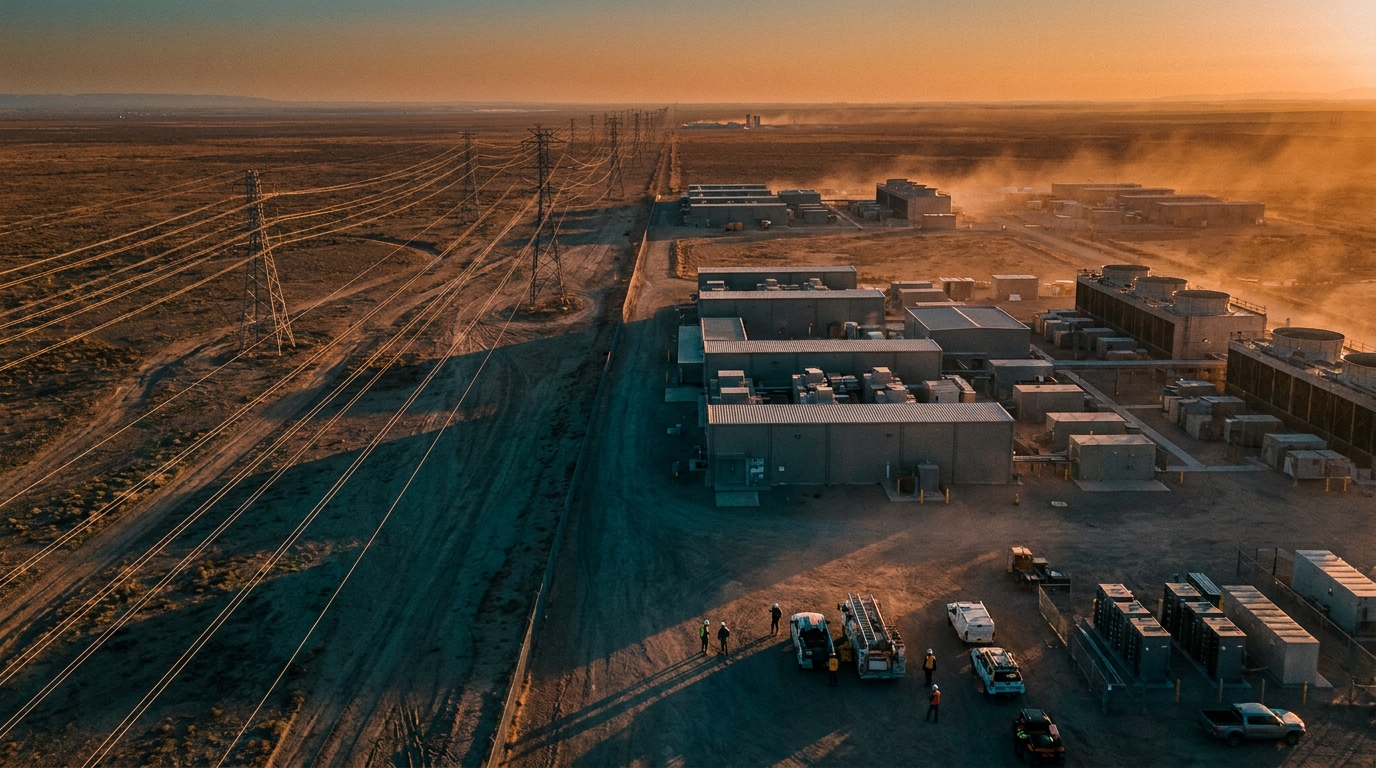
Data centers face a growing wave of climate litigation worldwide, according to the annual report of the Grantham Research Institute on Climate Change at the London School of Economics (LSE), published June 25, 2026. The report analyzes 3,600 climate lawsuits filed since 2015 and identifies the sector as a new legal battleground for its electricity consumption, water use, and backup-generator emissions.
The report identifies three litigation fronts: energy sources powering data centers, water consumption for cooling systems, and air pollution from backup generators. Ireland accounts for a disproportionate share of cases: the data sector already consumes more than one-fifth of the country's electricity. In Chile, legal action in Santiago halted Google's Cerrillos project in 2020 for inadequately assessing climate impacts. In the United States, active litigation in California, Georgia, Pennsylvania, and Mississippi spans fossil fuel permitting to Clean Air Act violations, including a lawsuit against xAI for operating gas generators without required permits.
The pressure extends beyond the courtroom. Data center concentration is also disrupting transmission grid planning. The clearest case is the Mid-Atlantic Resiliency Link (MARL), a 107-mile, $960 million line developed by NextEra spanning Pennsylvania, West Virginia, Maryland, and Virginia. Regional grid operator PJM approved the project in 2022, but state-level permitting drew opposition from all four states, as documented by Latitude Media: consumer advocates argue that residents should not subsidize infrastructure that disproportionately benefits northern Virginia data centers. Maryland took its complaint to the Federal Energy Regulatory Commission (FERC). Construction is not expected before 2029.
For Mexico, this dynamic is a preview. Industrial parks in the Bajío, Monterrey, and Querétaro, the main hubs of digital nearshoring, already strain the grid operated by the Comisión Federal de Electricidad (CFE) and the Centro Nacional de Control de Energía (CENACE). The same transmission bottlenecks stalling projects in the United States represent a concrete risk for the Sistema Eléctrico Nacional (SEN) as data demand grows along the northern industrial corridor.
The transmission cost allocation reform under FERC review will be a key signal for the North American market. On the Mexican side, how CENACE integrates data demand into its next grid expansion plan will determine whether digital nearshoring translates into productive investment or congestion.
This article was drafted with artificial intelligence assistance from verified sources and reviewed by a human editor before publication.
Sources
Related stories
This article was drafted with AI assistance from verified sources and reviewed by a human editor before publication.