Cape Station, the World's Largest Advanced Geothermal Plant, Will Deliver 500 MW by 2028
Delivering 100 MW this year and 500 MW by 2028: Cape Station, Fervo Energy's project in Utah, applies oil-drilling techniques to advanced geothermal energy.
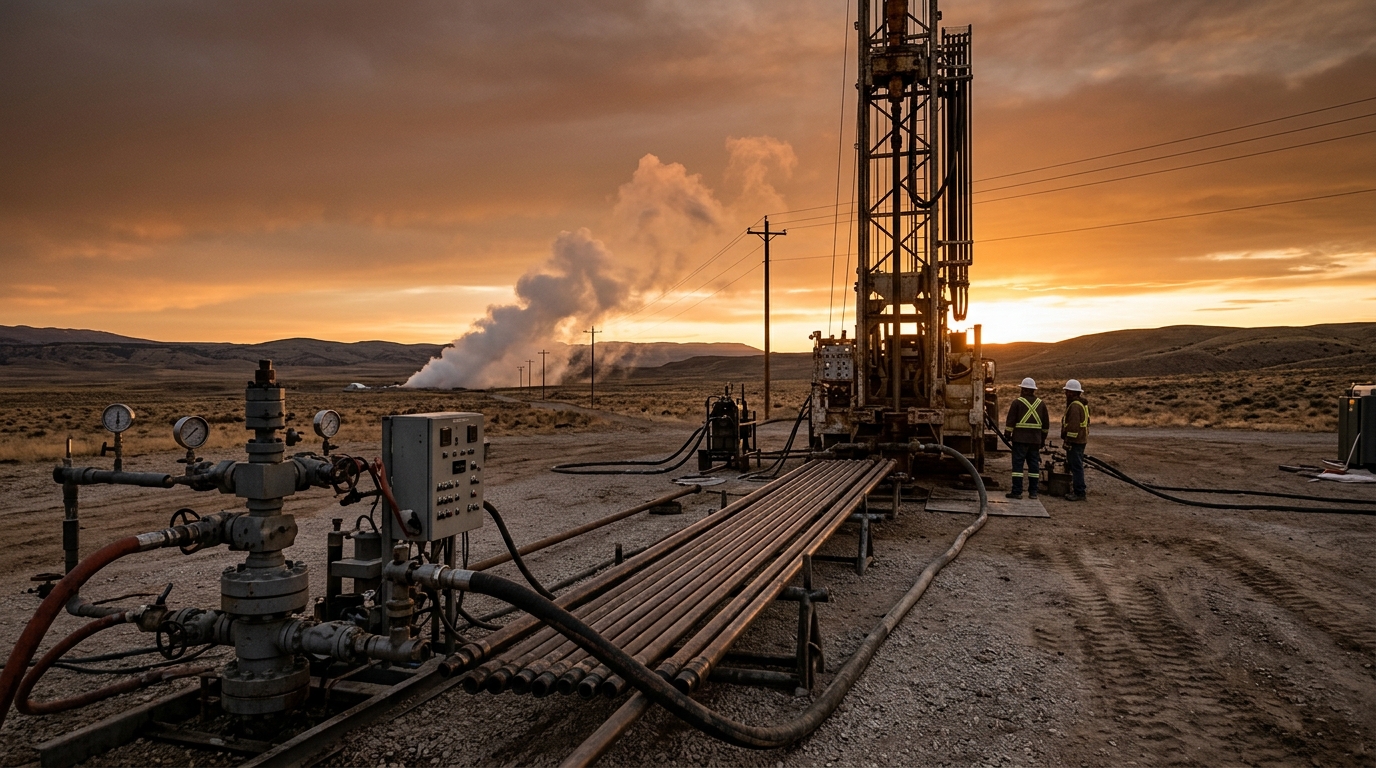
Fervo Energy will deliver in 2026 the first 100 megawatts (MW) of Cape Station, in Utah, the world's largest advanced geothermal plant, with 500 MW contracted for 2028. The project is fully subscribed with Southern California Edison and Shell Energy, according to Latitude Media.
Cape Station is the first utility-scale advanced geothermal development in the United States, a technique that fractures hot rock with pressurized water. The firm drilled its deepest well, at 15,765 feet and 520 degrees Fahrenheit, in 16 days, a milestone that Heatmap News documents in its coverage of the project's progress. Conventional geothermal wells rarely exceed 10,000 feet; drilling thousands of feet deeper opens zones where continuous electricity generation was previously not viable. That transfer of oil-industry techniques to geothermal is what operators in Mexico, with fields at Los Humeros and Cerro Prieto, and those in other Latin American countries with geothermal potential, are watching closely.
Cape Station's most recent financing raised $206 million, including $100 million in equity from the Breakthrough Energy Catalyst program and $60 million from Mercuria in corporate credit, according to Heatmap News. Southern California Edison signed a power purchase agreement for 320 MW, described as the largest geothermal deal on record, and Shell joined as a customer this year. Fervo already supplies 3.5 MW to Google from Nevada and is seeking to expand that relationship to 115 MW with NV Energy. The plant holds permits to expand to 2 gigawatts, and a DeGolyer & MacNaughton report projects potential exceeding 5 gigawatts.
Cape Station plans to inject its first 100 MW in the fall of 2026, and Fervo filed a confidential IPO registration with the U.S. SEC targeting up to $1.3 billion, according to Latitude Media. The key variable to watch is whether the first power delivery arrives on schedule and how deep-drilling costs evolve across the remaining 400 MW.
This article was written with artificial intelligence assistance from verified sources and reviewed by a human editor before publication.
Sources
Related stories
This article was drafted with AI assistance from verified sources and reviewed by a human editor before publication.